
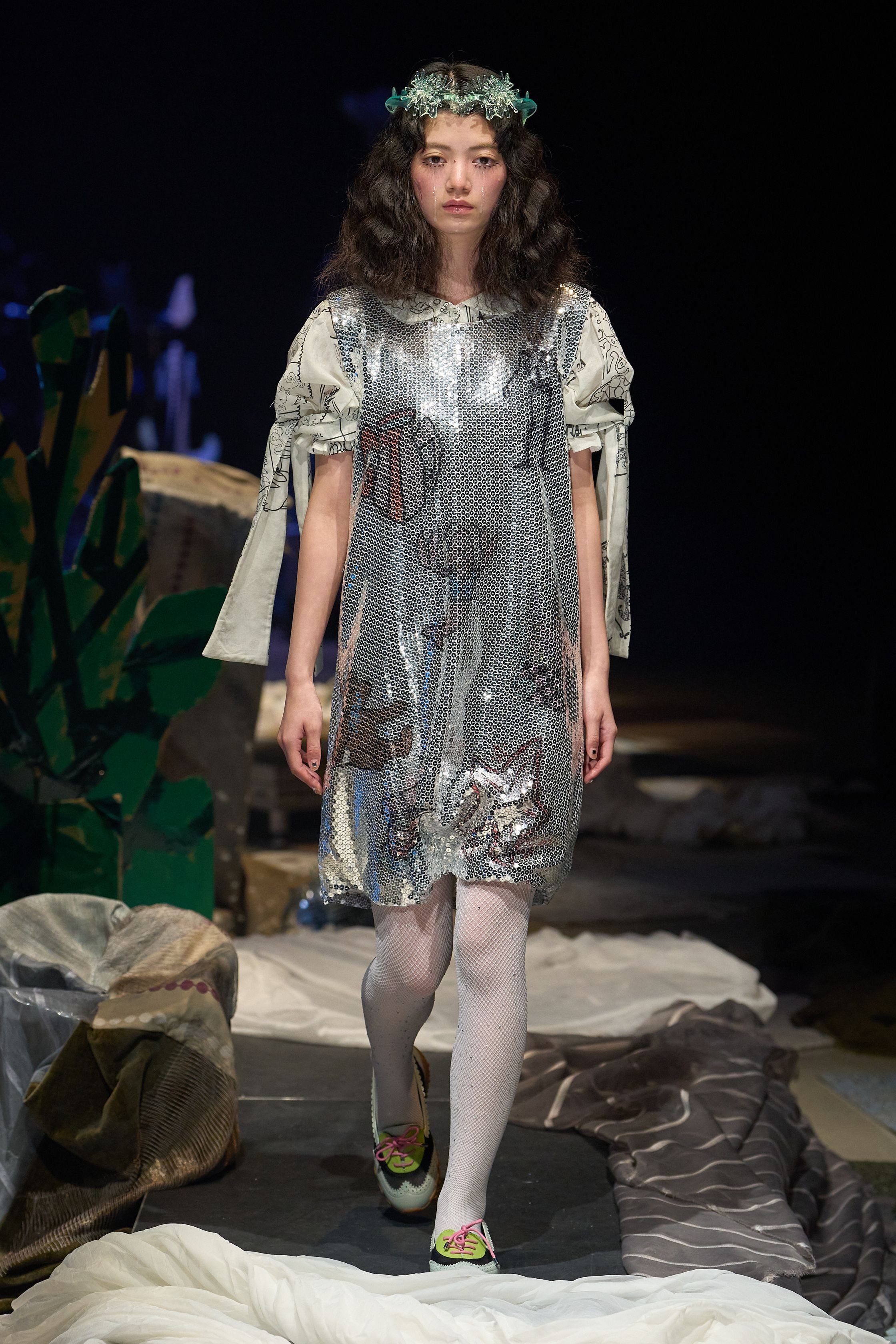
Yusho Kobayashi SS27. Photo: Umberto Fratini / Gorunway.com Save Story Save this story Save Story Save this story When you incubate and support local talent you hope will reach global relevance, how can you keep reaping the rewards?
That’s the question that Japan Fashion Week Organization (JFWO) is wrestling with this season, as Rakuten Fashion Week Tokyo evaluates its standing as a springboard for emerging designers — who are increasingly springing away. With many of its biggest names moving off schedule or showing abroad, the event must look elsewhere to maintain relevance.
The week nevertheless remains a reliable arena to scout for talent, as new designers enter the fashion week system through a combined effort of awards systems and a fresh international push . Here’s what you missed from the week.
An off-schedule exodus There were 27 shows on the main schedule across six days, but many of Tokyo’s biggest domestic designers were absent, having either opted to showcase their collections via lookbook shoots or to hold off-schedule shows earlier in the season, usually in order to be closer to the men’s schedule or to the pre-summer buying season in Paris.
“A lot of emerging designers now prefer to show outside of Tokyo Fashion Week timing-wise, and they are also trying to show in Paris,” says Kaoru Imajo, director of JFWO. This has left the SS27 season in Tokyo feeling especially sparse.
Viviano was one of the longstanding brands on the Tokyo schedule that decided to skip fashion week this season and instead created a lookbook. The brand recently hired PR in LA, and its designs have since been worn by Lady Gaga, Bad Bunny, and Hudson Williams, which has somewhat dwarfed the attention Tokyo alone can bring. “If you are a really young brand and you need attention, it’s a good thing [to show at Tokyo Fashion Week], but for us, once you reach a point, maybe it’s not as important to be on schedule.”
Knitwear brand Pillings by Ryota Murakami, one of Tokyo’s most notable emerging talents, remained on schedule and was a highlight of the week, expanding its knitwear designs into a wider selection of items that included linen suiting and sporty-looking separates. Owned by The Sazaby League (which operates Ron Herman Japan), Pillings was shortlisted for last year’s LVMH Prize and currently has over 25 international stockists, including Dover Street Market London and New York and Andreas Murkudis in Berlin. At the end of September, Murakami will hold a showroom at Paris Fashion Week with the goal of adding a few more to the roster.
“It made sense for us to show in Tokyo before going to Paris,” says the designer, who hinted that this may be his last time showing in Japan. “We haven’t decided on the presentation method for the next season, and I don’t think we’re in a position to do a full runway show in Paris just yet, but I’m thinking I’d like to take on some more challenges.”
To mitigate the void left by domestic talent flying the nest, JFWO is seizing the opportunity to plug the gaps with an increased commitment to showcasing international designers. Out of the 27 slots on the schedule this season, nine were designers from outside Japan, representing countries that included France, Spain, Thailand, Taiwan, the Philippines, Canada and China. “It’s a way for us to keep the week more exciting,” says Imajo, adding that the response from Japanese journalists and buyers has been especially positive.
For the visiting designers, Tokyo Fashion We…