
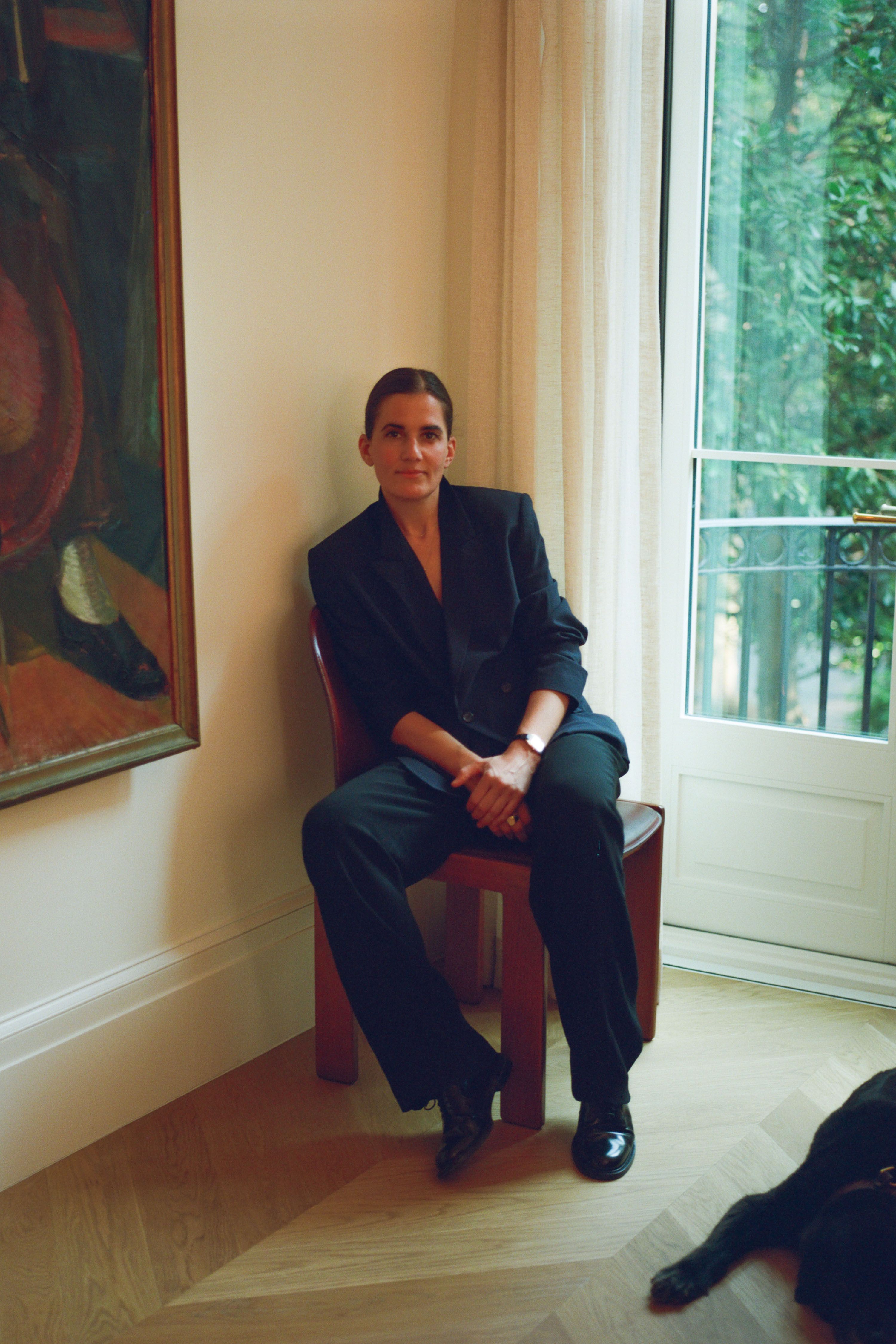
Photo: Samantha Bloom Save Story Save this story Save Story Save this story Before her preventative double mastectomy, artist and designer Carly Berlin’s favorite brand to shop was Kallmeyer. Post-double mastectomy, Kallmeyer remained a favorite, thanks to the adaptability of many of the brand’s garments.
“Just because something is functional doesn’t mean that it can’t be beautiful. You see that all the time in interior design, but it’s really not a part of the conversation in fashion,” Berlin says. Recovering from her surgery, she wondered why the tie between functionality and beauty remained so underexamined in fashion. She connected with other women going through surgeries, treatments, and moments of physical change — and nobody knew where to look for fashion in these moments.
In the wake of her mastectomy, Berlin lived in Skims and Negative Underwear — and then gifted those same pieces to friends going through their own transitionary moments. After sending so many of her contacts the pieces she had discovered during hours of searching, Berlin decided to create the discovery layer for pieces that are tasteful, beautiful, and, most importantly, wearable.
The result is Weldun: a luxury fashion marketplace built for women whose bodies change throughout their lives, whether down to surgery and illness, pregnancy, or aging and menopause. Pieces are curated and sorted into four functionality categories: Easy On / Easy Off, Healing and Recovery, Sensory-Considered, and Flexible Fit (though shoppers can also simply sort by traditional filters such as ‘tops’ and ‘bottoms’).
The key is that Weldun doesn’t only stock clothing purpose-built for accessibility and functionality. Instead, items from your usual luxury fashion brands are curated and recontextualized, highlighting aspects of accessibility and functionality. Weldun’s founding collective includes brands such as Kallmeyer, Another Tomorrow, Mansur Gavriel, H-O-R-S-E, Still Here, and Underwater Weaving Studio.
For H-O-R-S-E founder Sue Williamson, Weldun’s premise that one shouldn’t have to choose function and comfort over style resonated. “I was diagnosed with cancer a few years ago and have had several surgeries and treatments that have altered my body and mobility at times,” she says. “Fashion can seem trivial to some, but being able to express myself through clothing helped me maintain my sense of identity, which was huge.”
Weldun stocks a curation of functional luxury pieces.
Weldun operates as a marketplace: the user transacts on the Weldun site, which triggers the order from the brand partner, who does the fulfillment. But the relationship is built on the Weldun platform. Berlin is confident that, by catering to and speaking to its customers in a way that other sites aren’t (either by being overly clinical or not speaking to their changing needs at all), they’ll keep coming back.
The global adaptive clothing market is projected to grow from $1.53 billion in 2025 to $2.65 billion by 2033. According to a white paper released by Sinéad Burke last year, the disabled community accounts for $2.6 trillion in disposable income across the US, Canada, the UK, and the EU, with a growing population of 1.3 billion. And adaptive fashion accounts for $400 billion in the US alone. The reality is that these statistics likely don’t even include the bulk of the clothing stocked on Weldun, which isn’t technically classified as adaptive, but is part of brands’ existing ready-to-wear collections…