
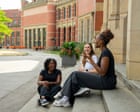
Improved satisfaction … students chat outside the university’s Aston Webb building. Photograph: Andrew Fox/The Guardian View image in fullscreen Improved satisfaction … students chat outside the university’s Aston Webb building. Photograph: Andrew Fox/The Guardian University Guide 2027 University of Birmingham Career focus and a community campus: how the University of Birmingham got its mojo back The university is one of the big success stories in higher education, with soaring student satisfaction levels and exam results. What’s the secret of its success?
Prefer the Guardian on Google The Covid pandemic upended almost every corner of British life, and universities were no exception. But for the University of Birmingham , the turmoil became a turning point.
The pandemic made the university think long and hard about the type of education it was delivering for its students, says Deborah Longworth, Birmingham’s pro-vice-chancellor for education. This sparked an overhaul of its teaching and curriculum – which has been rewarded with impressive results.
This year the University of Birmingham has been ranked in the Guardian University Guide’s top 20 for the first time in nearly a decade, reaching its highest ever position of 14th overall. The improvement is mainly thanks to a strong recovery in Birmingham students’ views of the university, after it dipped to alarmingly low levels during the pandemic and its aftermath.
Before 2020, Birmingham prided itself on providing a good experience on campus. “Covid really hit that, of course,” Longworth says. “But I don’t think we’d caught up with the things that really concerned and worried students, and what it was that they were most interested in … I think that got more exposed when we didn’t have students on campus.”
That began a university-wide programme of change, starting with the teaching timetable and including new elements woven into the undergraduate curriculum to enhance academic skills and help students secure a career of their choosing.
For first-year undergraduates that includes courses on how to develop a LinkedIn profile – something that can come as a shock to parents who graduated from university at a time when many courses were unconcerned with career prospects.
Adam Tickell, who took over as Birmingham’s vice-chancellor in 2022 as it was emerging from the pandemic, said the emphasis on developing employable skills within academic courses reflects the social change in the numbers going into higher education.
“It’s partly a recognition that so many more young people go to university than when I did. I graduated in the 1980s and one in 10 people went to university then, and now it’s around one in four, one in three. So things are different,” Tickell says.
“But it’s partly because even if your career aspiration is to get a job in creative arts or [if you’re] doing an English degree and want to work in publishing – how can we equip those students for the jobs they want?
“That’s not the same as saying we’re equipping them for jobs they don’t want to do and they just have to be motivated. We know that motivations can vary. Ultimately graduates do want control over their careers, so we’re trying to equip them for the job they really want rather than anything else.”
So far the results have been impressive : nearly nine out of 10 recent graduates would choose to study at Birmingham again, according to data from the Higher Education Statistics Agency.
View image in fullscreen Strivin…