
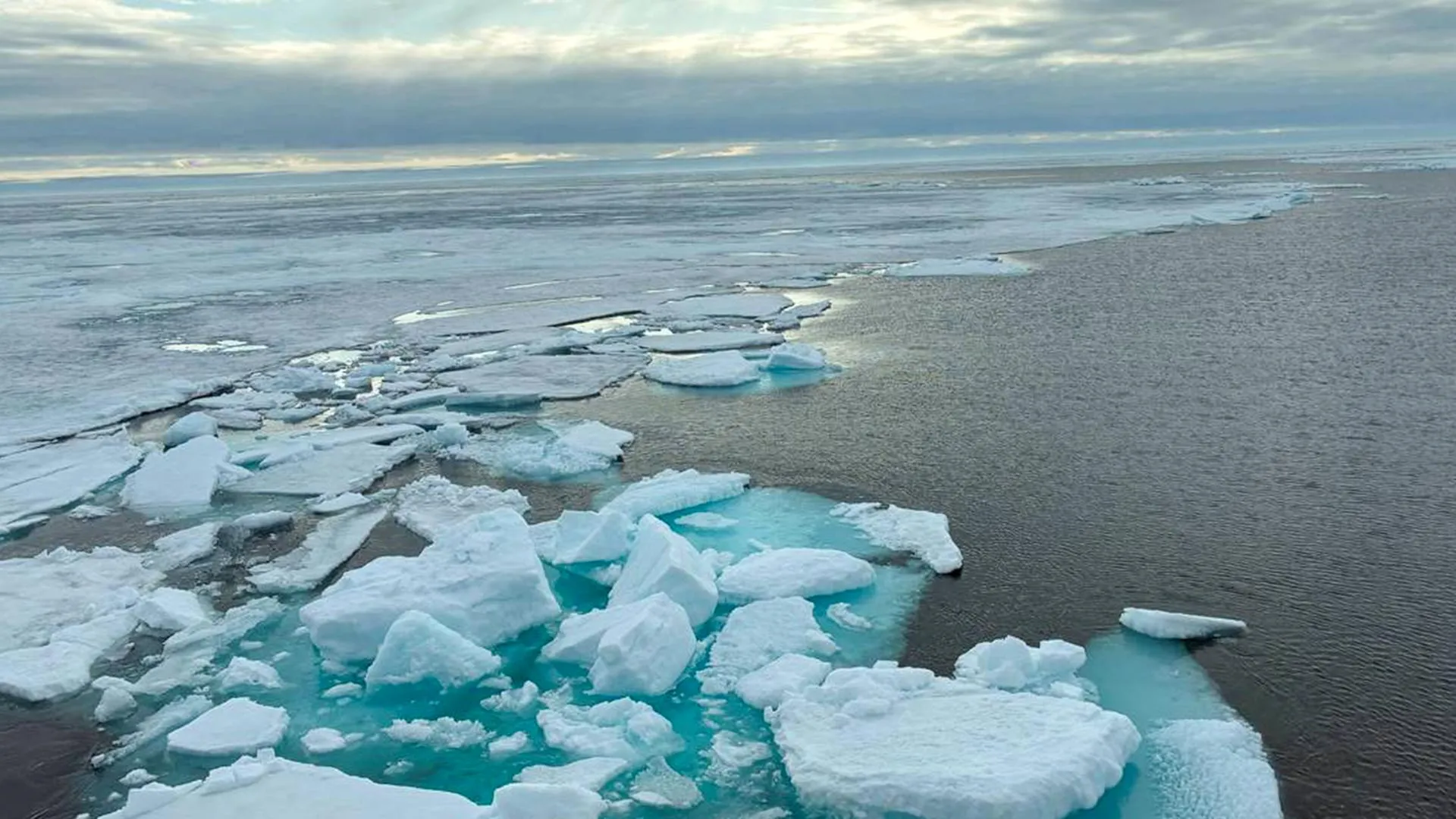
Weather can dramatically reshape the Arctic's frozen surface, and some storms appear to be far more destructive than others.
Arctic cyclones often bring unusually warm, turbulent conditions that can shrink and fracture sea ice. Their effects can become much more severe when several cyclones arrive in rapid succession, keeping the region stormy for an extended period.
An international research team led by the Alfred Wegener Institute has now carried out the first systematic investigation of these sequences of storms using decades of weather observations. Their findings, published in Nature Communications , reveal how this phenomenon, known as 'cyclone clustering', can intensify sea ice loss and potentially increase risks for Arctic coastlines.
When Arctic Storms Arrive One After Another
'Cyclone clustering' happens when multiple low-pressure systems move through the same region in quick succession. Rather than allowing conditions to calm after one storm passes, another arrives soon afterward, creating a longer and potentially more damaging period of severe weather.
"In Europe, such events have frequently led to significant damage in the past due to high winds, heavy rainfall or high tide levels along the coast," says Dr. Lars Aue, lead author of the study from the Alfred Wegener Institute, Helmholtz Centre for Polar and Marine Research (AWI).
Researchers wanted to determine whether the same clustering behavior occurs in the Arctic and, if so, what it does to sea ice. The AWI-led team examined satellite observations and weather records spanning 1979 to 2024.
"We adapted an algorithm for tracking weather systems so that it could detect rapidly consecutive cyclones in the Arctic," explains Lars Aue. "We were then able to compare the state of the sea ice on satellite images before and after a cluster had passed through."
The analysis showed that cyclones can physically disrupt the sea ice when the two overlap. Powerful winds break up the ice cover, causing individual floes to move, drift, and collide with one another.
In the depths of Arctic winter, newly opened gaps in the ice would ordinarily freeze over again within several days. But when one cyclone follows another, prolonged stormy conditions can prevent those openings from closing as quickly.
Cyclone clusters behave somewhat differently during the warmer part of the year. Although the storms tend to be less intense, they can still significantly alter local sea ice conditions. Winds can force floes farther north and push them into other ice, compressing the overall area covered by sea ice.
The storms can also attack the ice through heat. Cyclones may carry warmer air into the region, promoting melting from above. At the same time, they can bring relatively warm seawater upward from deeper layers, increasing temperatures closer to the surface.
During the past two decades, cyclones have therefore contributed to Arctic ice loss, particularly near the end of the annual melting season.
How many cyclones make up a cluster depends on both location and season, but the researchers found an average of 2.5 cyclones per event.
Their effects also vary considerably across the Arctic. In some areas, clustering increases the impact on sea ice by as much as 1.5 times. In other regions, the effect can become as much as seven times stronger.
"On average across the entire Arctic, cyclone clusters reduce Arctic sea ice cover by about twice as much as conventional, isolated low-pressure system…