
A lot of it comes down to the size of your car and how often you use it.
Jacktamrong/Shutterstock Add Engadget on Google: Preferred Source Google Discover We may receive a commission on purchases made from links.
So, you've purchased an electric car to finally stop relying on fossil fuels and power up your EV cleanly and economically from home. You probably already know that you've made a good decision from a budget perspective. Across the US, powering your car using household electricity is about three times more economical than running it on gasoline or diesel, especially with current prices . You're also helping reduce greenhouse gas emissions, something everyone should be extremely concerned about.
Owning an EV needs to be practical, though. Charging from home is cheap and convenient, especially if you get a discount during off-peak hours at night, adding just a few seconds to your commute if everything's set up properly. You can't avoid external charging on long trips, but the majority of your power-ups can be done from home.
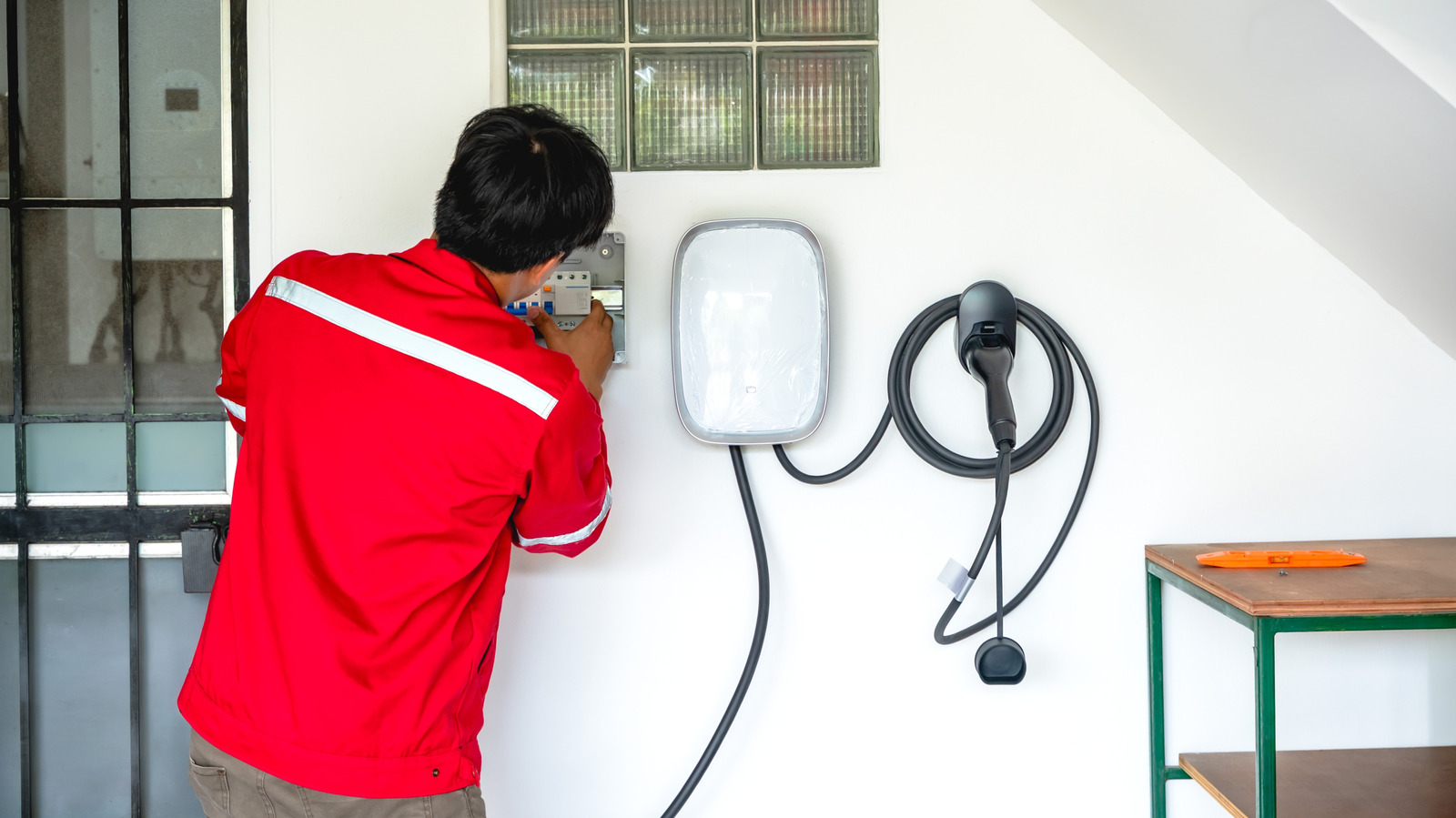
But should you charge your vehicle from a regular power outlet or should you spend some extra cash installing a faster Level 2 charger?
When deciding between a household or a Level 2 charger, remember that an EV is not a smartphone, so it doesn't need to start each day at 100 percent. Other key factors that come into play are the size of your EV's battery and its maximum AC charging speed, along with the number of miles you drive per day. Here's what to consider when deciding if you need a Level 2 charger or not.
Steve Dent for Engadget Before we dive into chargers, let's take a look at your EV and, especially, its battery. Is it a city runabout like the Fiat 500e with a smallish 38 kW battery? Or do you own a longer-range model like the Tesla Model 3 (79 kWh) or Volvo EX30 (69kWh, above). It could even be a big-battery pickup like the GMC Sierra EV (155 kWh). Many people also charge their plug-in hybrid vehicles like the Toyota Prius Prime (14 kWh) or Toyota RAV4 Prime (18 kWh) at home.
This is important, because battery capacity is the key factor dictating what type of charger you need at home. In the United States and Canada, a standard 15A 120 volt AC outlet pumps out about 1.8 kW maximum. When used with a standard outlet or portable adapter, this would recharge the PHEV hybrid in under 10 hours and the Fiat 500e in about 21 hours (38 kWh/1.8 kW), the Tesla Model 3 in 43 hours and the GMC Sierra EV in a whopping 86 hours, or over 3.5 days.
You'll need to consider the maximum AC charge rate of your EV too. Most PHEVs support relatively low charging speeds. Examples of those include the Toyota Prius Prime (3.5 kW maximum) and RAV4 Prime (7 kW maximum). AC charging speeds for battery EVs can vary as well. For instance, the Nissan Ariya, MG4 and Kia e-Nero are limited to 7.4kW, while most models including the Tesla Model 3 and Model Y support up to 11 kW.
The next thing to think about is usage. Do you typically burn just a fraction of your EV's range every 24 hours, or do you have a long commute that uses up much of its charge on a daily basis? If you want to replenish your car from home and not rely on expensive public chargers, this is a key consideration.
For example, say you have a long route that consumes 40 percent of a Tesla Model 3's battery per day (about 32 kWh, or around 100 miles). Then it's going to take 18 hours on standard household power to fully recharge it. That means you'll run you…