
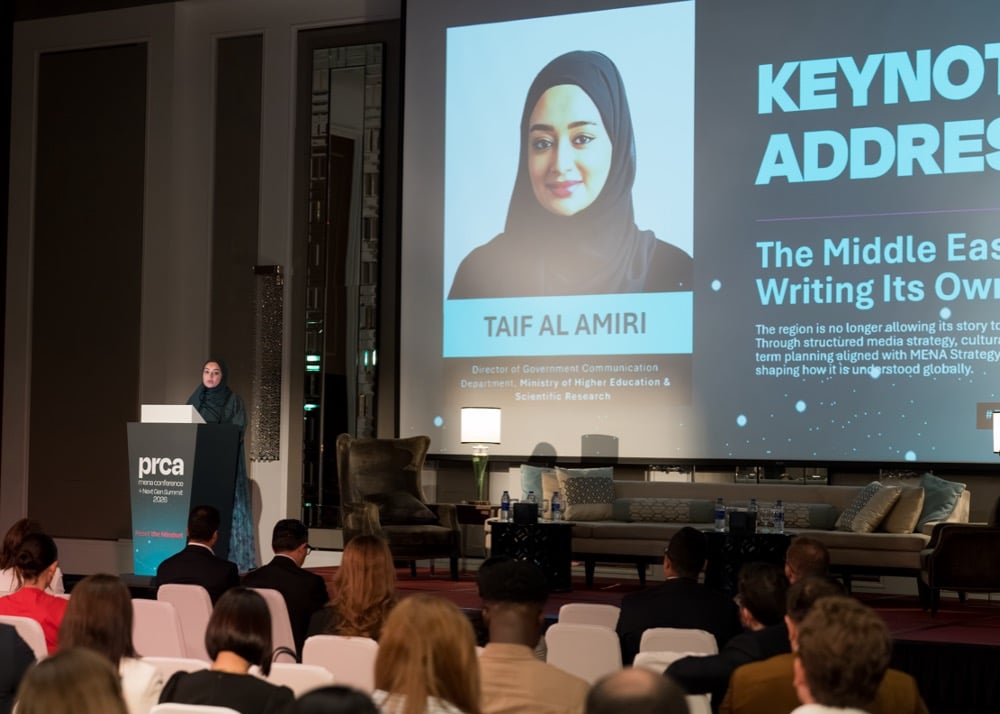
PRCA MENA brought back together close to 150 communications leaders, practitioners, journalists and rising talent in Dubai on 17 September 2026 at Taj Dubai for the PRCA MENA Conference + Next Gen Summit 2026 , a full-day programme examining the forces reshaping the region’s PR and communications industry.
Under the theme RESET THE MINDSET , the conference challenged dated thinking around influence, reputation, creativity, talent, technology and the changing role of communications across the Middle East.
Taif Al Amiri, Director of the Government Communication Department at the Ministry of Higher Education and Scientific Research and PRCA MENA Advisory Board Member , opened the conference with her keynote speech titled “The Middle East Is Writing Its Own Script”.
Drawing on her experience across government communications, Al Amiri argued that successful communications should not simply be measured by reach, coverage or visibility, but by whether it changes how audiences understand, engage with and perceive a story.
“Rewriting the narrative must begin with understanding the audience. A narrative does not change simply because we communicate more. It changes when we communicate differently, when we understand what people care about, what they do not yet understand, and what will make the story meaningful to them,” Al Amiri said.
The conference also marked the launch of the fourth edition of the PRCA MENA Mental Health Report , providing a new snapshot of mental health and wellbeing across the region’s communications industry.
Across the day, speakers explored how power and influence are changing, the impact of geography on corporate reputation, the relationship between people and agency profitability, the realities of client relationships, and whether the industry is still willing to take creative risks.
The programme also examined the growing influence of AI on the profession, including its implications for originality, trust and communications leadership, alongside wider conversations about the increasing importance of human judgement, empathy and relationships in a technology-driven environment.
Conrad Egbert , Head of PRCA MENA , said, “This conference was deliberately built around the conversations our industry needs to be having, not the ones it’s already comfortable with. The regional communications industry is growing in confidence and influence, but that brings new questions around talent, creativity, technology, reputation and responsibility.”
He added, “Bringing 150 people together to challenge assumptions, exchange perspectives and have some genuinely candid conversations is exactly what PRCA MENA should be doing. The quality of debate in the room showed an industry that is ambitious about where it goes next, but equally prepared to question how it gets there.”
The Next Gen Summit also placed emerging talent at the heart of the programme, creating a platform for the next generation of practitioners to contribute to conversations about the future of the profession alongside established industry leaders.