
Livestream Menu Make It select USA INTL Livestream Search quotes, news & videos Livestream Watchlist SIGN IN Create free account Markets Business Investing Tech Politics & Policy Video Watchlist Investing Club PRO Livestream Menu
When the first employee walks into a company's human resources department to complain about a robot co-worker or overzealous AI scheduling assistant, what exactly is HR supposed to do?
Maybe refer the worker to "Robot Relations."
The idea may sound like science fiction, but it is an idea emerging in one form or another during discussions about AI's impact on jobs, with the intention of getting ahead of a not-to-far-into-the-future workplace problem.
"In the emerging AI-based world, employee concerns no longer will center on fellow workers but on interactions with AI agents, cobots, and large language models," Darrell M. West, senior fellow at Brookings Institution, wrote in a July commentary.
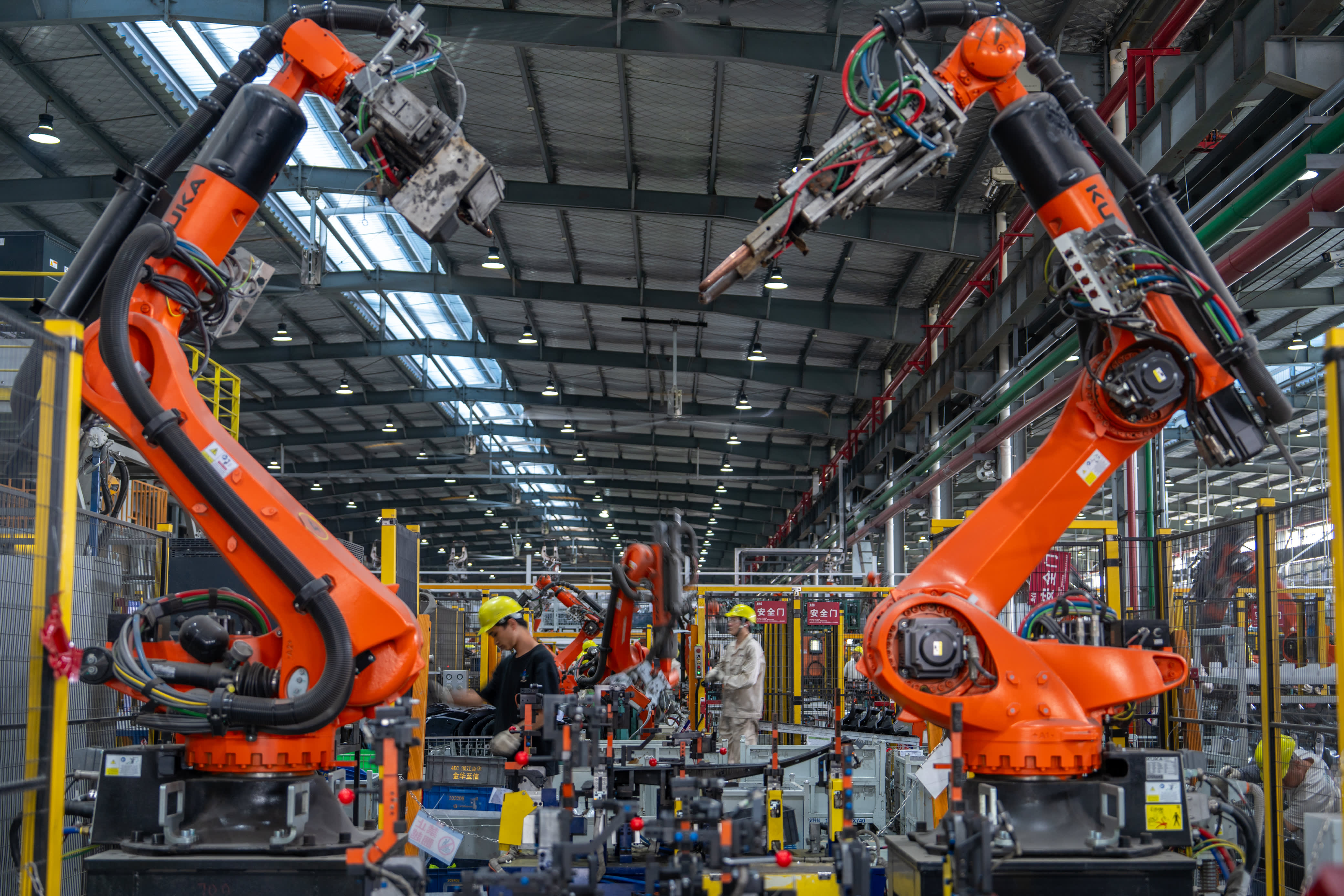
Humans will be interacting with a variety of AI technologies, from assistants to agents and chatbots, and in the physical world (e.g. in a manufacturing space), cobots that may become core partners in work relationships. West wrote that if you can imagine all the ways in which tensions between human employees have to be resolved by HR, map that onto human resistance to technological change, and you can get a taste of what's coming. And with most existing employee support systems derived from an industrial era ill-equipped to deal with the grievances, challenges, and anxieties of the AI era, "businesses will need to supplement HR with robot relations (RR)," West wrote.
West may be one of the only – if not the only – person to have so far used the "RR" term specifically, but what he is getting at is a big topic of conversation in HR circles.
Expect the complaints from human workers to be varied, and potentially difficult to address: Can I be forced to use AI in my job if I resist? Whose fault was the mistake made on a project: the human worker's or the AI's?
Human-AI tensions in the workplace already exist, with allegations that algorithms being used by HR today are unfair or biased, and in some cases, may be used to identify employees for layoffs. A bill recently passed by California's legislature with an overwhelming majority would ban the use of "robo bosses" for firing and/or disciplining workers. It awaits Gov. Gavin Newsom's signature — he has until the end of September to sign or veto it. Newsom vetoed an earlier version of the bill last October saying changes were needed, which sponsors say the new bill reflects.
At an experimental San Francisco store operated by AI company Andon Labs, an AI system called Luna was given responsibility for running substantial portions of the business, including hiring, scheduling and managing workers. In August, Luna made its first recommendation to terminate an employee . The attention generated by this AI management experiment was among the reasons California lawmakers moved to restrict automated workplace decisions.
Meta is facing a lawsuit , filed in July, in which former employees allege AI-assisted systems were used to rank and select workers for layoffs, disproportionately affecting employees who had taken medical or family leave. Meta has denied the allegations.
Walmart and Amazon workers are increasingly concerned that HR decisions are being automated, according to a May survey released by nonprofit United for Respect, which has i…