
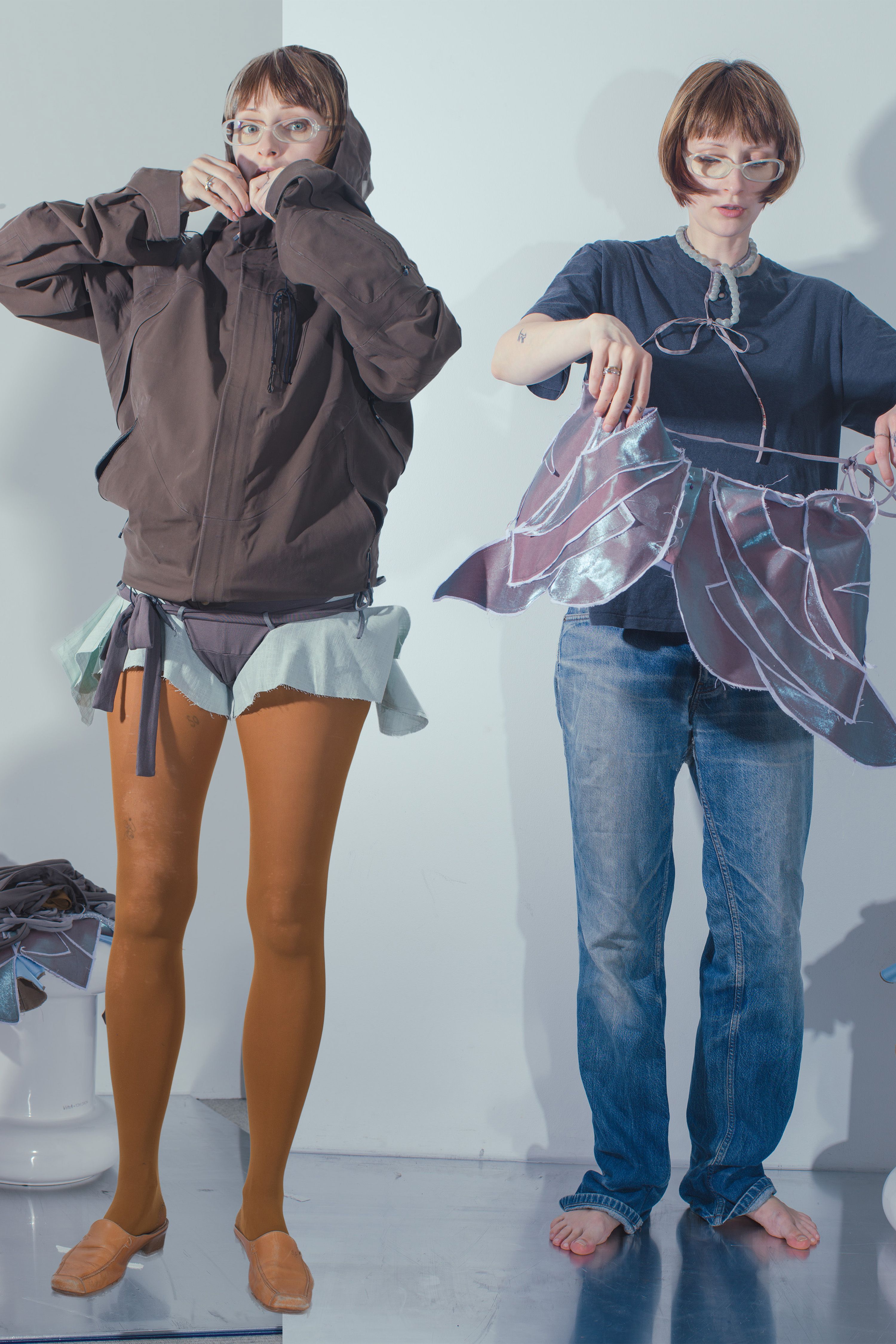
Sól Hansdóttir is introducing “hybrid garments” for SS27. The designer is pictured modelling the designs, which include a spiral-cut pinny (right) that ties around the waist. Photo: Sól Hansdóttir Save Story Save this story Save Story Save this story At any given runway show, a brand will typically show between 30 and 80 full looks to pique the interest of buyers and editors. Increasingly, though, designers are reconsidering the wisdom of presenting a completely new offering each season, considering the sustainability implications involved and the costs of sampling. For emerging designers in particular, the current system no longer makes sense.
“I’ve been doing ready-to-wear, but it felt like something needed to change,” says London-based Icelandic designer Sól Hansdóttir. The Central Saint Martins alum — known for her sculptural designs made from deadstock fabrics — has presented three full collections since graduating in 2021, debuting her Spring/Summer 2025 collection as part of Copenhagen Fashion Week’s One To Watch program in 2024. After holding her first London Fashion Week presentation last season, the designer is returning to the schedule again for SS27.
The designer pictured with an asymmetric chiffon drape top that ties below the bust.
But while her creations have proven a hit with A-listers like Robyn and Amelia Gray, Hansdóttir found her designs — priced between £800 and £2,500 — were less accessible to a wider audience. So she has decided to move away from producing fully formed clothing altogether, instead fashioning what she describes as “hybrid garments” — pieces that sit somewhere between a garment and an accessory. They include bamboo jersey neckties that hang down like a necklace-cum-scarf; a backless pinny that ties around the waist, inspired by Hansdóttir’s signature spiral-cut skirts; and a backless bolero-like top, designed to jazz up an old T-shirt or dress.
Entry pieces, including the neckties and “naughty pearls” (marble necklaces covered in mesh), will now start from £80. Mid-tier pieces, such as pinnies and bolero tops, will range from £250 to £500, while more complex designs, like a sequined apron dress, will remain at around £800.
The brand’s “naughty pearls”, made from marbles that are wrapped with mesh, will be priced at £80.
The idea of a hybrid garment is not a completely new one: in recent years, we’ve seen brands like Ganni selling detached Peter Pan collars (priced at around £55 for a cotton version, compared to £145 for a collared shirt) and Simone Rocha introducing embellished harness tops (priced at around £795, compared to over £1,000 for a similar dress), designed to be worn over shirts and dresses. For Hansdóttir, the concept allows for a renewed emphasis on styling. Instead of encouraging customers to overhaul their wardrobes, she wants them to consider how these new pieces could update items they already own.
“It’s not about having to buy the whole look; this is supposed to unlock your own wardrobe,” the designer explains. “I’m very excited about giving up control to the wearer.” As part of her London Fashion Week presentation, the collection will be styled with clothes by other brands — an almost unheard-of move that shows how serious Hansdóttir is about the approach (she declined to name the brand she’s using).
Hansdóttir hopes her hybrid garments will encourage customers to restyle pieces that already exist in their wardrobes.
In many ways, the concept aligns with a growing desire…