
Could you please explain the markings on the top of the wrapper covering the cork of French wine? Do the numbers, colours mean anything? Can they help identify a better wine if you are shopping for wine?
A reader sent in the above query. If you have a question you would like answered, please contact me at The Irish Times via the form at the bottom of this article.
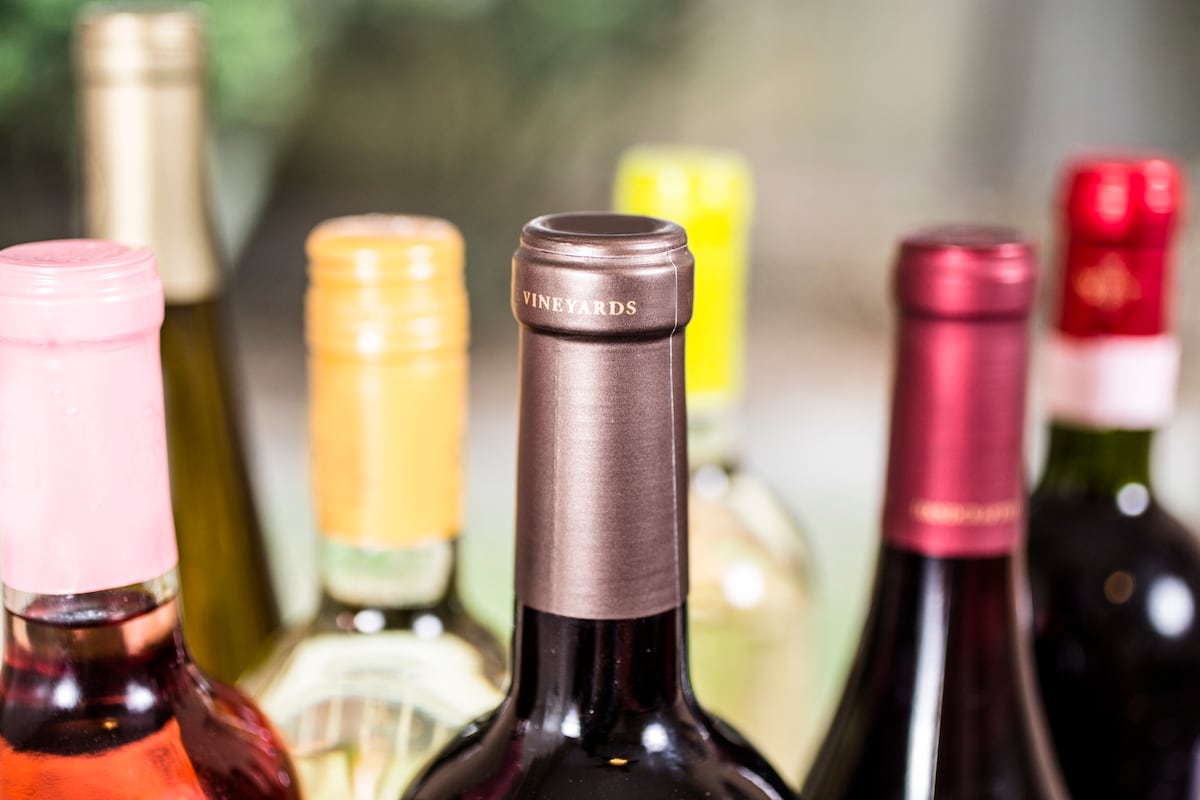
The foil seal that covers most wine is known as a capsule. At one stage, all wines were sealed with wax to protect the wine from leakage, dirt and insects and possibly to prevent fraudsters removing wine and replacing it with an inferior product.
Wax seals have made a comeback recently with some artisan producers, although they are time-consuming; each bottle must be dipped in melted wax and then briefly cooled in a bucket of water. Wax capsules were superseded by lead capsules, which are no longer used due to health concerns. Today, some capsules are made from tinfoil, others are made of plastic and some wines have no capsules at all.
The markings on top of a bottle of French wine are known as a capsule-congé or, officially, the Capsule Représentative de Droit (CRD). Until recently, it was mandatory for every bottle of wine (and spirits) sold within France to have this. It was proof that the producer had paid the required excise duties and any other taxes. It also provided information on who had bottled the wine and the region of origin. Charmingly, it had an image of Marianne too, the traditional symbol of France.
Sadly, a capsule-congé is not an indication of quality or style. However, it was possible to glean a certain amount of information from it. A blue stamp meant the wine was an IGT or Vin de France, and a green one signified an appellation controlée wine. Orange meant a sweet fortified wine. The tiny numbers indicated the origin of the wine and who bottled it.
The capsule-congé was not required on wines for export and was occasionally viewed suspiciously by Irish customs officers trying to prevent smuggling. However, many producers found it easier to put capsules on their entire production when bottling the wine.
I use the past tense as French wines are no longer required to have a capsule-congé or any capsule at all. However, a small minority of producers continue to use them. An unscientific survey in my local Super valu and O’Briens revealed that around 10 per cent of the French wines had a capsule-congé.
Capsules or other seals are still widely used by countries and wine regions as a means of preventing fraud. Often, they are mandatory. For instance, all bottles of genuine Chianti Classico have a black rooster (gallo nero) on the neck or back label. Many countries have an identifying seal that must be used on either the bottle or back label. All Austrian wines have a red and white flag on the top of the capsule, making them instantly identifiable when lying down.