
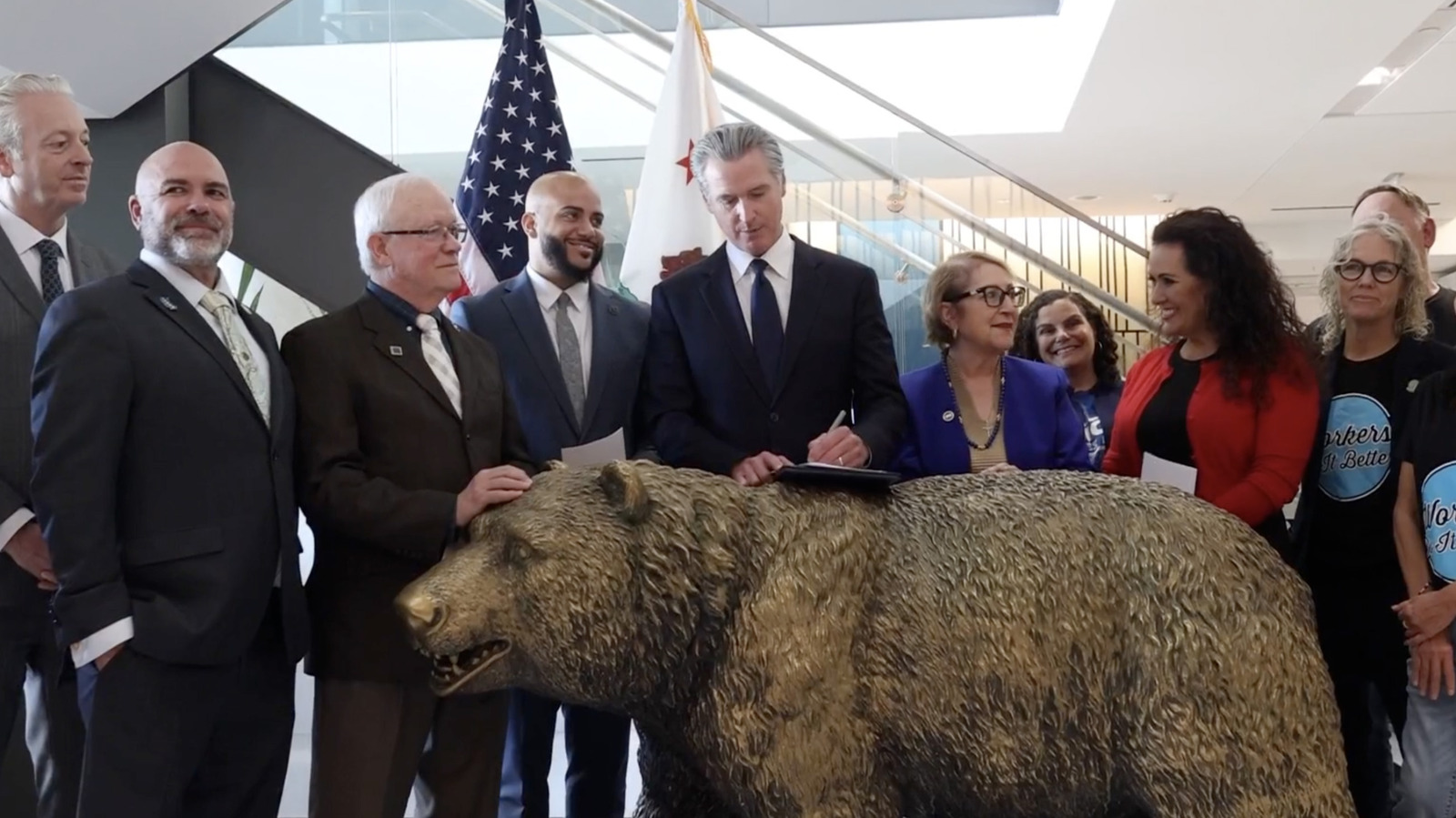
It also prevents AI-powered surveillance of employee bathrooms.
Ritu Manoj Jethani/Shutterstock Add Engadget on Google: Preferred Source Google Discover California has enacted new legislation to protect workers from AI-powered layoffs and surveillance, governor Gavin Newsom announced . The new laws are mostly aimed at companies using AI to initiate job cuts or monitor employees, not about harnessing the tech to replace workers. However, it's some of the first legislation in the nation that gives employees rights about how AI can be deployed in the workplace.
"AI should expand opportunity — not come at the expense of workers and families," said Newsom in a statement. "As this technology reshapes the workplace, California is putting people at the center." Newsom also called recent statements from the Trump administration that the AI industry can self-regulate "bulls*it," adding "we have to do a lot more in the absence of federal leadership."
Divided into multiple bills, the new law prohibits employers from only relying on AI when making a disciplinary action or termination decision, and forces companies to provide transparency if any mass layoff, relocation or termination is caused by an AI system. It also protects against the use of surveillance tools in workplace bathrooms and prohibits lawyers from "fully handing over core legal work" like drafting briefs, to AI.
Newsom, a potential 2028 presidential candidate, also signed an exhibitive order requiring state agencies to continue to refer to the tech as "artificial intelligence" rather than "super intelligence" as Trump recently mandated for some federal employees. Newsom is positioning the state as a leader in AI regulation, likening AI tech to the airline industry in terms of potential dangers to the public.
California's new laws may have been motivated in part by Meta employee complaints that the company used biased AI tools that "disproportionately selected" people who took medical leave as candidates to be laid off. One in four managers reportedly use AI to help decide which employees to cut "often or all the time," according to human resources site HR Dive .