
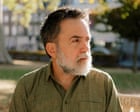
‘Who am I protecting? The company – or other people?’ ... Arturo Béjar. Photograph: Ethan Parker/The Guardian View image in fullscreen ‘Who am I protecting? The company – or other people?’ ... Arturo Béjar. Photograph: Ethan Parker/The Guardian Social media Interview Why Arturo Béjar left Meta – and blew the whistle: ‘I don’t recall Mark ever being empathetic’ Steve Rose Béjar’s daughter was 14 when she told him Instagram was failing to keep her safe. So when he became part of Meta’s ‘wellbeing team’, he knew he had to speak out – and his testimony cost it billions
Thu 8 Oct 2026 11.00 CEST Share Prefer the Guardian on Google T he Social Reckoning hits cinemas this Friday, but the real world has already been working on a sequel – or rather, a threequel. Directed by Aaron Sorkin, the movie is a follow-up to The Social Network, detailing the further misadventures of Mark Zuckerberg and his social media empire, and in particular Frances Haugen , the employee who in 2021 leaked internal documents that appeared to show Facebook was aware of the harms its products had inflicted.
It’s no spoiler to reveal the film climaxes with Haugen’s testimony to the US Senate, on 5 October 2021. That very same day, Arturo Béjar, a consultant on the wellbeing team of Instagram (which is also owned by Facebook), hit send on a long-gestating email to Zuckerberg and other senior Facebook executives on a similar theme. “I wanted to bring to your attention what I believe is a critical gap in how we as a company approach harm, and how the people we serve experience it,” Béjar began, before laying out some shocking statistics from his team’s survey. For example: 24.4% of 13-15-year-olds on Instagram said they had received unwanted advances, and 21.8% said they had been the target of bullying on the platform in the past seven days . Furthermore, 51% of Instagram users said they had had a bad or harmful experience in the past seven days. Only 1% of them reported it, and of those, 2% had the content taken down – so just 0.02%. This was a far greater degree of harm than the company’s existing measurements suggested. Zuckerberg never replied.
By that time, Béjar had worked at Facebook (which rebranded as Meta later that month) for a total of eight years. He had learned how to communicate with Zuckerberg. “You couldn’t talk to Mark about, ‘We have to do this thing to prevent suicide because it’s the right thing to do,’” he says. “You had to put everything in terms of metrics. That was his language. That’s how he related to things, which is also what’s behind all the grief in the world right now.”
View image in fullscreen Jeremy Strong as Mark Zuckerberg in The Social Reckoning. Photograph: Everett Collection/Alamy Béjar has seen The Social Reckoning, and he recognises Jeremy Strong’s portrayal of Zuckerberg as a detached, awkward, humourless control freak all too well. “Oh, it’s accurate,” he says. “I don’t recall him ever being empathetic to the harm that somebody was experiencing and wanting to make that better … The only thing that really consistently came across in all my interactions with him was winning. He’s one of the most fiercely competitive people I know.”
One time, Béjar recalls, he and Zuckerberg were walking together after a fraught meeting. “One of the things that I used to say when bad things were happening is, ‘Are we having fun yet?’ Just as a little kind of defusing humour thing,” says Béjar. “And he looked at me, very intense, and said, ‘I’m not…