
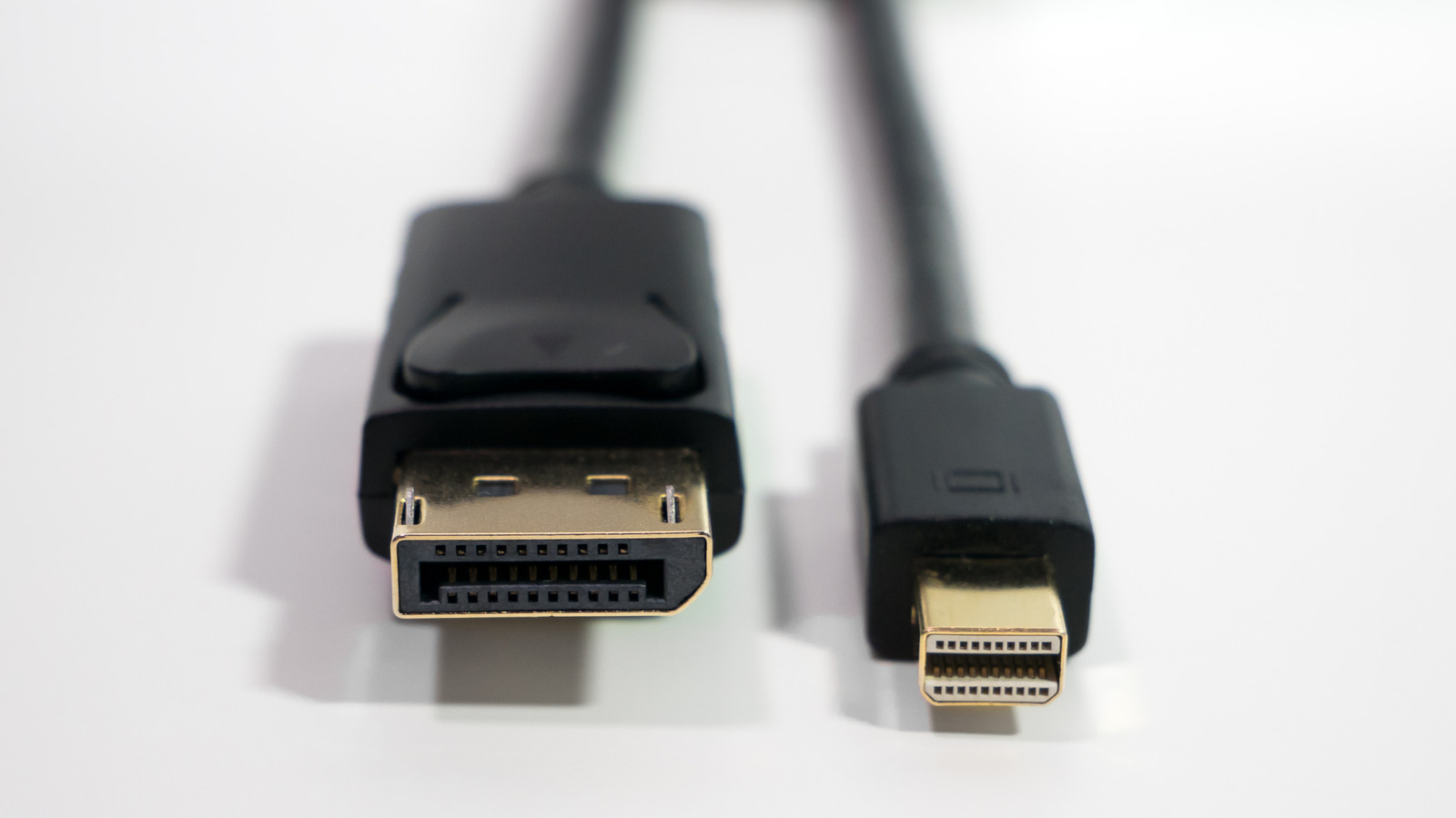
How Thunderbolt and USB-C replaced the need for a dedicated video port.
Barry Paterson/Shutterstock Add Engadget on Google: Preferred Source Google Discover We may receive a commission on purchases made from links.
For a while, Mini DisplayPort was one of the main options for video output on smaller devices. Apple announced it in 2008 to replace interfaces like VGA and DVI with a single, slimmer connector. While it was seen on most Mac models for several years, it's since become difficult to find computers with Mini DisplayPort — even Apple has removed the port from Macs.
But does that mean it's obsolete? Not exactly, although you won't see it as often as you used to. The DisplayPort standard remains popular, especially among workstations and gaming monitors, so it's not as if the technology itself has become obsolete. But we now have another small port that's favored.
Hadrian/Shutterstock Mini DisplayPort is called "mini" for a reason. The full-size version (simply called DisplayPort) supports the same core specifications, but with a larger connector. Apple always opted for the tiny version because it fits better on smaller computers like MacBooks and the Mac mini.
It doesn't matter whether you use DisplayPort (DP) or Mini DisplayPort — both can transmit video and audio through a single cable. Compared to older connectors like DVI and VGA, one of the main advantages of DisplayPort is that it offers much higher bandwidth. Depending on the generation, DP can handle resolutions up to 8K and beyond, at high frame rates (144+Hz) depending on the resolution. Meanwhile, older connectors struggle with anything above 1080p.
When the Thunderbolt standard emerged, its first two iterations used the Mini DisplayPort connector. While a standard Mini DP port only carries video and audio, Thunderbolt also supports high-speed data transfers. That meant the same connector could be used for video, audio and data — perfect for accessories like Apple's Cinema Display.
In late 2015 and 2016, the Thunderbolt 3 standard arrived and switched to the USB-C connector . Apple and other PC manufacturers quickly moved to USB-C or HDMI, leaving the Mini DisplayPort connector behind. These days, USB-C has become the standard for nearly everything. Not only can it support high-speed data transfer, but it can also handle video , audio and even the Thunderbolt protocol — all in a single, small reversible connector. Not every USB-C port can handle the same tasks , but you'll see some version of it on almost every device.
To further push Mini DisplayPort down, USB-C also supports DisplayPort Alternate Mode, meaning a compatible USB-C cable and ports can carry the same DisplayPort signal through the more modern cable. PC makers have no reason to have people buy a Mini DP-to-DP cable when they can simply buy a USB-C-to-DP cable.
Alina Vytiuk/Getty Images That doesn't mean DisplayPort is gone. Of course, you may still find older hardware with Mini DisplayPort, like past laptops and graphics cards. If you still have one of these, you can buy a Mini DP-to-DP cable to connect them to a modern monitor. Since the protocol is the same, they'll communicate with each other just fine. New hardware also continues to use full-sized version of DisplayPort. It's still the standard for many high-end monitors and graphics cards.
HDMI has come a long way in recent years and can now transmit video at incredibly high resolutions. Still, DisplayPort remains the gold standard for absur…