
Dublin now exists in a state of pizza superabundance. Look around – the city is rife with slice-joints and lousy with pies of almost every persuasion. If you stand still or even slow to a saunter within the precincts between Dame and Stephen Streets, it will likely just occur to you unbidden. You might dodge the Detroit-style squares at Dame Lane’s Doom Slice only to run into Mani’s airy Roman rectangles. There’s a perma-line of tourists outside Bambino waiting for a New York slice.
Beyond the city limits the middle-class suburbs too are being steadily colonised. Rathmines lords Reggie’s over the rest, Ranelagh has both Rita’s and a Sano. Clontarf now has BoCo’s wood-fired specimens to sate its pizza needs. So what’s the deal?
This most democratic of dishes has been repositioned in food culture over the past decade, traversing shifts in perception and quality. Junk-food status and stuffed crusts have given way to a digital discourse around provenance, fermentation-timings and leoparding . Pizza literacy rates have never been higher.
The appeal to restaurateurs and food entrepreneurs is apparent too – there’s dough to be made in those margins.
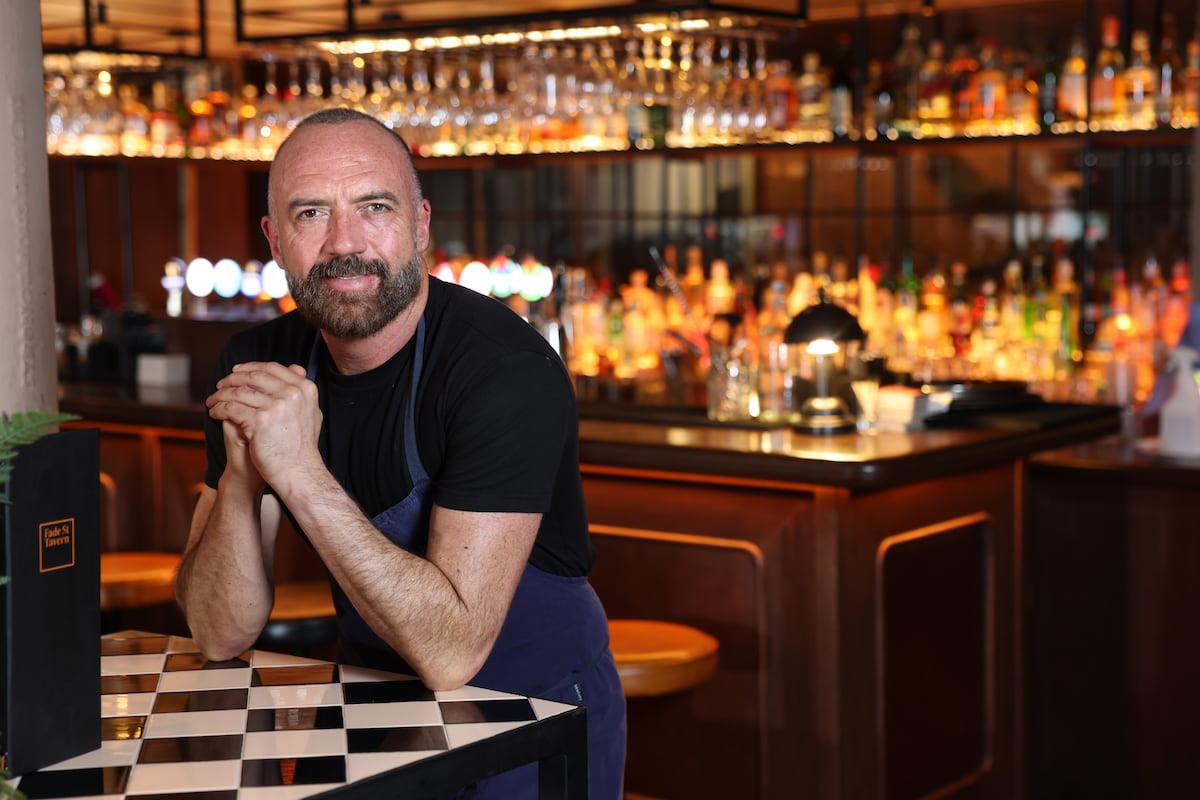
Dylan McGrath ’s Fade St Tavern opened in early July and occupies the ground-floor space in Fade St Social on Fade Street that had been serving small plates. Electric deck-ovens are now turning out an ambitious three distinct pizza styles, one of which gives its name to the concept. The tavern style is associated with Chicago and distinguished by its thin crust and the manner in which it is served – cut into small squares. “Tavern-cutting” made the pies go further at a point when their purpose was to keep the blue-collar workers drinking. They were often “on the house” to keep you within it.
On a recent Thursday, Fade St Tavern is heaving – there’s a lot of youthful energy in the room and decibels to match. “What’s good?” is commonly used as a salutation in Chicagoland but hereabouts the answer is “pretty much everything”.
You are here for the pies but there’s a concise list of appetisers and sides to round out the menu. Deep-fried lasagne is having a moment just now and the version here, constructed with braised beef cheek, makes a persuasive argument. It is profoundly savoury and sits in a carmine pool of gently piquant and fruity San Marzano tomato sauce.
Our pizza pageant begins with a (red) tavern pie, topped with nduja, lardo and mozzarella, and finished with the sharp sheepishness of pecorino romano. The crust is crisp and light – it’s the perfect thing to take the sting out of a round of strong drinks. Those will be serious cocktails, (€13.50-€16) developed with Dave Mulligan of Bar 1661 to sit at the centre of an impressive drinks programme. There’s also a well-chosen wine list with plenty to interest, along with pét-nats and orange wines for those into that sort of thing. Bottles begin at €30 and top out at €65. The beer-inclined will find a comprehensive collection of suds and the alcohol-averse are unusually well catered for.
If you have yet to try lambrusco (the once maligned, now modish sparkling Italian red) with pizza, prepare to have the scales fall from your eyes. We enjoyed a lambrusco salamino from Emilia Reggiano (€55) that was juicy and refreshing, bursting with sour cherry.
“Grandma pies” are a style most associated with New York (and Long Island in particular), where first-generation immigrant nonnas would bake them in sheet-pans. Our white pie with artichoke and wi…