
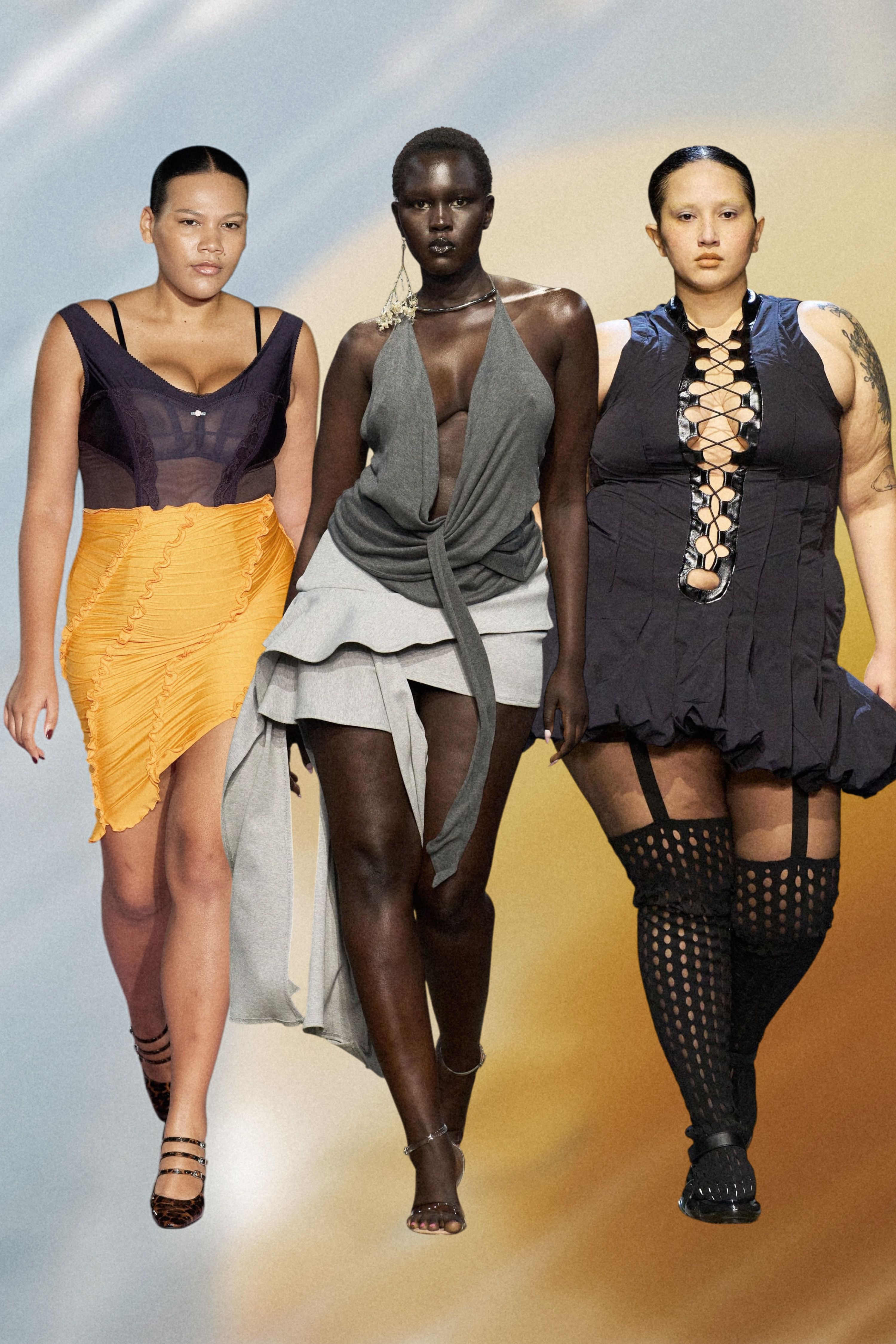
SS27 looks from Ester Manas, Karoline Vitto and Sinéad O’Dwyer Photos: GoRunway.com Save Story Save this story Save Story Save this story As fashion keeps getting skinnier , there are a few designers who are still fighting the good fight. When size-inclusive designers Ester Manas, Sinéad O’Dwyer or Karoline Vitto don’t show in Paris or London, respectively, the city’s mid and plus-size representation plummets, according to four years of Vogue Business Size Inclusivity reports.
This season, O’Dwyer did an early runway show at the V&A in July, while Vitto showed at Rio Fashion Week in April. In London, just 0.5% of looks were plus-size (down from 0.8% last season), 3.6% were mid-size (down from 6.5% last season), and 95.9% were straight-size (up from 92.7% last season). Likewise, Ester Manas, founded by Manas and her husband and co-creative director Balthazar Delepierre, returned to the Paris runway this season after a two-year break. It’s no coincidence that body diversity in Paris showed incremental improvement. Manas and Delepierre always prioritize curve models in their shows: this season featured 42.4% mid-size looks and 36.4% plus-size. And in Paris this season, 0.5% of looks were plus-size (up from 0.1% last season), 2% of looks were mid-size (up from 0.4%), and 97.5% of looks were straight-size (down from 99.5%).
A look from Karoline Vitto’s LFW FW26 collection. She showed in her native Brazil for SS27 at Rio Fashion Week.
While established brands show the occasional curve look on the catwalk (typically on the back of one of few famous curve models), the aforementioned designers commit to size inclusivity season after season. And they don’t just present bigger bodies on the catwalk. They actually design, produce and sell mid and plus-size clothing, and are building small but hyper-engaged communities of customers who are thrilled to be able to wear creative but well-fitting luxury clothes.
While Manas and Delepierre, O’Dwyer, and Vitto often top the rankings of our size inclusivity reports with their respective brands, they tend to rank alongside designers who have tokenistically included one curve model for one season only, cast a plus-size celebrity, or featured a couple of athletic models at the very low end of mid-size. So, ahead of the Spring/Summer 2027 season, we decided to host an open discussion with the fashion world’s most size inclusive designers, on Zoom from their respective studios, to allow them to unpack their success in the space, their frustrations with the industry, breaking out of institutional structures, and where we go from here.
Here’s our full conversation (responses have been edited for clarity):
Vogue: What does size inclusivity mean to your brand and your practice today?
Ester: At the beginning, it was maybe from a selfish point of view, if I can say that. I’m size EU 44, 46, or 48 depending on the brand. So I decided to do something for myself because I was in the design industry, designing every day for a size EU 38 or 36 or 34.
Balthazar: When we launched, it had such a big reaction. I think it’s super nice that we can talk all together today. We each have a specific take on inclusivity and what it means in design. And I think we are all super different.
Ester Manas returned to the runway for SS27 after a two year break, boosting Paris Fashion Week’s curve representation.
Sinéad: I think I always struggled with being in the industry and being around its exclusionary practices. I had an eat…