
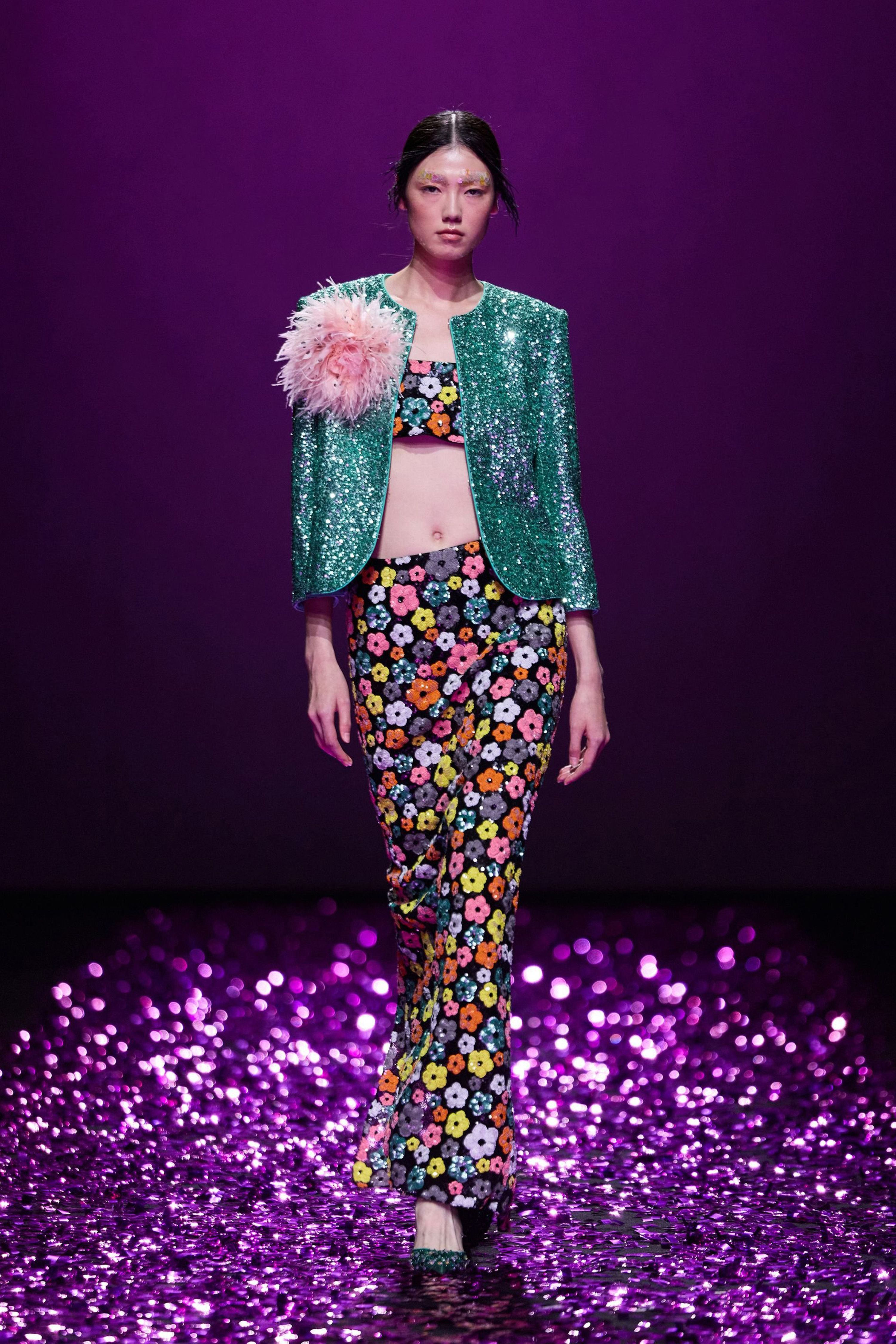
Shuting Qiu. Photo: Courtesy of Shuting Qiu Save Story Save this story Save Story Save this story What was clear this Shanghai Fashion Week is that China’s growing number of independent designers are rethinking the business models that helped them establish themselves in the first place.
The shift was visible across the Spring/Summer 2027 season, which saw a host of shows and presentations take place from October 8 to 16, with homegrown label Hemu and its Silk Road collection kicking off the week. But beyond the usual formats, brands took the opportunity to open standalone stores, test pop-up retail and reconsider their reliance on showrooms to reach wholesale buyers.
These moves point to a new phase in the development of China’s independent fashion sector. For emerging labels, fashion week exposure and placement in multi-brand boutiques have long been important routes to recognition and distribution. But as some brands build stronger customer followings and more established relationships with retailers, they are looking for greater control over how their products reach markets, as well as the customer relationships that follow.
The luxury market is still facing a sluggish recovery, particularly in China, as consumers only become more selective about spending. For independent designers, creative recognition is just one part of the equation. They must find ways to convert attention into sales, build repeat business, and develop distribution models that can withstand uncertain demand.
At Shanghai Fashion Week (SHFW) this season, those questions were reflected in both the runway collections and the commercial decisions taking shape around them.
The SS27 collections highlighted a move towards designing clothes for everyday wear, rather than the occasion pieces or dramatic styling that’s often graced the Shanghai runways.
Pronounce, the Chinese label making its mark in Milan , offered a notable example. Marking the brand’s 10th anniversary, designers Yushan Li and Jun Zhou used its latest womenswear collection, Through Her Eyes, to reconsider the traditional boundaries between men and womenswear from a female perspective. Defined silhouettes and softer tailoring appeared alongside less structured pieces, while proportions and construction techniques drawn from traditional Chinese dress were reworked for contemporary wardrobes.
Shushu/Tong , meanwhile, continued to develop its girlish femininity aesthetic. For a label with an established visual identity, the challenge is less about changing its signature look than extending its appeal beyond occasion dressing. Xu Zhi explored a similar tension through pairing Victorian-inspired nightdresses, lace and vintage prints with distressed denim, biker jackets and military outerwear, better fit for everyday dressing.
Across the season, a more polished but relaxed approach emerged. Clean silhouettes, restrained colors and familiar wardrobe staples provided the foundation, with distinction coming through cut, proportion, materials and construction. The result was not minimalism for minimalism’s sake however. Designers explored how to retain a recognizable point of view, despite making clothes that customers could wear and style in different ways.
Change is also afoot in product development. For Rui Zhou, founder and creative director of RuiBuilt, his brand’s approach to designing and creating product has evolved over six years in business. “In the beginning, we deliberately focused on creating…