
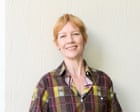
‘You’re going to say I cried, aren’t you’ … Hüller. Photograph: Victoria Stevens View image in fullscreen ‘You’re going to say I cried, aren’t you’ … Hüller. Photograph: Victoria Stevens Film Interview ‘I struggle to see myself as someone special’: Sandra Hüller on being the star of four - or, possibly, five - of the year’s biggest films Danny Leigh New film Fatherland took Sandra Hüller back to a divided Germany. She talks about damaged dreams, Hollywood feelgood and - just maybe - appearing in the new Marvel movie
Prefer the Guardian on Google S andra Hüller is crying, and it feels very strange. A wildly gifted actor, she can convey every human emotion there is. On screen, though, she is most often asked to embody deep self-possession. Even doing karaoke, Hüller is in control. And in real life, life is good. Her 2026 will end with four high-profile movies this year alone. Two (Fatherland and Rose) are black-and-white arthouse films that centre on her brilliance, and though one of the others (Digger) is already a Hollywood cautionary tale, a second (Project Hail Mary) was a giant $684m hit. (There may also be a fifth movie, bigger still. We will come back to that.)
And yet, dressed in film star black, she is in tears. “This is really hard for me,” she says.
We are talking about Fatherland. Directed by acclaimed Polish film-maker Paweł Pawlikowski, Hüller plays the German polymath Erika Mann, who in the film drives her novelist father Thomas Mann through newly divided postwar Germany. The Nazi past shadows everything – but the movie is also tied up with the birth of East Germany, where Hüller grew up. (She still lives in what was once the GDR.) I tell her I’ve never before seen a film that acknowledged the utopian dreams of that place and time, however damaged they became. Yes, she replies: German directors don’t know how to approach it.
“But Fatherland has a grief that you feel clearer coming from the East.”
Read more And then her voice cracks, and she cries. We reflexively apologise to each other. “I’m just grateful Pawel gave space to this political idea that didn’t survive in Germany , but is one maybe people can still think about. The socialist idea.”
Hüller wipes her eyes. Finally, she laughs. “You’re going to say I cried, aren’t you? I can see the headline.”
View image in fullscreen In Fatherland Hüller plays Erika Mann, who drives her father through newly divided postwar Germany. Photograph: Grzybowska Agata/Agata Grzybowska And yet she has always been open about the nuance to the East Germany she remembers from childhood – a place defined by more than the Stasi men of cold war thrillers. “What fascinates me is that in East and West were two systems that for a certain time could have learned from each other.” She apologises again; I’m not sure why. “It is this situation we live in now. I feel like I’m on thin ice.”
Inevitably, we come to the far-right Alternative für Deutschland (AfD). The subject is doubly unavoidable in light of Fatherland. The Manns originally fled the country in 1933 and they would end up in the US. “It’s no secret there are similarities now,” Hüller says. “Fascism doesn’t arrive overnight. It gets here slowly, in little doses.” Her tone turns businesslike. “The question is what we do about it.”
We all contain multitudes, but Hüller more than most. At home in Leipzig, she is a co-founder of the experimental Farn Kollektiv theatre group; a politically engaged woman of 48, she is the single mother to…