
With insurers offering classic cover on bikes as young as 15 years old, your annual premium need be no bar to sampling the delights of older motorcycles.
There’s now over a century’s worth of motorcycles to choose from, but we’ve stuck with a machine from each of the last five decades, so even with the oldest you can still stick with modern traffic, and the controls won’t feel too alien either.
Read on for our expert guide to practical classics!
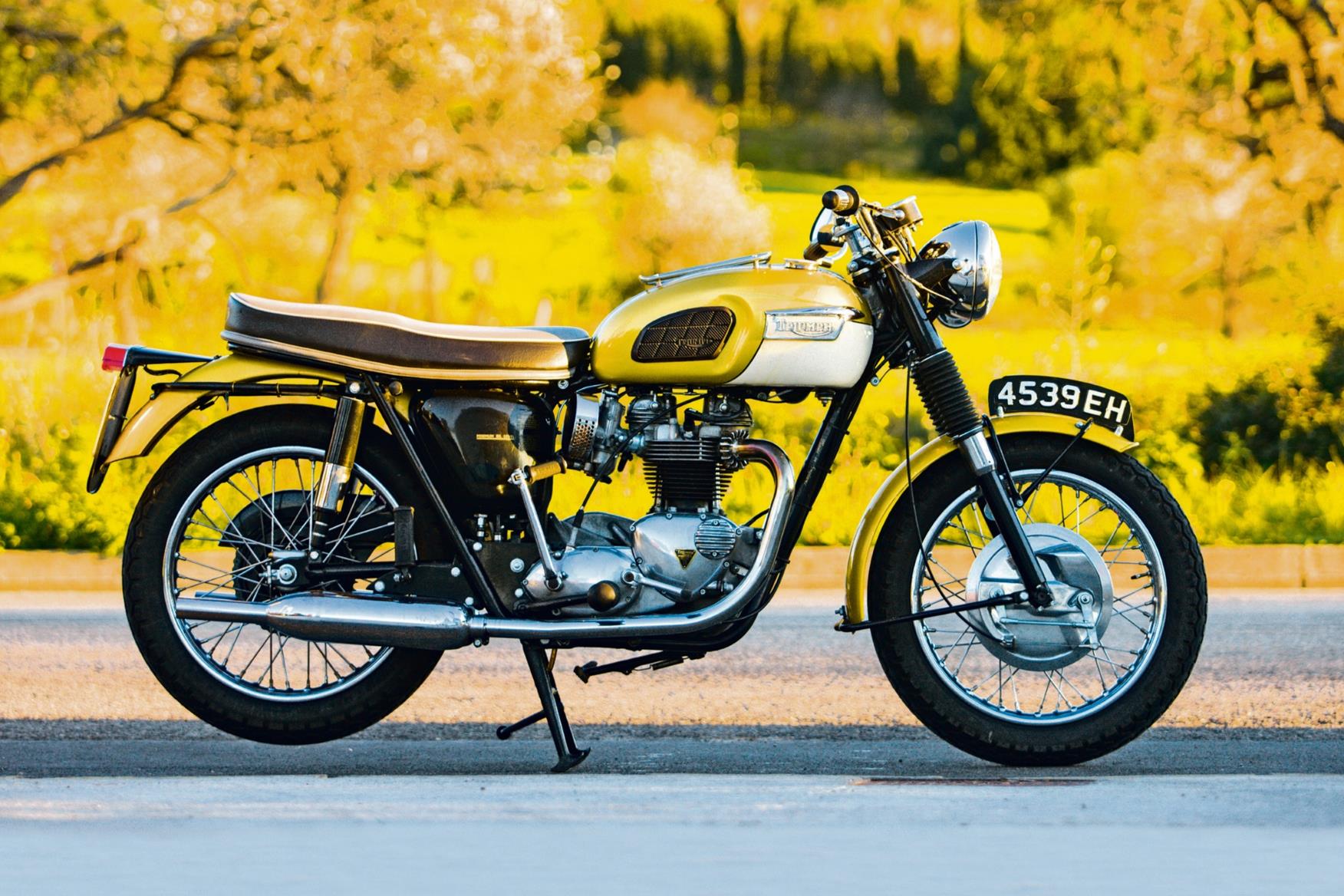
Britannia still ruled the highways back in the 1960s and the Triumph Bonneville was the aspirational sportsbike of its day. From its debut in 1958 the 650cc parallel-twin Bonnie evolved steadily throughout the 1960s before taking a pronounced turn for the worst as the 1970s dawned and the machine was redesigned as an oil-inframe 750.
The ultimate Bonnies for many are the 1969/1970 T120 models like the one here which best epitomise the oldschool Triumph’s lines and dynamic while featuring a twin-leading shoe front drum brake which was the best stopper fitted to those seminal models. That they aren’t getting any cheaper suggests that you’ll never lose money on a late 1960s Bonnie while owning a solid slab of biking history.
Matching numbers (frame and engine) are all in the world of concours Triumph collecting. Do your research before committing to buy; join the Triumph Owners Motor Cycle Club and try to take the opportunity to ride one if you have never experienced older bikes, just to see what you’re getting yourself into and whether you will enjoy it.
The 1970s was the decade when the four-stroke inline four came to primacy, setting the template for what would become known as the Universal Japanese Motorcycle (UJM). Honda, Kawasaki and then Yamaha all had fours but Suzuki were slow to adopt the template, first with the 1977 GS750, then the following year with the GS1000. Bulletproof in the engine department thanks to a rollerbearing crank and loaded with torque, nothing says 1970s muscle bike like the GS1000.
Unscrupulous sellers are trying to pass off dressed-up E models as the more collectible bikini-faired S. Ageing wiring can lead to electrical issues, but if a rewire is required, the system is primitive enough to be simple. Age-related issues such as corrosion should be looked out for.
Our choice is the RD350YPVS, launched in October 1982. The twostroke twin was a refinement of the original Elsie (LC), a cult legend that had appeared 18 months before. The new bike featured power valves in the exhaust ports, the acronym YPVS standing for Yamaha Power Valve System. These effectively raised and lowered exhaust port height to improve tractability across the rev range, reducing the ‘peakiness’ of a tuned two-stroke. With prices of the original LC reaching crazy levels, the arguably better YPVS is a cheaper choice.
Look out for leaking crankcase seals allowing gearbox oil to be burnt off. Many YPVSs up for sale today will have been assembled from the parts of many others. Not necessarily a problem, but the quality of assembly counts.
The CBR900RR FireBlade arrived in 1992 and things would never be the same. The Blade accomplished the trick of cramming big power into a light, compact chassis that handled as well or better than any middleweight that had come before. Some of that was down to the fact that the Blade was originally to be a 750 before Honda decided to take the Yamaha FZR1000 and Suzuki GSX-R1100 head-on, and Project leader Tadao Baba fitted an 893cc inline four into the dimi…