
My most convincing introduction to the iPhone Duo came on a flight over the weekend. Between Las Vegas and Phoenix, I unfolded the phone to watch live NFL action between the New York Giants and Houston Texans on its expanded screen. On that trip, the Duo became a practical replacement for my iPad.
The device attracted attention almost immediately. Strangers tapped me on the shoulder at an airport bar and aboard the plane, asking whether I was using the new foldable iPhone. The attention is entertaining, but curiosity fades. The more meaningful question is whether it remains useful after the novelty wears off.
Apple provided an early unit for this review. I wanted to understand whether its first foldable iPhone solved real problems. After using it on the go, I see the appeal. I also see compromises that deserve careful attention before anyone spends $1,999.
Apple enters this category seven years after Samsung helped establish the modern foldable smartphone market. That delay deserves acknowledgment. Samsung and other manufacturers did much of the difficult early work. Still, the Duo suggests Apple spent that time thinking carefully about how a folding device should fit into the iPhone experience.
The hardware makes a strong impression. Its titanium frame, precision hinge, and carefully finished surfaces communicate quality. The hinge supports partial folds, giving the device flexibility for watching videos or making calls. The inner display's matte treatment reduces distracting reflections and makes the crease less noticeable, though it doesn't eliminate it.
The A20 Pro processor and vapor chamber cooling provide a strong technical foundation. The weight comparison also surprised me. With its case, my Duo setup weighed 10.6 ounces, slightly below the 10.7 ounces of my iPhone 18 Pro Max setup. Those are complete configurations, not a comparison of bare devices.
Closed, the Duo can initially feel like a step backward. Its 5.4-inch outer display looks squat, especially if you're used to a Pro Max. Some webpages feel constrained. That first impression can make you feel you paid more for less. Open the device, however, and the calculation changes quickly.
The 7.6-inch inner screen creates an experience closer to a small tablet. It is not identical to an iPad mini, but the larger screen makes a difference when reading, watching sports, or reviewing information. The advantage is availability. You carry the larger screen because it is already part of your phone.
That distinction became clear during my flight. Watching football felt more comfortable on the expanded display, without having to pull another device from my bag. A foldable will not replace every iPad workflow, especially those that involve extensive typing or specialized apps. For entertainment and casual reading while traveling, though, the substitution is persuasive.
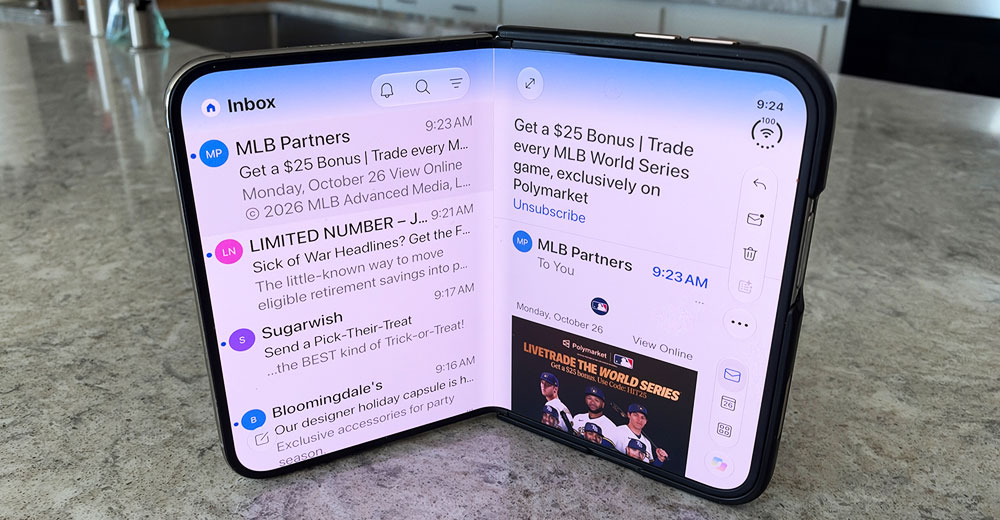
Software gives the hardware purpose. With iOS 27, supported applications rearrange information instead of simply enlarging a familiar phone interface. Email can display messages alongside an inbox. Two applications can run side by side. These changes reduce switching between apps and make the larger display useful for checking information while composing a response.
Apple has clearly done its homework, though the experience remains uneven. Apps that haven't adapted to the Duo can waste screen space or feel awkward. Buyers should evaluate the apps they use daily. Future developer updates may improve things, but…