
For nearly three decades, the technology industry has chased the elusive dream of the personal digital assistant. From early desktop mascots to smartphone voice agents and today's generative AI overlays, the promise has always been the same: a tireless digital partner that makes our lives easier, reduces cognitive load, and keeps us organized. Yet so far, the reality has largely been a series of frustrating false starts.
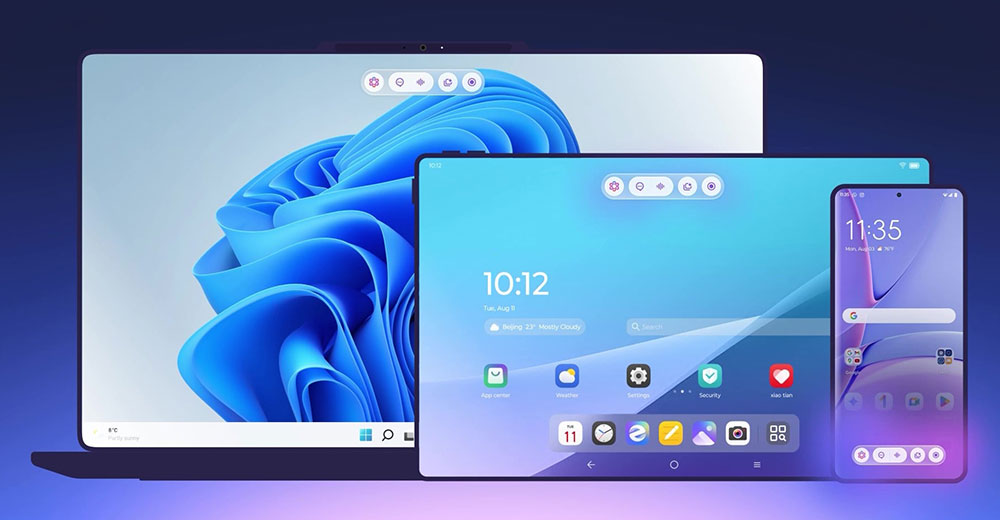
Now, as Lenovo's Qira announcement details, the company is stepping directly into the breach with a platform designed to provide context-aware AI assistance across PCs, tablets, and Motorola smartphones.
To understand why Qira could move personal digital assistants forward — and what that could mean for Lenovo and the broader hardware ecosystem — we need to examine why earlier attempts fell short, where Microsoft's AI PC push stumbled, and what a true digital assistant is supposed to do.
Stick around until the end of the column for my Product of the Week, a Lenovo ThinkPad designed for AI workloads.
When we look back at the lineage of digital assistants, the overarching failure wasn't necessarily a lack of processing power; it was a fatal lack of clear, user-centric goals. Technology companies consistently built tools designed to serve the vendor's ecosystem or compensate for poor interface design rather than genuinely serving the user.
Consider Microsoft's infamous Office Assistant , universally known as Clippy, which debuted in Office 97 to surface buried software features because users weren't reading help manuals. Because the software lacked any real understanding of human focus and relied on rigid, rudimentary Bayesian triggers without true contextual awareness, it constantly interrupted workflows at the worst possible moments.
Yet, despite the industry-wide derision aimed at Clippy, that early experiment accidentally stumbled onto something vital: emotional resonance. Personally, I liked the feature — not the default paperclip, mind you, but F1, the little hovering robot available as an alternative Office Assistant.
When I was grinding through a brutal workday or feeling depressed, having that animated little robot sitting on the corner of my monitor, occasionally whirring to life or doing a quirky animation, provided a surprising, pet-like comfort. It made a sterile digital workspace feel less isolating.
The problem was that F1 had the brain of a toaster. It couldn't tell when I was in the middle of a high-stakes financial analysis versus when I needed a breather. Imagine how transformative that emotional benefit would be today if backed by genuine, empathetic intelligence — a tool that recognizes vocal stress or frantic typing, stays quietly out of the way during deep focus, and offers supportive, companion-like warmth or takes tedious formatting tasks off your plate when you are exhausted. Microsoft threw the baby out with the bathwater, killing the persona instead of fixing the underlying intelligence.
The second wave — Apple's Siri, Google Assistant, and Microsoft's Cortana — suffered from a different set of muddled objectives. Siri became a master of party tricks and setting kitchen timers, trapped in a walled garden rather than becoming the deep, cross-platform orchestration engine users needed.
Cortana was an even more tragic missed opportunity because Microsoft actually started with the perfect blueprint. Named after the iconic AI companion in Microsoft's Halo franchise and voiced by actress Jen…