
B e warned: reading chef Mickael Viljanen ’s description of Chapter One’s signature potato dish on an empty stomach might be a punitive experience.
The mashed potatoes on the two Michelin -star restaurant ’s lunch menu are made “a little bit special” by flavouring them with vin jaune, the distinctive yellow oxidised wine from the French Jura Mountains.
The unpeeled potatoes are baked whole on coarse sea salt, then the flesh is scooped out, pushed through a fine sieve, and emulsified with milk and so much Kerrygold butter that it equals 40 per cent of the potatoes’ weight.
To finish, the spuds are seasoned with salt, white pepper and nutmeg.
Viljanen puts it simply, “Potatoes are an essential part of Irish kitchens in homes and restaurants. They are part of the culture here.”
The promotion of the humble spud to a premium product stands in stark contrast to a time when potatoes were forced into epicurean exile in high-end kitchens. In the late 1990s and 2000s, ambitious chefs were trapped in the mould of molecular gastronomy and potatoes didn’t have a strong argument amid gels, foams and liquid spheres. But the era of “cheffy tricks”, as chef and Irish Times columnist Mark Moriarty calls them, is over. Over the past decade, cooking that showcases whole ingredients has taken its place, and potatoes have dug in.
“It’s back to what it would have been like in the 50s and 60s, where the real skill of the chef is not being able to produce a sauce; it’s being able to work with suppliers to find really good produce that they can deliver consistently,” says Moriarty, whose baked potato sourdough is “flying out the door” in his new venture in Wilton Park, Dublin 2 .
Some of the most high-profile chefs in Ireland are now transforming tubers from a purely functional carbohydrate into a delicacy. They are taking them from a side dish to the main event. The apex of this championing is on show at Ómós, chef Cúán Greene’s Abbeyleix restaurant , where an entire course of the €175 tasting menu is devoted to a single potato. Cooked in salted water with the garden herbs lovage and mint, the new-season potato is served with a scoop of fermented butter made on site.
“They’ve gone from being the thing on the plate that was almost taken for granted to something chefs are now treating with a lot more respect,” says Paul McNamara, head chef at Uno Mas, where a Spanish tortilla made with a waxy Irish potato is the most popular dish on the menu. McNamara, like other chefs, credits the spud’s renewal to producers who have moved away from the commercially dominant varieties of Queen, Rooster, Kerr’s Pink and Golden Wonder, and begun growing speciality and heritage varieties. “People are much more interested in the variety, the flavour and how you cook them,” says McNamara.
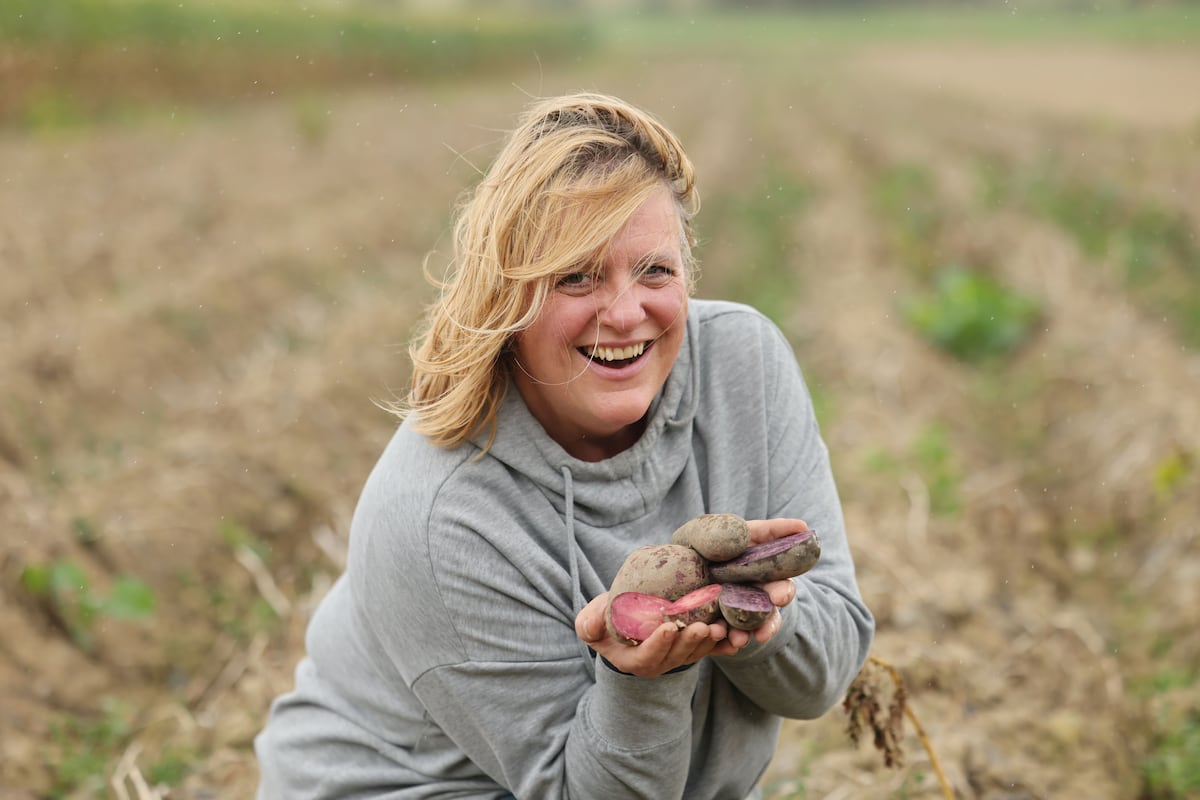
And for chefs wanting to make a statement with potatoes, Ballymakenny Farm has become a go-to grower. Ten minutes north of Drogheda, Ballymakenny is busy on a Saturday. It’s the only day of the week that Maria Flynn, who owns and runs the farm with her husband David Flynn, opens her drive-through shop. Cars pull in every few minutes, and Maria is up and down, chatting and cooking different varieties for people to try. From a little shed, she emerges with steaming bowls of the farm’s signature Violettas, lemony Sharpe’s Express and floury Mayan Gold.
“People literally fight over the Mayan Gold,” she says. “It’s probably one of the nicest potatoes I’ve ever had.”
Flynn passes a stick of but…