
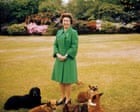
Queen Elizabeth II in 1976. Photograph: Dmitri Kasterine/Camera Press View image in fullscreen Queen Elizabeth II in 1976. Photograph: Dmitri Kasterine/Camera Press Photography Obituary Dmitri Kasterine obituary Photographer who captured the humanity of subjects including Queen Elizabeth II, Dirk Bogarde, Jean-Michel Basquiat and Tom Stoppard
Prefer the Guardian on Google In 1963, the photographer Dmitri Kasterine heard that Stanley Kubrick was in London filming Dr Strangelove. Kasterine was a fan, so he approached the editor of Queen magazine and successfully pitched a feature on the director at work. Kubrick noticed him on set and said: “Would you like to come and work for me? You stand in the right place.”
Kasterine worked for Kubrick from 1963 to 1971, taking the stills on Dr Strangelove, 2001: A Space Odyssey and A Clockwork Orange. Kubrick taught the photographer the importance of courage, patience and perseverance.
These lessons supplemented his photographic craft, honed since the beginning of the 1960s, creating a style that led to Kasterine, who has died aged 94, becoming one of the most significant portrait photographers of the 70s and 80s. He photographed James Baldwin, Michael Caine, Patricia Highsmith , Martin and Kingsley Amis , Tom Stoppard and Queen Elizabeth II for Harpers & Queen, Vogue, the BBC’s Radio Times and the Daily Telegraph magazine.
In his work, Kasterine wanted to “avoid the conventional” and prevent the sitter from “putting on a polite face”. He utilised his gentlemanly charm and elegance, putting the subject at ease before turning away, pretending to adjust his equipment, ignoring the sitter – attempting to catch them off guard, thus revealing something of themselves. This approach unveiled vulnerability in Dirk Bogarde , discomfort in Samuel Beckett and boredom in Muriel Spark .
View image in fullscreen Kasterine’s portrait of Stanley Kubrick, who taught him the importance of courage, patience and perseverance. Photograph: Dmitri Kasterine/Camera Press In an interview with the reporter Bradley Towle, Kasterine said: “I look for something that gives me a shock. I look for something that has unusual elements. It could be what they’re wearing; it could be the background. It could be just an expression. I don’t really look for it, it comes to me.”
As well as his acclaimed portraits of the literati, he took great pride in a personal project undertaken between 1996 and 2018 in his adopted home of New York state. He had become fascinated with the city of Newburgh on the Hudson River, which, from being awarded the title of All American City by Look magazine in 1952, had become, by the 1990s, blighted by recession, corruption and racism. He set about to capture the decaying splendour of the city and, more importantly, the dignity of the overlooked, predominantly Black community that called it home.
In the introduction to his 2012 book, Newburgh: Portrait of a City, Kasterine wrote: “This is a record of uncelebrated and ignored people … But in the ruins of the buildings and in the faces of the people I see warmth and beauty, and in some of the faces a determination to change things.” Three years later, Kasterine filmed a documentary, Newburgh: Beauty and Tragedy . The city embraced his work, and 44 of his Newburgh portraits were mounted on the exterior of its Ritz theatre, from 2012 to 2026.
His photographs are held by the Royal Collection Trust and the National Portrait Gallery in London, and the Smithsoni…