
Aerospace & Defense Astronauts Marooned On Moon Could Be Abandoned Under Current NASA Plan By Kevin Holden Platt ,
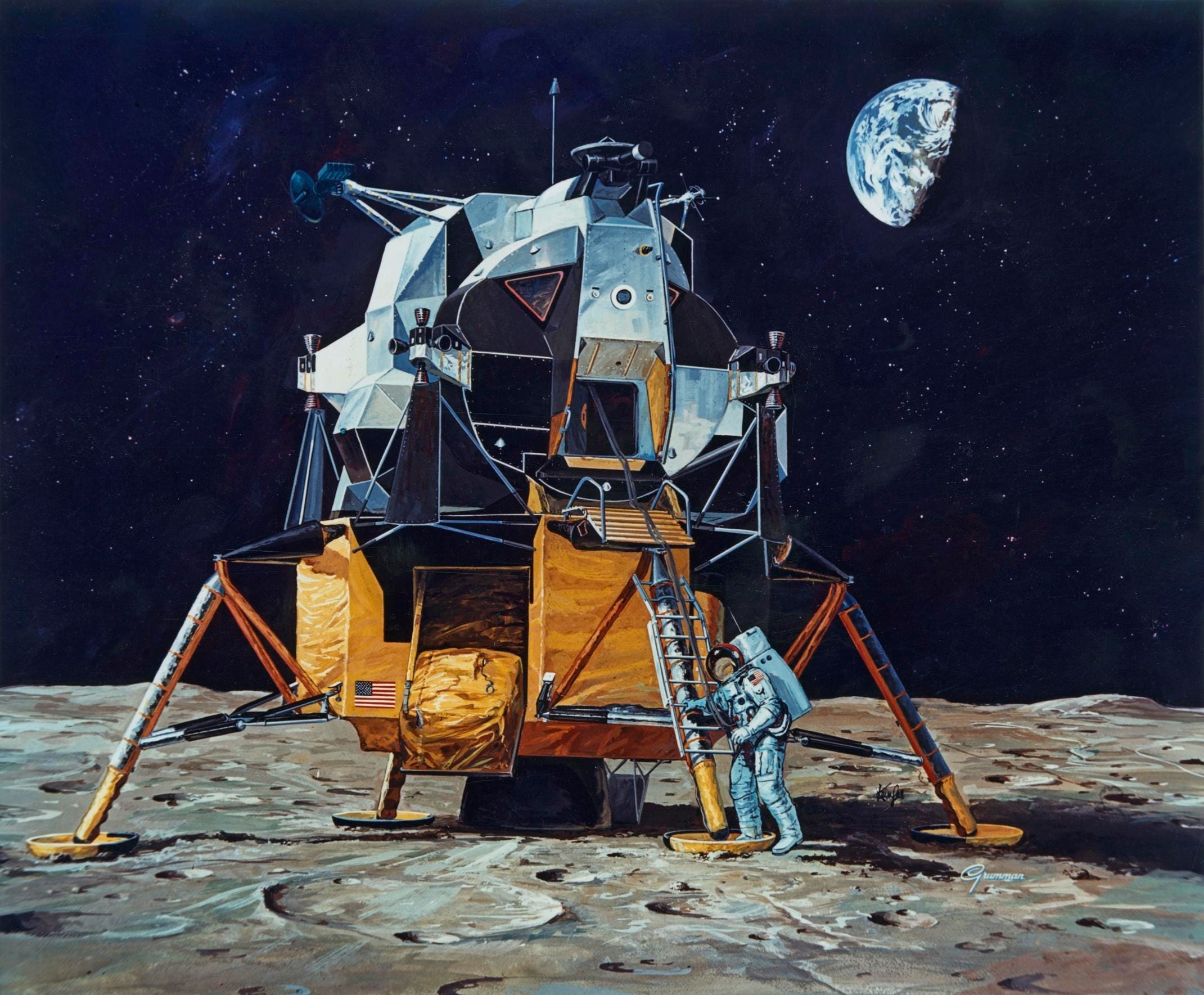
Forbes contributors publish independent expert analyses and insights. Kevin Holden Platt writes on space defense, SpaceX, ISS, Space War I Follow Author Jul 19, 2026, 12:48am EDT --:-- / --:-- This voice experience is generated by AI. Learn more . This voice experience is generated by AI. Learn more . Unlike the compact Apollo landers, which touched down on the pacific plains of the Moon's equator a generation ago, the colossal new American landers have to navigate the treacherous terrain of the orb's South Pole, and face a much higher risk of toppling over, say NASA inspectors. Shown here is an artist's impression of the first time humans walked across the Moon. (Photo by Space Frontiers/Getty Images) Getty Images NASA’s working masterplan for the upcoming lunar landings has a massive fundamental flaw that could prove fatal to the first American astronauts set to touch down on the Moon in 2028, say experts at the NASA Office of Inspector General, an independent watchdog empowered by Congress to oversee the space agency.
During the race to explore the South Pole of the Moon, these inspectors say, “While NASA is taking steps to prevent catastrophic events from occurring during the Artemis [Moon] missions, at some point in the future, astronauts will likely encounter a life-threatening emergency in space.”
But under NASA’s landing blueprints now in place, they warn, “Ultimately, should the astronauts encounter a life-threatening emergency in space or on the lunar surface, NASA does not have the capability to rescue the stranded crew .”
NASA’s high-risk plan at present envisions astronauts spearheading the exploration of the Moon descending onto a perilous, cratered region, strewn with massive boulders, with no landing pad to touch down on.
If their lander capsized, there would be no back-up emergency spacecraft prepositioned at the site to lift off on, or even an oxygen-filled habitat or rover to shelter in.
So far, NASA has not even required either spacecraft outfit commissioned to ferry its astronauts from lunar orbit down to the southern tip of the satellite, Blue Origin and SpaceX, to produce a second, back-up lander that could be instantly launched from Earth and sped to a lunar crash site to save the lives of its aeronauts.
To prevent martyring the first Americans sent to scout out the Moon in the new millennium, NASA could completely redesign its touchdown architecture to build rescue operations into the entire scheme, partly by spending billions of dollars to station at least one standby lander on the lunar surface, says a world-leading space scholar.
“A prepositioned backup lander could provide one of the strongest forms of lunar rescue capability because it could potentially serve as both an emergency shelter and an independent ascent vehicle,” says Brian Hurley, the Canada-based founder of the influential think tank New Space Economy.
The space agency could also delay the first lunar landing, at the risk of losing Moon Race II to Chinese taikonauts, until SpaceX and Blue Origin were each independently capable of speeding a spacecraft-ambulance to the scene of a Moon crash landing, Hurley told me in an interview.
NASA’s operating plan now in place is to commission the first lander developed by either outfit to lead the lunar landing expedition, regardless of the other rocket maker’s ability…