
See more of our coverage in your search results.
Add The New York Post on Google It took 45 minutes of resuscitation to get Mark Allen’s heart going and save his life.
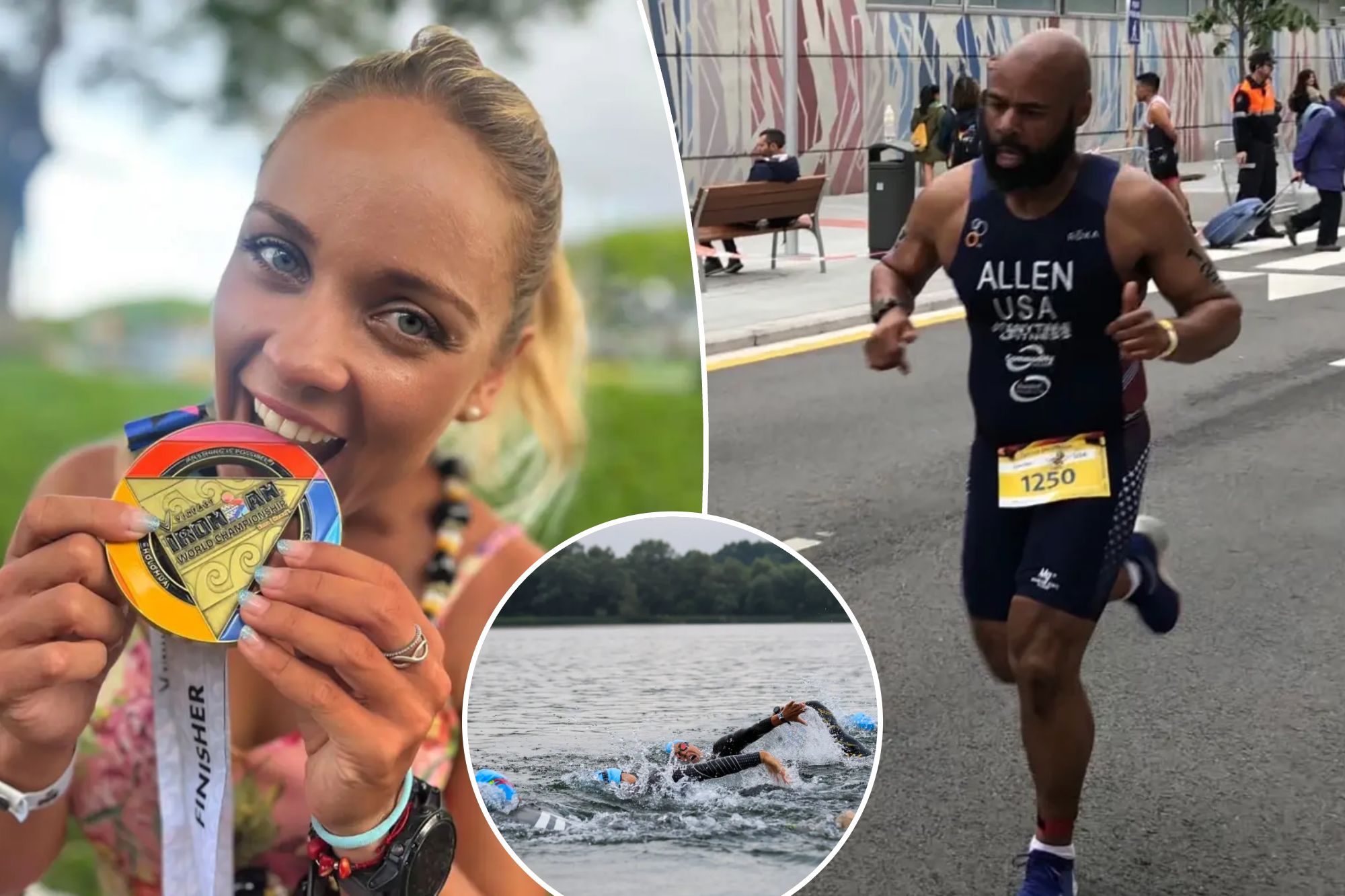
The then-50-year-old was swimming in the open-water portion of a half-Ironman competition in Georgia, when he went into cardiac arrest.
“I have no memory of what happened,” the Newark, Delaware, financial supervisor told The Post of the 2014 incident. “I had to hear about it from other people.”
And yet, Allen said, he regrets nothing.
“I don’t look back at it like I shouldn’t have done it,” he said. “I would do it all over again.”
It’s that kind of extreme mindset that powers competitors in what is widely regarded as the world’s most challenging race, 140.6-mile-long combination of swimming (2.4 miles), biking (112 miles) and running (26.2 miles) that can lasting 10 to 17 hours.
The Ironman triathlon is also perhaps the world’s most deadly race. Since 2001, at least 85 athletes — an average of more than three a year — have perished while taking part. At one single race in Wisconsin race in 2019, two men died during the swimming portion.
Already this year, there have been two fatalities. On July 12, during an Ironman in Spain, a British man had a fatal heart attack during the swimming leg of the race. On April 18, Brazilian influencer Mara Flávia Souza Araújo, 38, lost her life during the same segment in The Woodlands, Texas.
But that doesn’t stop the weekend warriors addicted to the thrill of the race.
“If you want to do a sport where you’re staying in your limits, you shouldn’t be doing Ironman,” said competitor Jamie Metzl, an author in New York City. “That’s the essence of what Ironman is. The reason why people compete in Ironman is so they can show to themselves that they’re capable of superhuman feats.”
He possessed the mentality and physical drive required to be an Ironman participant. “They are often type-A personalities,” Melissa Mantak, who founded The Empowered Athlete in Colorado and trains people for Ironman races, told The Post. “They’re people who can take on true challenges and have a stick-with-it attitude. They’re not going to give up.”
So much so that, when a June 28 Ironman in France was canceled due to extreme heat, some competitors refused to take no for an answer. One, a 42-year-old man, was killed on the road when he bike crashed with a motorcycle on a portion of the road that would have been restricted to traffic during an actual race.
“We train all year for this. Between the entry fee, transporting our bikes and the hotel, we spent a lot of money,” another rogue competitor on the unofficial course told Triathlon magazine . “We’re here anyway, so we might as well make the most of it.”
The highest number of Ironman deaths, though, happen during the swimming portion, according to a study.
“Two-thirds of the [fatal] events happen during the swim,” said Dr. Kevin Harris, a cardiologist with Minneapolis Institute Heart Foundation who conducted the study on triathlete deaths during ultramarathons, including the Ironman.
He told The Post that it’s likely due to “water temperature, [which is] going to be a shock, the adverse environment, big waves. Marine life has even been speculated.”
Traditionally, crowds also increased the risks.
A complaint filed on behalf of Veronique Tremblay, whose husband died in a 2025 Texas race, alleges that “the sheer number of racers cre…