
Lea is an esports journalist with too many interests and too little time. Covering esports stories for more than 3 years, she likes to spend her days (and nights) watching and analysing competitive VALORANT. Lea is also deeply invested in DEI issues and promoting mental health awareness within her industry.
Olivia Richman is a seasoned esports journalist who has worked with Inven Global, Esports Illustrated, Esports.gg, and more. As an editor and writer at Esports Insider, she loves telling unique esports stories, especially within the FGC. When not working and gaming, Olivia loves collecting Kirby plush, eating sushi, and driving her cars at the track.
Image Credit: Team Vitality France-based esports organization Team Vitality fields one of the most successful rosters in the history of competitive gaming. And it’s not what you might expect.
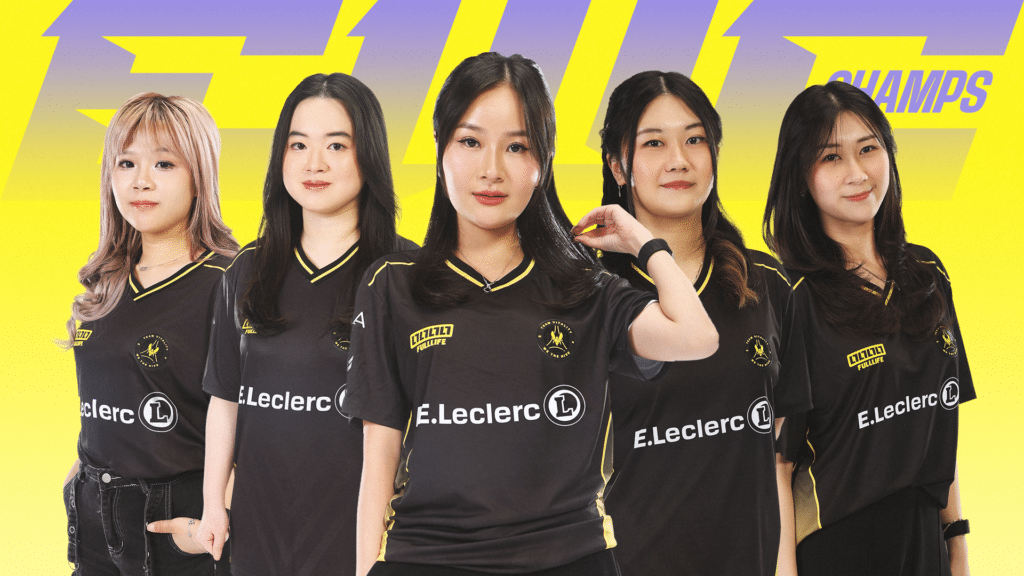
Team Vitality’s women’s Mobile Legends: Bang Bang (MLBB) team just won its fourth championship title at the Esports World Cup (EWC) 2026. According to esports data platform Esports Charts , 565,483 peak viewers witnessed Team Vitality’s historic achievement, making this the most-watched edition of the MLBB Women’s International (formerly Invitational) to date.
As an incredibly accomplished women’s mobile esports roster represented by a Western organization, Team Vitality MLBB takes a unique position within the global esports landscape. At the EWC in Paris, the team showcased MLBB’s competitive excellence to a Western esports audience largely unaware of or skeptical of mobile esports, while simultaneously challenging gender stereotypes in a male-dominated industry.
Esports Insider spoke to the Indonesian star roster about the dedication required in their discipline and their role in spearheading women’s esports.
What are the most popular esports titles in the West? Counter-Strike? League of Legends? VALORANT? Certainly not mobile titles. And this is despite the likes of MLBB, Free Fire, and PUBG Mobile having already established massive fandoms in the East, particularly across Southeast Asia.
For instance, the 2024 League of Legends World Championship is the most-watched esports tournament to date, with a peak viewership of 6.9 million. Its 2025 and 2023 editions occupy the second and third ranks, respectively. In fourth place, however, sits MLBB’s M7 World Championship with 5.7 million peak viewers. This is followed by yet another mobile esports event, the Free Fire World Series 2021, which peaked at 5.4 million viewers.
So, what is holding back mobile esports in the West? I found an intriguing online discussion about this issue, in which the central argument was that “Western media dominates the world, and it is heavily biased against mobile games.” Outside of esports-specific media outlets, major mobile esports events appear to be discussed less frequently and less thoroughly than “traditional” esports titles.
This means that gaming enthusiasts in Western regions are less likely to get invested in a mobile game and its competitive scene.
Image Credit: Bigetron / Team Vitality Others argued that it is not a matter of bias but of “simple supply and demand.” Because mobile games lack global reach beyond Southeast Asia, Western sponsors show little interest in mobile esports events. This creates a cycle of reduced global investment, leading to less global reach and even less global investment.
In addition, “mobile stigma” remains alive and well across Western esports fandoms. Mobile g…