
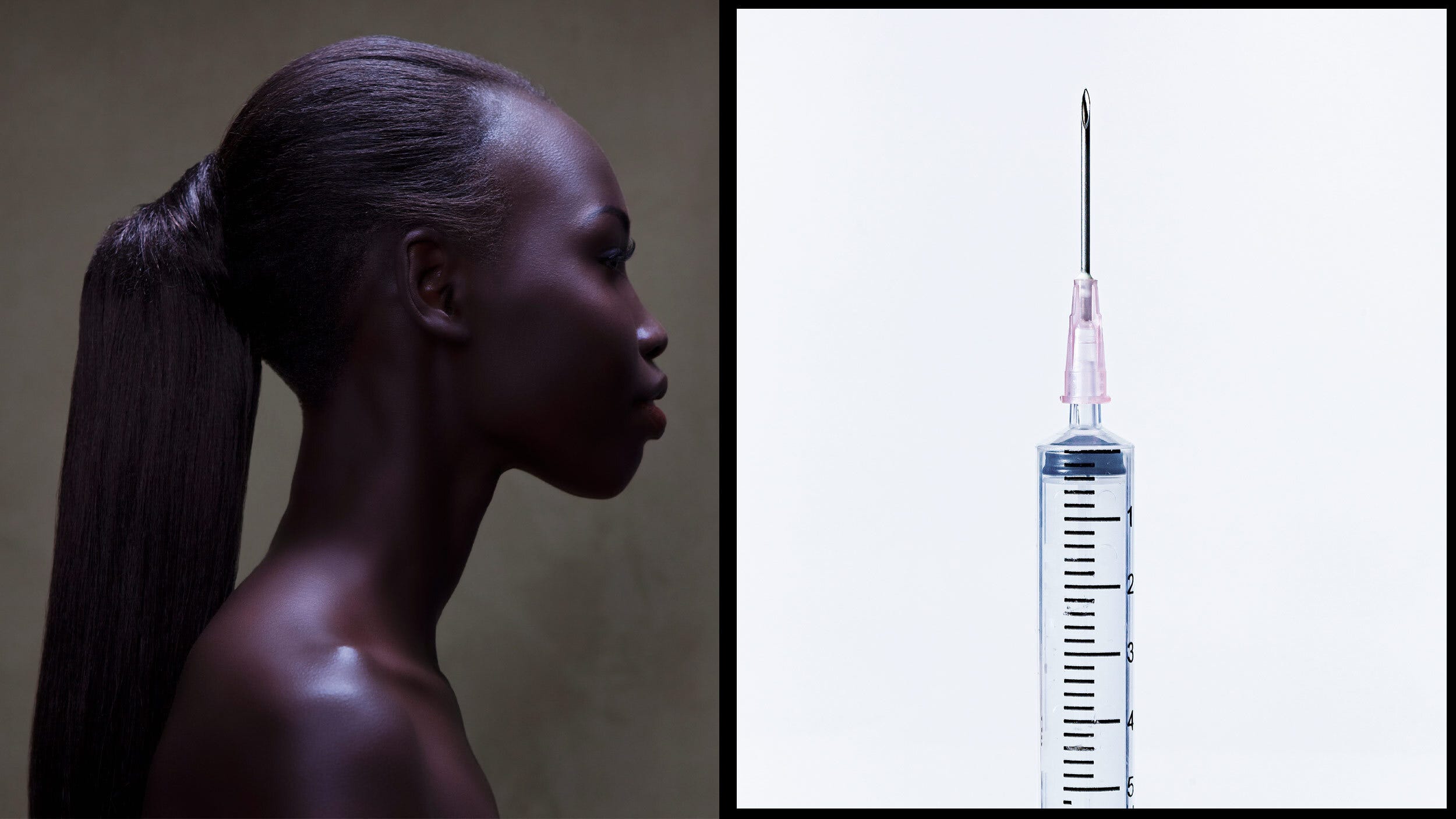
Collage by Sarah Olivieri Beauty Skincare Why You Might Want to Think Twice About Botox in Your Jaw Why You Might Want to Think Twice About Botox in Your Jaw Doctors are sounding the alarm on the off-label use of Botox in the masseter muscle
At a recent teeth-cleaning appointment, I mentioned experiencing pain in my jaw—an annoying cracking or popping sensation—from clenching and teeth grinding. “Do you want us to inject Botox into your masseter muscle?” the dentist asked. My brows furrowed, as this is a question I expect at the dermatologist’s office, not the dentist’s. However, injecting a neurotoxin into the masseter muscle (a large muscle in the jaw connected to the temporomandibular joint, also known as TMJ) as a pain remedy for jaw clenching or teeth grinding is a popular remedy among doctors. It’s also been used for aesthetic reasons, as injecting the muscle can slim the face.
While placing Botox or another neurotoxin into my masseter muscle seems like an easy fix, I am not jumping at the chance to be poked in that area—especially after the discourse I’ve seen on social media lately. New York–based dermatologist Shereene Idriss posted a video last year warning about injecting Botox in the jaw area, emphasizing how it can lead to early jowls. She suggested trying other methods before resorting to injections—especially if you care about the appearance of the jaw and skin around it down the line. Even people on Reddit have noticed their faces becoming “jowly” months, even years, after getting the masseter injected.
“Masseter Botox can be a game-changer for many people, but from an aesthetics standpoint, not everyone is the right candidate,” Idriss tells me. “While it’s fantastic for addressing issues like jaw clenching, teeth grinding, and creating a more sculpted jawline, it’s important to recognize that the shape and structure of a person’s face will influence the results.”
The masseter muscle is the anchor of the jaw; it is responsible for chewing and stabilizing the skull and, subsequently, the strength and shape of the jawline. “Botox relaxes the muscles by blocking the receptors that are telling it to tighten and contract, thereby releasing tension and pain,” says David Shafer , a plastic surgeon and founder of the Shafer Clinic in New York. “It helps reduce grinding at night, so you wake up with a more relaxed jaw area.”
While many doctors have become accustomed to injecting Botox in the jaw off-label, it’s not FDA-approved, meaning there’s no safe masseter injection protocol and more room for error.
“It is off-label use in the US, which means the treatment is currently not approved for use in that area," Shafer explains. "For the manufacturer, it means they're not compliant to market and promote that product for use. However, as licensed and trained doctors who know how the drug works, we oftentimes can prescribe or use the product in other ways, like for the temporomandibular joint, teeth grinding, or migraines."
Aside from the fact that the use of Botox in the masseter muscle isn't FDA-approved (at least yet), Idriss and other derms echo that masseter Botox can backfire years later when it comes to facial aesthetics, especially as your skin laxity decreases. “When you weaken or shrink this muscle, it can cause a reduction in support for the lower face, especially if you already have less natural bone or muscle structure,” says Idriss. “Over time, as skin loses its natural elasticity with age, this lack of muscular s…