
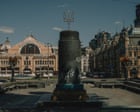
The plinth in central Kyiv where a statue of Vladimir Lenin once stood. Crowds toppled the statue during the 2013-14 Maidan revolution. Photograph: Alessio Mamo/The Guardian View image in fullscreen The plinth in central Kyiv where a statue of Vladimir Lenin once stood. Crowds toppled the statue during the 2013-14 Maidan revolution. Photograph: Alessio Mamo/The Guardian Ukraine ‘Lenin was an enemy of humanity’: Why Kyiv wants to put Cossack chief statue in place of Soviet leader Removal of Soviet-era statues sped up when Russia seized Crimea in 2014, and since Putin’s 2022 invasion has moved at pace as Ukrainians question their identity
Prefer the Guardian on Google S ince 2013 the plinth at the bottom of Taras Shevchenko Boulevard in Kyiv has been eerily empty. The scruffy monument is daubed in white paint and graffiti. Someone has stuck a Ukrainian trident where Lenin once stood, gazing down during the years of Soviet communism. A crowd toppled the sculpture during Ukraine’s Maidan revolution , which ousted the pro-Russian government, and smashed it with sledgehammers.
In June, Volodymyr Zelenskyy proposed putting a new figure on the plinth: Ivan Mazepa, a Cossack military and political leader, who broke with Moscow and fought for Ukraine’s independence. “I am certain that where Lenin fell, Mazepa will stand firm,” Zelenskyy said . He spoke next to a bust of Mazepa in the Pechersk Lavra, an ancient Kyiv monastery hit by Russian missiles.
View image in fullscreen A bust of Ivan Mazepa, who is being reclaimed as a hero after being portrayed by Russia as a traitor, in Kyiv’s Pechesk Lavra monastery. Photograph: Alessio Mamo/The Guardian The proposed swap of Lenin for Mazepa has triggered a lively debate about monuments and what they say about changing national identity. After winning independence in 1991, Ukraine removed large numbers of Soviet-era statues and renamed streets as part of “decommunisation”. The process sped up in 2014 when Russia seized Crimea and fighting began in the Donbas, and moved even faster after Vladimir Putin’s 2022 full-scale invasion that aimed to scrub Ukraine from Europe’s map.
Nataliia Kryvda, a professor of the history of culture at Taras Shevchenko National University in Kyiv, said Ukraine was going through an unfinished period of decolonisation. “The USSR absorbed national cultures. It tried to make a single nation of Soviet citizens. Russia today looks at Ukraine and says we are one people. It isn’t true. We have our own mindset, historical destiny, beliefs and dreams. Our identity is a dynamic process,” she said.
Standing next to the ex-Lenin plinth, Kryvda said she was in favour of a Mazepa monument. “Why not? He’s our leader. Each culture needs to mark its space with memorials. They objectify memory,” she said. She described Mazepa as a “contradictory personality” and not an “ideal hero”.
“He really was a friend and political partner of Russia, right up until the moment he dramatically changed his life and history,” she added.
As hetman, or head, of Cossack Ukraine, Mazepa sought to balance the demands of neighbouring Moscow and Warsaw. In 1708, the Russian emperor Peter the Great refused to protect Ukrainian territory from invading Swedes. Mazepa abandoned the tsar and formed an alliance with the Swedish King Charles XII, an act that ended in defeat and led the Bolsheviks to call modern Ukrainian patriots “Mazepists”.
“Mazepa was the architect of European Ukraine,” Kryvda said.
In his speech…