
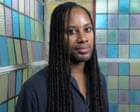
Jason Arday is the youngest black professor in Cambridge University’s history. Photograph: Christian Sinibaldi/The Guardian View image in fullscreen Jason Arday is the youngest black professor in Cambridge University’s history. Photograph: Christian Sinibaldi/The Guardian University of Cambridge Playbooks, plagiarism and a pig’s head: new claims surrounding a star Cambridge professor Jason Arday was regarded as an academic superstar, but then questions about his work prompted scrutiny of his backstory and counterclaims of racism
When the superstar academic Jason Arday took to the stage at the British Sociological Association’s 75th anniversary conference earlier this year, he delivered a talk called Wanted Dead or Alive: the Playbook.
The youngest black professor in Cambridge University’s history told an audience of his peers that the playbook in question had helped bring down some of the biggest names in US academia. Conservative “activists” were trawling through the work of black academics, looking for anything to use against them: inconsistencies, citation errors, passages in their work that were similar to existing papers.
Once an error was identified, rightwing media outlets and conservative politicians joined the pile-on – heaping pressure on universities to cut ties.
Claudine Gay, the first black woman to become president of Harvard, was only in the post for seven months before she was forced out over plagiarism allegations. Others said they felt like “ sitting ducks ” as their work was pulled apart. Some academics have killed themselves after being hounded out of their positions.
View image in fullscreen Claudine Gay speaking at her inauguration as Harvard University’s 30th president in 2023. Photograph: Boston Globe/Getty Images The playbook was not restricted to the US, Arday explained. The same tactics were being used to bring down some of the UK’s most high-profile black academics.
“The instruments that are designed to protect academic integrity, designed to protect our wellbeing and our intellectual property, are weaponised,” he told the audience in April.
He called for his peers to defend him. “There isn’t any room to sit there and watch your fellows suffer for no reason. It’s abhorrent, it’s a disgrace and, quite frankly, evil,” he added. “That’s the cancer that we need to eradicate from academia.”
Some of the audience thought it was strange. Keynotes are usually places where academics talk about their work and discuss breakthroughs, yet here was Arday talking about racism and harassment. Some felt he must have been saying this for a reason.
Then last week a row erupted concerning Arday’s academic work. The Telegraph reported that analysis had found more than 100 passages in his PhD were similar to another thesis by Paula Zwozdiak-Myers, a student at Brunel University in London, published six years earlier.
The report followed a Substack post by Nathan Cofnas, an academic who was previously embroiled in a free speech row at Cambridge after he suggested in a blogpost that, in a meritocracy, there would be “close to zero” black professors at Harvard. The British politician and activist Simon Woolley called the post “abhorrent racism, masquerading as pseudo-intellect”.
Cofnas, a self-defined “race realist”, was sacked by Cambridge’s Emmanuel College in 2024 and underwent a disciplinary investigation into the blogpost about black academics. The investigation concluded that Cofnas was not guilty of “discrimination o…