
Livestream Menu Make It select USA INTL Livestream Search quotes, news & videos Livestream Watchlist SIGN IN Create free account Markets Business Investing Tech Politics & Policy Video Watchlist Investing Club PRO Livestream Menu
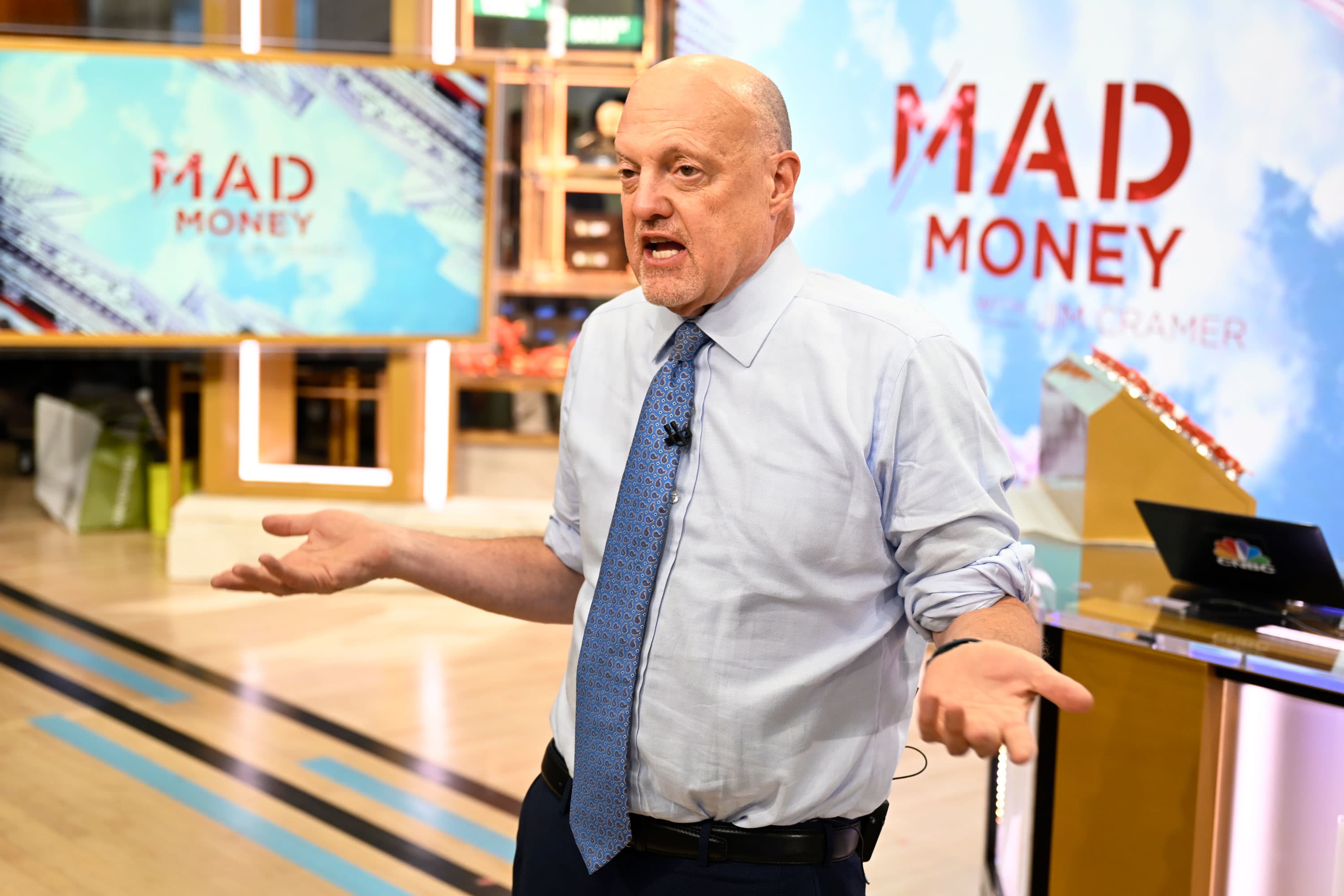
CNBC's Jim Cramer on Monday said Wall Street's "basket trades" during the Iran war are distorting stock prices, urging investors to use the dislocations to their advantage.
"The best thing? They create real opportunities, as the stocks divorce themselves from the fundamentals until the companies report," the " Mad Money " host said. "There are big gains to be had when the worth of the baskets blows up in the face of real earnings."
Cramer said traders have increasingly grouped stocks into baskets that rise or fall together based on broad themes rather than company-specific fundamentals. While those trades often dominate day-to-day price action, particularly as the Middle East conflict stretches on, he argued they frequently have little to do with a company's long-term prospects.
He pointed to Boeing as one example. The planemaker's shares have increasingly traded with geopolitical headlines, rallying on signs of diplomacy and selling off when the conflict escalates. Despite this linkage, Cramer said the daily headlines do not change the company's long-term outlook.
"Boeing, the company, not Boeing the trading plaything, gets valued on cash flow and production," he said, noting the company's backlog of roughly 6,200 aircraft should matter far more than short-term developments in the Middle East. Cramer's Charitable Trust , the portfolio run by CNBC's Investing Club, owns shares of Boeing.
Retailers have become another basket trade, according to Cramer. When geopolitical tensions and higher oil prices raised concerns about inflation, Cramer noted investors rotated into retailers such as Costco and Walmart — two perceived winners when shoppers are feeling squeezed at the gas pump — and out of more discretionary names such as Ralph Lauren , Target and Williams-Sonoma . Cramer's Charitable Trust owns shares of Costco.
"Costco and Walmart are both excellent evergreen retailers," he said. "You should own them regardless of the state of the war."
Cramer said technology became one of Wall Street's biggest basket trades. For the first half of the year, investors broadly favored artificial intelligence infrastructure stocks, while selling enterprise software, regardless of how their businesses were faring. He said the market assumed hardware companies would be the biggest beneficiaries of the AI boom and software providers would struggle as AI disrupted their seat-based business models. As that trade began to reverse, he said companies with stronger fundamentals, including ServiceNow and Salesforce , started to break away from the software pack. Cramer's Charitable Trust owns shares of Salesforce.
He acknowledged basket trading can overwhelm fundamentals in the short term, but said earnings season eventually forces investors to refocus on individual companies.
"It's good to see that the fundamentals still matter, even if it only happens during earnings season, four times a year," he said.
Click here to read Jim Cramer's Guide to Investing at no cost to help you build long-term wealth and invest smarter
Sign up now for the CNBC Investing Club to follow Jim Cramer's every move in the market.
Questions for Cramer? Call Cramer: 1-800-743-CNBC…