
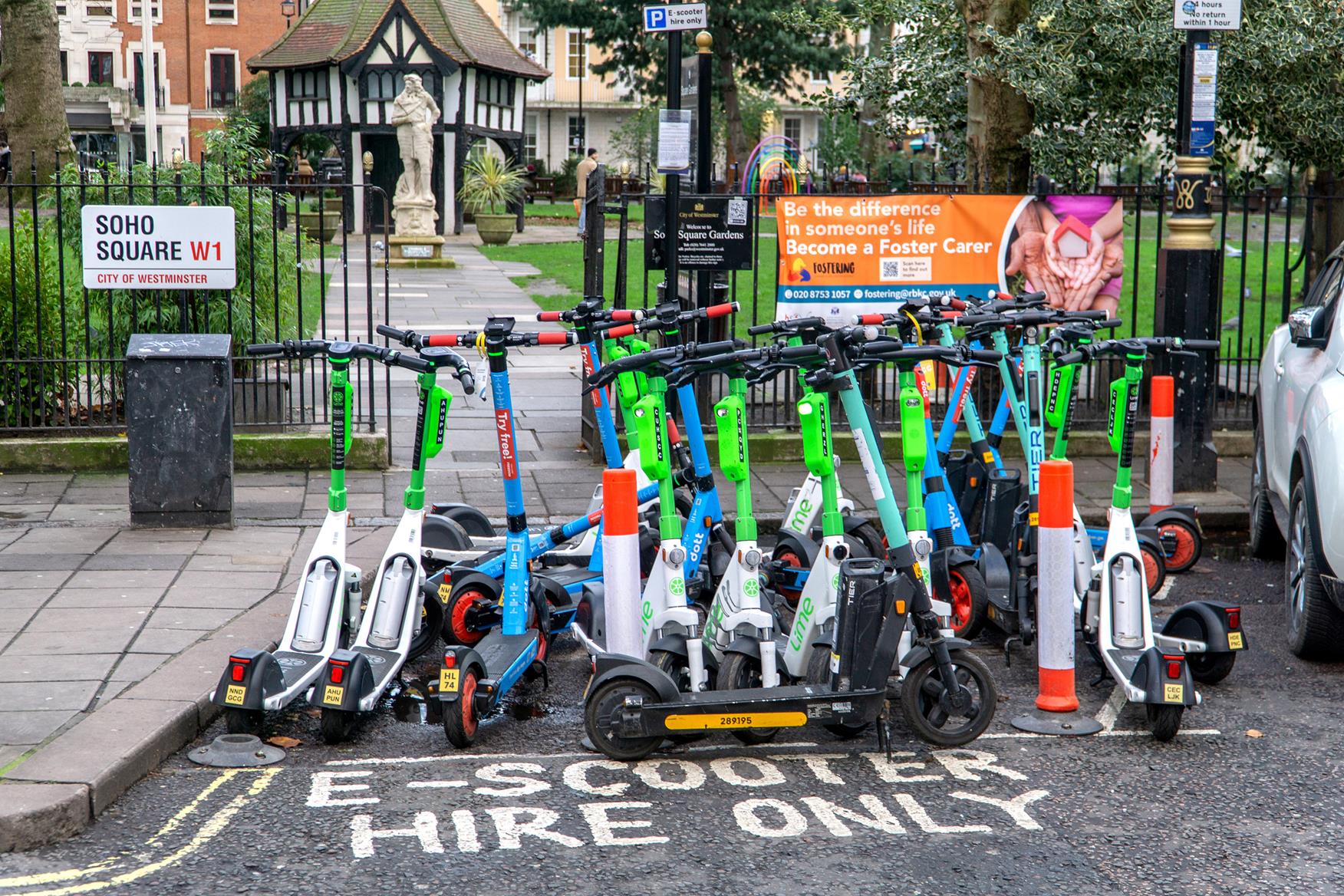
E-scooter riders are far more likely to suffer serious head and internal injuries than motorcyclists, according to a major new study – despite riding a machine that needs no test, no training and, for almost all of them, no helmet.
Researchers behind the study, published in Scientific Reports , dug through NHS trauma records for England and Wales alongside rental operator data covering more than 33 million rides.
Compared with motorcyclists, e-scooter riders were more than three times as likely to suffer a traumatic brain injury, more than three times as likely to suffer vascular trauma, and around 1.5 times as likely to injure an internal organ. The only category where they came off better was broken bones, where they had a slightly lower risk.
Just 5.9% of injured e-scooter riders were recorded as wearing a helmet, against 75.7% of motorcyclists. That motorcycle figure is 75.7% of injuries, not overall – and there will be some leeway created by times the data is missing. Among rental users it was worse still where fewer than one in a hundred donned a lid.
According to the researchers, a big part of the problem is that the scooter riding position – bolt upright with your weight high and forward – leads to being pitched head-first over the bars the moment the small, suspension-free wheels hit a kerb or pothole.
E-scooters also hurt children more often. They made up only about 4% of trauma cases overall, yet 16.2% of e-scooter injuries were sustained by under-18s, compared with 6.2% for motorcyclists. Younger riders are especially exposed to those over-the-bars mechanics, with the handlebars lining up with a child’s stomach.
The rider data only covers legal rental machines – not the estimated million privately owned e-scooters being ridden illegally on UK roads and pavements. Many are modified, and a 2023 study found these lighter machines brake far worse than the rental fleet. The authors admit their figures probably understate how bad the real picture is.
That gap is something the shared-scooter industry itself acknowledges. Richard Dilks, chief executive of CoMoUK, said: “Shared e-scooter schemes remain the only legal way to use an e-scooter on the public highway. As this study shows, the data on safety relating to e-scooters at large in the UK is partial at best.
“We continue to make the case that the UK Government needs to follow its commitment to legislating in this area by bringing forward actual legislation as soon as possible. The UK is the only developed country without a legal standard for e-scooters generally.”
The researchers want mandatory helmets, tighter speed limits and enforcement aimed at younger riders. The Government is still weighing up whether to legalise private e-scooters, with rental trials running until May 2028.
As MCN reported earlier this year, motorcyclist deaths rose 14% to 386 , prompting fresh calls for licensing and training reform. Motorcyclists jump through hoops before they’re let loose on the road – this study is a reminder that not every powered two-wheeler is held to the same standard.
Ben Clarke began riding (legally) at 21-years-old when he passed his direct access one month before shipping his Yamaha XT660 R to Miami and embarking on a 13,500-mile tour of the USA and Central America. He's worked at MCN for the last six years, riding everything from super nakeds and superbikes to small-capacity electrics and scooters across several continents. In more recent years, he's work…