
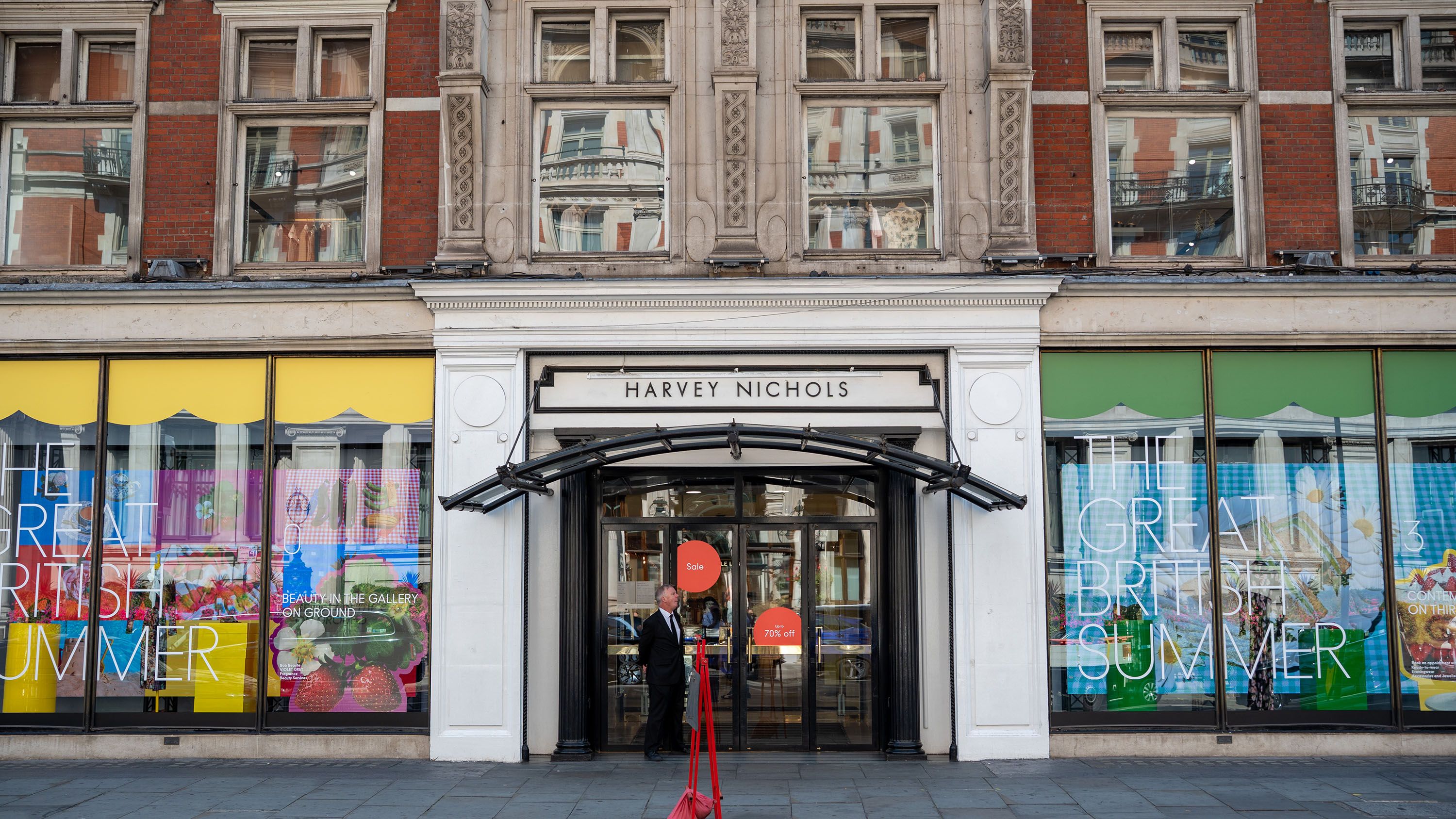
For the new Harvey Nichols owner, a successful strategy across logistics, brand mix, and positioning is essential. Photo: James Willoughby via Getty Images Save Story Save this story Save Story Save this story In the heady ’90s, Harvey Nichols was an icon of British luxury. Three decades later, the department store had become a shadow of its former self, reporting annual losses since 2019. Now, that could all change.
Earlier this summer, current owner Sir Dickson Poon put the luxury retailer up for sale. Potential investors, including Frasers Group, Next and retail investment firm Gordon Brothers, were told to submit bids between £50-60 million. But Frasers Group quickly emerged as the frontrunner when founder Mike Ashley spoke to the Financial Times about how desperately Harvey Nichols needed a buyer. On Wednesday, Sky News reported that Frasers were in advanced talks to finalise the deal. Frasers or not, the new Harvey Nichols owner will step in imminently, taking the business on from current owner Poon.
Whether the new owner can succeed in returning the endearingly named “Harvey Nicks” — once synonymous with UK sitcom Absolutely Fabulous and celebrity shoppers including Marc Jacobs, Princess Diana, and Kate Moss — to success is the question on every executive’s lips. Harvey Nichols’s latest posting on Companies House detailed a loss after tax of £177.6 million for the year ended March 29, 2025, following losses of £12.9 million and £4 million after tax in the years prior.
Absolutely Fabulous co-star Jennifer Saunders and supermodel Naomi Campbell at a promotional event in Harvey Nichols’s London store in 1994.
On paper, some fresh investment sounds exciting, but that won’t carry the turnaround. Per The Telegraph , Poon invested £138.5 million into Harvey Nichols over the last five years. Experts agree that a strategic reset is overdue. The broad verdict: Harvey Nichols lost its hold on a niche, failed to keep up with new consumer demands, and grew lax on financial and operational discipline. Insiders are more positive, willing to give its reset under CEO Julia Goddard time to flourish.
Of course, some of its problems are endemic to department stores. Where once, bringing a variety of fashion, beauty, and homewares all under one roof worked well, sales in this channel have declined since the pandemic, Marguerite Le Rolland, Euromonitor’s head of footwear and apparel, tells Vogue Business . She cites the reduced footfall across larger city centres exacerbated by hybrid working environments post Covid, a rise in e-commerce, and changing customer habits as pivotal in this shift.
Meanwhile, the shape of shopping has radically shifted in the sector , as key players have embraced customer profiling technology, AI-generated purchase predictions, and highly personalized customer service experiences in an attempt to keep up. Such developments are expensive, requiring investment in innovation and staffing that can eat into bottom lines.
Additionally, the broader luxury slowdown between 2024 and 2025 proved critical, with the luxury market shrinking for the first time (bar Covid) since the Great Recession. Together, the events of this decade crafted the perfect storm for Harvey Nichols, which, unlike some of its competitors, only began adapting recently.
Nonetheless, all is not lost. Following two years of slow demand, the global luxury market will return to growth in 2026, up between 3% and 5%, management consultancy Bain forecasted ear…