
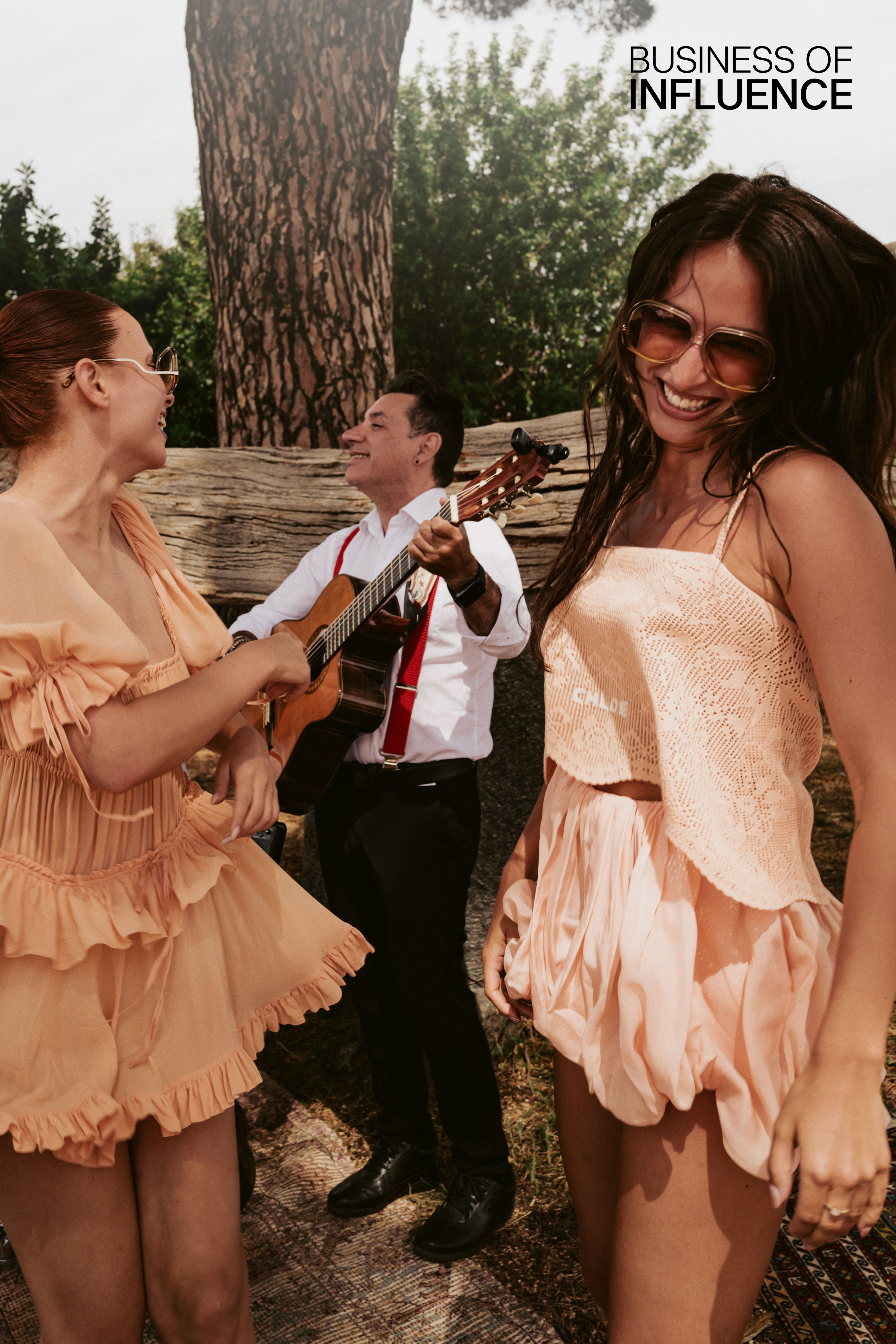
Net-a-Porter’s trip to Taormina with Chloé. Photo: Marie Maguech Save Story Save this story Save Story Save this story Gone are the days of the over-the-top influencer trip.
Well, kind of. The influencer trip is not dead. This year, brands have shuttled creators to all corners of the world for short stints of content generation, from Mango in Greece and J. Crew tucked away in the Adirondacks , to Tresemmé in Morocco or Paris and Rhode in none other than Rhode Island (the first stop on the brand’s summer tour ). Gucci hosted a blink-and-you’ll-miss-it three-person trip to Monaco, while Net-a-Porter teamed up with brands like Khaite and Chloé for European sojourns.
These trips were once structured primarily around big-name, big-reach talent, and often generated as much backlash as they did positive discourse – most recently seen last week, when ChatGPT parent OpenAI hosted its first-ever brand trip and immediately became a lightning rod for criticism for the internet, which shamed the attending creators for aligning with the tech company. For fashion brands in 2026, the trip logic has shifted. These days, more brands are hosting smaller, better curated trips with talent they believe will not just increase their reach, but their cultural clout, too. Scale is no longer the top priority; instead, influencer trips are now designed with a more specific, sticky audience in mind. (There are exceptions, of course, like Alo’s superyacht summer in France.)
Anastasia Karanikolaou (left), Alix Earle (middle), and Jake Shane (right) onboard the Alo yacht.
It’s a reflection of a shifting measure of ROI for influencer and creator trips, experts agree. “The ROI [return on investment] of a brand trip is measured in long-tail advocacy and content efficiency,” says Emily Brown, associate director of strategy at influencer agency Billion Dollar Boy. These days, brands want content that will outlast the trip, and drive brand engagement beyond the creator’s own content.
“Attention and awareness are the main goals,” says Max Stein, owner of Brigade Talent agency. “We still do work with a lot of brands that think sales, conversion, that sort of thing is important. But if someone thinks that an ROI being ‘X’ amount of sales is the most important thing, the trip isn’t necessarily the most effective way to achieve that.” Instead, it’s about building out a brand world, and inviting customers into that world with content that feels less product focused and more experiential. “Doing it that way is a bit of a trend where it’s less ‘brand’ everywhere you look,” Stein adds.
In 2026, brands are rethinking what a trip looks like. Traditionally, these trips have been scheduled down to the minute, with activities, meals and, of course, ample content opportunities filling the days, and little free time to be had. The content ops remain, but this year, the most successful trips include looser itineraries, leaving attendees to their own devices. In keeping with these more relaxed trip parameters, brands are also rethinking how they measure performance, rethinking trips as long-game plays, designed to stick in customers’ brains, rather than simply get in front of as many people as possible. When creators are given more free rein with a brand they have a relationship with, they’re more likely to organically over-deliver, Brown says.
“It feels like there’s this trend where it is a brand trip, but it isn’t so planned,” Stein says. His client, Courtney Grow, went on two trips…