
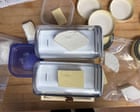
Photograph: Rachel Sherman/The Guardian View image in fullscreen Photograph: Rachel Sherman/The Guardian Guardian journalism is independent. We earn a commission if you buy something through an affiliate link. Learn more .
If you want to maintain the integrity of your camembert, specialty products work – but you may already have a solution at home
The Anyday glass food containers transformed how I store leftovers
Sign up for the Filter US newsletter, your weekly guide to buying fewer, better things
Prefer the Guardian on Google Jump to Why you should trust us How we tested ways to store cheese The results for best cheese storage What other storage methods were tested? F ine cheeses can easily cost more per pound than steak, so unwrapping a long-anticipated treat to discover a science experiment gone wrong can be horrifying. A perfectly ripe cheese can be a transcendent eating experience, but what is the best way to manage that aging window? Storing cheese improperly can negatively affect taste and texture, and can hasten the growth of bad mold. Proper storage can preserve the product for weeks and even go so far as to encourage the good, naturally occurring mold to grow back.
By keeping factors such as moisture retention, breathability and flavor impact in mind, you can store cheese to keep it tasting as good as possible, for as long as possible. So is cheese storage really necessary? In short, yes, depending on your habits. If you’re looking to give your Humboldt Fog double the shelf life, then forget what you know about cheese storage and take a look at some of the products below.
To gain some insight into how the world of cheese professionals store their cheese, we talked with Emilia D’Albero, ACS CCP, a member of Guilde Internationale des Fromagers and Meilleure Fromagère du Monde 2025. (Full disclosure: among her other titles, D’Albero is the sales and marketing manager at Formaticum, which is one of the brands in our roundup.) When asked about what makes a cheese storage method effective, she said: “The two key elements are breathability and humidity ... It allows the cheese to breathe because, remember, cheese is a living product. It needs oxygen … so [proper storage] allows the cheese to breathe but also maintains the right amount of humidity in the package.”
We decided to dive deeper into the mechanics of cheese and spoke with Michael Tunick, PhD, an adjunct professor of food science at Drexel University, and the author of The Science of Cheese. “Cheese is a living object,” says Tunick. If it’s just stored in plastic, he explains, “eventually microbes will die out so you are not getting more flavor development. If you are going to keep it for a while … then it ages better when there is some sort of ventilation.” As cheese ages, the microbes change over time. “I just saw an article about an English cheese [that] had over a thousand species in there,” Tunick says.
Not all microbes are a benefit, however. While there are many cheeses where molds are purposely introduced, for example to add flavor in blue cheese, Tunick says that if you see green or pink mold growing on the outside of your cheese, you should be wary. If it’s on a hard cheese, you can just cut off the mold and continue to eat it. With soft cheeses, the mold can grow deep inside – if you see green or pink mold growing on a wedge of camembert, for instance, play it safe and throw it away.
View image in fullscreen Photograph: Rachel Sherman/The Guardian Over t…