
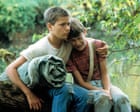
River Phoenix and Wil Wheaton in Stand By Me. Photograph: Allstar Picture Library Limited./Alamy View image in fullscreen River Phoenix and Wil Wheaton in Stand By Me. Photograph: Allstar Picture Library Limited./Alamy Drama films Stand By Me at 40: Rob Reiner’s seminal coming-of-age saga remains a bittersweet triumph The late director’s sensitive and detailed adaptation of Stephen King’s novella has an authenticity that so many imitators could never replicate
Prefer the Guardian on Google C oming-of-age metaphors don’t get any blunter than a group of preteen boys following a set of railroad tracks to a classmate’s dead body, a sobering testament to the fragility of life and a sign that their own futures are not guaranteed. The Stephen King novella that would become Rob Reiner’s Stand By Me is simply called The Body, and there’s no doubt that commercial considerations factored into naming the film after the song that blankets the soundtrack. Yet the enduring magic of Reiner’s film lies in the tension between this bleak journey and the nostalgia and warmth that keeps complicating our feelings about it. Between those two poles is a bittersweet tone that perfectly suits the material, the rare example of an adaptation that benefits from softened edges.
Read more Though Reiner kicked off his career on a legendary heater that opened with This is Spinal Tap and would go on to include The Princess Bride, When Harry Met Sally … and A Few Good Men, Stand By Me was just his third feature and an early showcase of his versatility. His deft comic touch is not only essential in maintaining tonal balance, but important in suggesting what these four wayward boys mean to each other. Between the loose talk about Annette Funicello’s expanding bust on The Mickey Mouse Club and a Wurlitzer soundtrack of novelty singles like Lollipop and Yakety Yak, it can be easy to forget the anger, pain and dread that’s always simmering close to the surface. They laugh to keep from crying and occasionally don’t succeed.
Though set a few years earlier than American Graffiti, Stand By Me feels like a natural companion to it, another radio-friendly nostalgia piece about a transitional moment for male friends in small-town America. Both films are death-haunted but the difference is that the characters in American Graffiti, who are reaching young adulthood at the cusp of the Vietnam war, don’t know what the future holds and writer-director George Lucas saves that bummer news for the epilogue. The boys in Reiner’s film know what lies at the end of a 20- to 30-mile hike down the tracks and their attraction to the novelty and notoriety of seeing a dead peer turns morbid. Their steps grow heavier by the hour.
The more direct tie-in to American Graffiti is Richard Dreyfuss as Gordie LaChance, who narrates his memories as a novelist and father who’s gotten the perspective he and his buddies lacked as 12-year-olds. Flashing back to Labor Day weekend in 1959, the film casts Wil Wheaton as young Gordie, whose intellect and storytelling wizardry already puts some distance between him and his three troublemaking friends, who are bound for trade school at best. There’s not much to do in the Oregon backwater of Castle Rock, so when Gordie’s pal Vern (Jerry O’Connell) overhears his older brother talking about where they found the body of missing boy, the group’s curiosity is piqued. The two other no-goodniks in the gang, Chris (River Phoenix) and Teddy (Corey Feldman), come from broken h…