
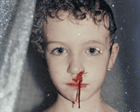
‘It made me realise that life is very short’ … Lawrence, left, and Philipp, whose lives are recorded in Chronograph. All photographs: courtesy the artist and Mack. View image in fullscreen ‘It made me realise that life is very short’ … Lawrence, left, and Philipp, whose lives are recorded in Chronograph. All photographs: courtesy the artist and Mack. Photography ‘I didn’t miss a thing’: How Nick Haymes photographed his sons’ entire lives from verrucas to homemade hamster coffin Bloody noses, ear cleanings, the first sproutings of armpit hair … the photographer reveals how he captured his two babies growing into boys and then men
Tim Jonze Mon 24 Aug 2026 06.00 CEST Share Prefer the Guardian on Google N ot many family photo albums open with images of the twin towers on fire. But for Nick Haymes, it made perfect sense. “When 9/11 happened,” he says, “I realised life was very short.” At the time, he was living in New York, trying to forge a career, while his friend, colleague and future wife Lina was dealing with the fallout of her previous marriage. “It made us realise we should probably get together and have a family. It was this huge historical event, but on a very micro level, it also shaped my relationship with my wife and children.”
Chronograph is a photography book that runs from those terrorist attacks to the present day, tracing the journey of Haymes’s two sons, Philipp and Lawrence, as they grow from drooling babies into young men. We are given a ringside seat as arms get broken, beloved pets die and hairs start sprouting from armpits. The mundane side of life – verrucas, messy kitchens, Lina cleaning out an ear with a cotton bud – is captured in the same way as birthday parties and rites of passage.
Lawrence would joke: ‘You photograph me when I’m crying rather than dealing with it’ “Because we lived in this tiny, 800 sq ft apartment in Manhattan, you don’t miss a thing, all the ups and downs, all the mood swings,” says Haymes. “There was no door slamming, because there was nowhere to go!”
View image in fullscreen Indeed, we are not spared from seeing the children at their least flattering: “We used to have a running joke where Lawrence would say: ‘You’re the only parent that would photograph me when I’m crying rather than deal with the issue straight away,’” admits Haymes, “but I like to think I was attentive. It was a funny balance because the camera was always around, but it seemed to work.”
There are also multiple shots of the boys naked – not just running around the house as young children but as they transition into adulthood too. I suspect most teenagers would not be cool with this, but Haymes insists he had their approval. “They don’t have an issue,” he says. “I’ve been lucky enough to have some very nice photographers in my household at various times, so they’re aware of the creative process.” He shrugs: “There are bigger themes in the book than child nudity. That was just a part of our daily life.”
Besides, when Philipp and Lawrence reach their teens – all bleached hair, tattoos and stubble – they work out an ingenious method of rebellion. Instead of sulking or turning away from the camera, Haymes says his kids smiled and put their thumbs up, knowing that the last thing their dad wanted was a posed family portrait. “That was basically their way of telling me to clear out of their lives,” he says.
View image in fullscreen Born in Stratford-upon-Avon, Haymes hoped to study art but ended up dropping out. “I took wa…