
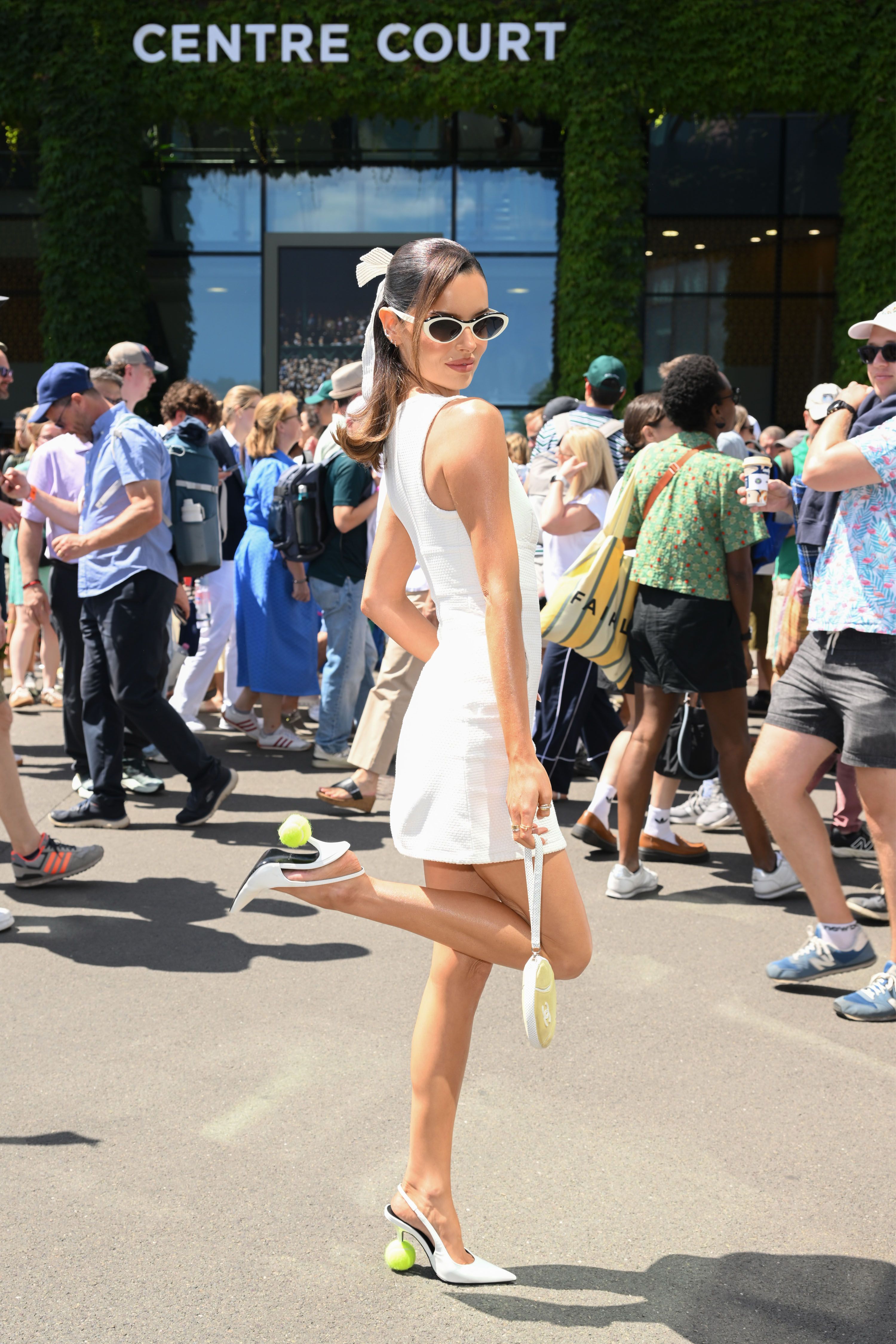
Influencer and TV presenter Maura Higgins attends day one of the 2026 Wimbledon Tennis Championships. Photo: Getty Images Save Story Save this story Save Story Save this story When the US Open begins in New York later this month, amid the bustling crowds, sponsor pop-ups and iconic Manhattan food outposts, there will be a new content machine operating in the background. Creators will film their outfits, review the food and give followers a look inside brand experiences and premium seats, broadcasting the spectacle of being at the Open to millions of people beyond the gates. Brands are spending tens — and in some cases hundreds — of thousands of dollars to make sure they have a place in that content.
During the US Open, influencer management company DBA consistently sees three to four times more brand interest and partnership opportunities for its tennis-adjacent talent than at other tennis events, according to vice president of talent Kirstin MacGowan. “Brands are increasingly investing in culturally relevant sporting moments,” she says, “and the US Open’s relevance extends well beyond tennis.”
A private suite for a single US Open session can cost roughly $50,000 to $150,000, says Alex Georgy, founder and CEO of BWB Agency, and that’s before accounting for agency fees, design, hospitality, content production or talent. Paying multiple creators or celebrities to attend and post can add another six figures, pushing a larger activation into the several-hundred-thousand-dollar range.
Those activations are becoming more elaborate, too. Three to five years ago, Georgy says, a brand might have simply invited a group of guests to a suite. Today, hospitality is increasingly paired with paid talent, highly designed spaces and professional content production intended to reach far beyond the people physically attending. “The suite used to be the experience,” she says. “Now it’s often just one piece of a much bigger campaign.”
Influencer Olandria Carthen during the 2025 US Open.
Underlying that investment is the cultural currency that comes with simply being there. For creators, attending a Grand Slam can signal something to their audiences beyond an interest in tennis; for brands, the appeal lies partly in associating themselves with that cachet. “Being at Wimbledon or the US Open now says something,” Georgy says. “It signals access, taste and that you’re moving in certain circles.”
But brands are no longer the only ones interested in using that access to reach the millions of people outside the gates. While they remain the primary route through which many influencers get into tennis’s biggest events, tournaments are increasingly cultivating their own relationships, from granting media credentials to commissioning content. As more money and attention flow into the space, the challenge is how to capitalize on the cultural cachet of the Grand Slams without diminishing what made that access desirable in the first place.
For brands, creator hospitality around tennis can range from a ticket or suite invitation to a fully funded trip incorporating flights, hotels, dinners and other experiences. Both official tournament sponsors and brands with no formal relationship to an event use the calendar as an opportunity to host talent, MacGowan says.
Creators don’t necessarily require large appearance fees to make those invitations appealing either. “A lot of them just really want to do it for the content, because it’s incredibly culturally relevant,” Ma…