
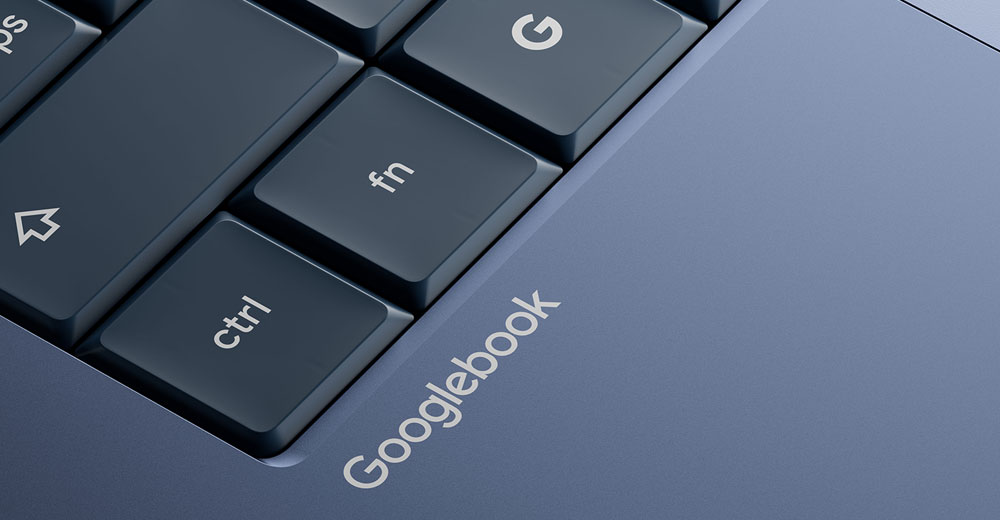
Google will hold an in-person media event in New York on Sept. 15 to provide a deeper look at Googlebook, including its software and hardware from PC partners.
With the first devices expected this fall, the event should begin answering the bigger question about Google's new premium laptop platform: Is Google building one of the first personal computers designed around an emerging agentic computing model?
The traditional PC makes users choose the applications, find the files, and work through the steps needed to accomplish something. An agentic PC could move more of that work to AI. Tell the computer what you want to accomplish, provide the relevant context, and let AI determine which information, applications, and actions are needed.
This creates a tradeoff for Google: the more Gemini can hide the complexity of individual applications, the less the application gap costs Google. Can Google make applications matter less before users discover that some of the applications they still need are missing?
Google plans to launch the first Googlebooks this fall from Acer, Asus, Dell, HP, and Lenovo. Google describes the category as premium but has not announced pricing. Retailer leaks suggest at least some models could cost more than $1,000.
Google's developer team describes Googlebook as the next generation of ChromeOS built on the Android stack, with existing Android apps able to run on the new platform. Intel, Qualcomm, and MediaTek are supplying processors.
Google has previously tried to bring Android applications to laptops. Android apps arrived on Chromebooks a decade ago, and Google has spent years encouraging developers to adapt them for keyboards, mice, resizable windows, and larger displays. The result never matched the Windows or Mac software ecosystems.
Googlebook must prove this attempt is different.
The company says Android is moving from an operating system toward an "intelligence system" in which AI can increasingly understand context, interpret intent, and take action. Android 17 is also pushing application development toward an adaptive model spanning phones, tablets, laptops, and other screens.
At Nvidia’s GTC Taipei conference, CEO Jensen Huang asked what becomes of the personal computer in a world of agents. He described agents running natively, connecting to models locally or in the cloud, understanding users, and performing work. He concluded: "The chips and the OS must evolve."
Nvidia and Microsoft are already pursuing that vision. RTX Spark is a Windows platform for personal agents, with systems from major PC manufacturers expected this fall — the same season as Googlebook.
Nvidia and Microsoft are building agent capabilities while preserving the enormous Windows application and compatibility ecosystem. Google has far less desktop legacy and is using an Android-based laptop platform to rethink more of the experience around Gemini.
Google's most interesting evidence may be in the interface rather than the processor.
Magic Pointer lets Gemini understand what a user is pointing to on the screen and offer actions based on that context. Create My Widget lets the user describe information they want and have Gemini assemble it into a customized view.
Googlebook features include Magic Pointer, Quick Access, Cast My Apps, and Create My Widget.
Most PCs remain application-centric. The user starts by deciding, "Which application do I open?"
Googlebook appears designed to become more intent-centric. The user increasin…