
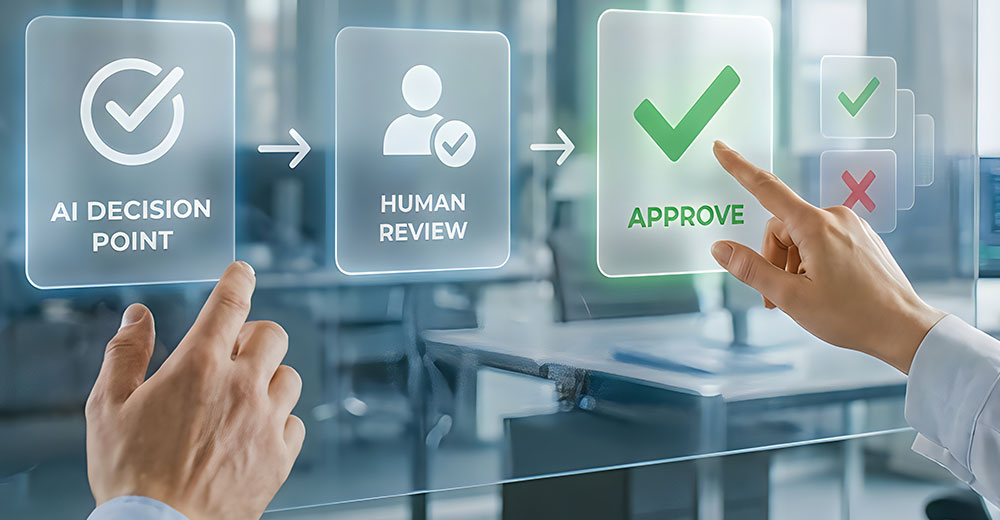
Bill Gates has issued a stark warning about the speed of artificial intelligence development and society's lack of preparation for the disruption it could bring. The Microsoft co-founder argues that AI could eventually exceed human cognition while transforming employment, security, education, and other fundamental parts of society far faster than previous technology transitions.
Let's examine Gates' concerns about the turbulent AI transition, where the greatest risks may lie, and what the technology industry and policymakers could do to keep humans in control. Then we'll close with my Product of the Week: a hardware-encrypted drive designed to protect sensitive data from unauthorized access.
Gates recently published an essay outlining what he expects to be a turbulent transition into the AI era. His central argument is that AI is advancing faster than governments, businesses, and communities are preparing for its economic and social consequences.
He identifies AI-enabled fraud, disinformation, deepfakes, surveillance, and cyberattacks among the most immediate risks. His concern is that AI can lower the expertise and resources needed to attack individuals, businesses, governments, and critical infrastructure while giving defenders less time to identify and address vulnerabilities.
Gates also raises concerns about AI's effects on human development and relationships, particularly among young people. He points to emerging research suggesting that heavy use of AI companions could reinforce social isolation and that greater reliance on AI may be associated with weaker critical-thinking skills. However, he acknowledges that the evidence remains limited and mixed.
I've seen a similar risk-versus-speed calculation play out in the hardware industry. Years ago, I argued with a technology executive about recalling notebooks with potentially dangerous batteries. The company resisted until a subsequent incident made the danger impossible to ignore.
AI raises a much larger version of that familiar technology-industry problem: how much risk companies and society are willing to accept when competitive pressure rewards getting new technology to market quickly.
Gates' concerns place him within a broader debate over how seriously to take the long-term risks of more powerful AI systems. Geoffrey Hinton , a pioneer of neural networks, has warned that advanced AI could eventually become an existential threat if humans cannot ensure that systems more intelligent than themselves continue to act in humanity's interests.
Others in the technology industry remain more confident that AI's risks can be managed as the technology develops and argue that slowing progress could sacrifice enormous economic and societal benefits. The difficulty is that competition among companies and countries creates powerful incentives to push AI development forward even when researchers disagree about the risks.
I've sat in boardrooms with executives on both sides of this kind of debate. Optimists can underestimate unintended consequences, while pessimists can underestimate our ability to adapt. Gates' position is more pragmatic. He sees enormous potential benefits from AI, but argues that realizing them requires taking its economic, social, and security risks seriously now.
The danger is assuming that technical progress will resolve these problems on its own. AI can scale beneficial capabilities rapidly, but it can do the same for fraud, cyberattacks, disinformation, and othe…