
Take the proper steps to fully experience Dolby Atmos sound.
Simpson33/Getty Images Dolby Atmos soundbars changed the home audio game for good, but enjoying one isn't as simple as plugging in and pressing play. Mimicking the immersive experience from your local theater and translating it to living rooms around the world sounds simple on paper, but you have to make sure you're using it properly.
Unlike your typical soundbar , which fires audio straight at your couch, Atmos-enabled options paved a new way and operate differently. To mirror overhead speakers, these setups often rely on upward-firing — and occasional side-firing — drivers that reflect sound off your ceiling and back down to your ears. Meanwhile, some compatible soundbars don't feature up-firing drivers, instead using digital signal processing to deliver a virtualized three-dimensional soundscape, but they undeniably pale in comparison.
Dolby's proprietary spatial audio tech depends heavily on acoustics and room reflections; simply shoving it on your media stand won't do the trick. So, to get the actual sound you paid top dollar for, you should learn the best setting and placement for your Dolby Atmos soundbar.
marekfromrzeszow/Shutterstock Before diving into speaker placement, make sure your go-to apps and devices are actually outputting a real Atmos signal to the bar.
If you're looking to binge-watch a new show or revisit your favorite movie, you'll need a premium subscription tier on supported platforms like Netflix or HBO Max, as content must be specifically encoded in Dolby's spatial format to create genuine height channels. On the other hand, physical media enthusiasts can rest assured knowing select Blu-ray players are also Atmos-compatible.
Whether it's your TV, a streaming device , or an Xbox One, your source of choice must be connected directly to the soundbar via eARC to experience Dolby Atmos to its full potential. After connecting your Dolby Atmos soundbar, go to your TV's advanced audio settings and set it to audio Bitstream out; that way, your soundbar handles all the decoding and delivers maximized audio.
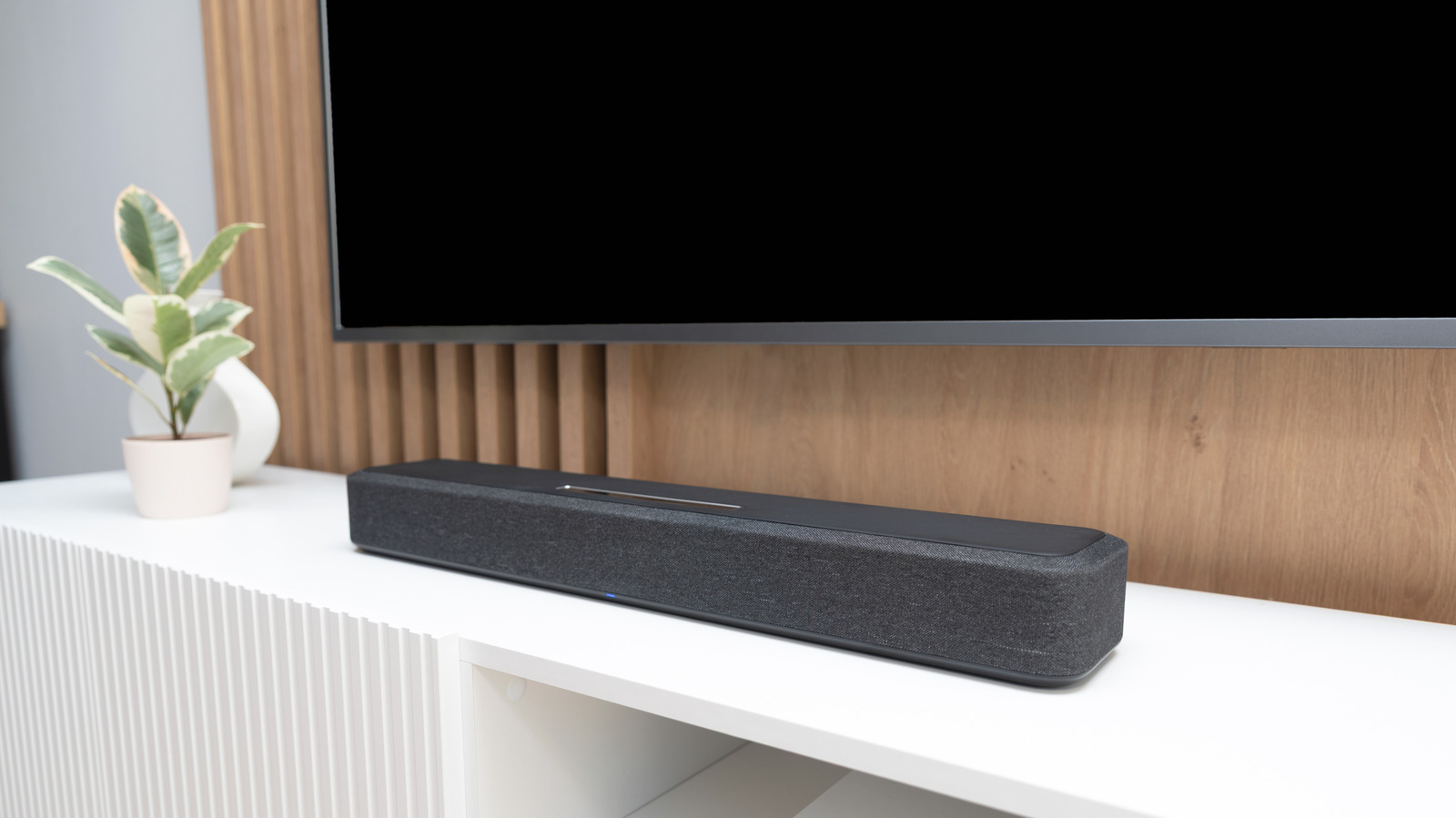
Artphoto21/Getty Images In some cases, confusion about where to place a Dolby Atmos soundbar causes many setups to fall short. You shouldn't have it tucked away under your TV or a shelf, but rather positioned slightly in front of your TV to avoid dampening its effects.
Since they use at least two upward-firing elements to generate audio above the listener, there should be an unobstructed path for those drivers to hit your ceiling and bounce straight back down. That means you should have a flat ceiling with no light fixtures or fans, as these could easily deter sound waves, or, even worse, block the audio path entirely.
For added optimization, your Atmos-enabled soundbar should be placed no more than halfway up the wall, right between the floor and ceiling.
You should also ensure the soundbar is parallel with your couch, as the results are best when it sits as close to ear level as possible. Dolby asserts that if you mount a soundbar off-center, too high, or too low, dialogue and sound effects will feel as though they're arriving from a whole other room, rather than your movie or show.
If you upped the ante and bought an Atmos-enabled soundbar with side-firing drivers, rearrange your decor as needed so the sound from those speakers and their first reflection off the wall have a clear pathway to your seat, ensuring that no furniture, shelving arrang…