
Livestream Menu Make It select USA INTL Livestream Search quotes, news & videos Livestream Watchlist SIGN IN Create free account Markets Business Investing Tech Politics & Policy Video Watchlist Investing Club PRO Livestream Menu
As America has an intense national debate about the cost of AI data centers and who stands to benefit, one often overlooked industry that has seen a boost in business from AI is trucking.
Sprawling data centers don't just sprout from fields, even if it seems that way. All the components that go into a data center, from HVAC systems to tubing and wiring and semiconductors, arrive primarily by truck (or train and then truck). And for a freight business that has been hurt by successive rounds of trade war tariffs and surging diesel fuel prices which hit an all-time high of $5.85 a gallon on Friday as a result of the Iran war, AI is providing a bit of a respite.
"Against that backdrop, AI and data center activity presents an opportunity for fleets," said Patrick Brennan, senior vice president of fleet management solutions provider Cox Fleet. Overall freight demand is still uneven, he said, but AI is providing some needed stability. Equipment-led growth, whether for data centers or defense and semiconductor projects, is inherently more freight-generating, he said.
Some niches within the trucking sector benefit more than others. The best-documented effect is the increased hauling of data center-aligned materials, which shows up in production indices and in individual carrier earnings commentary. Load-to-truck ratios have jumped as capacity tightening reaches this part of the market too.
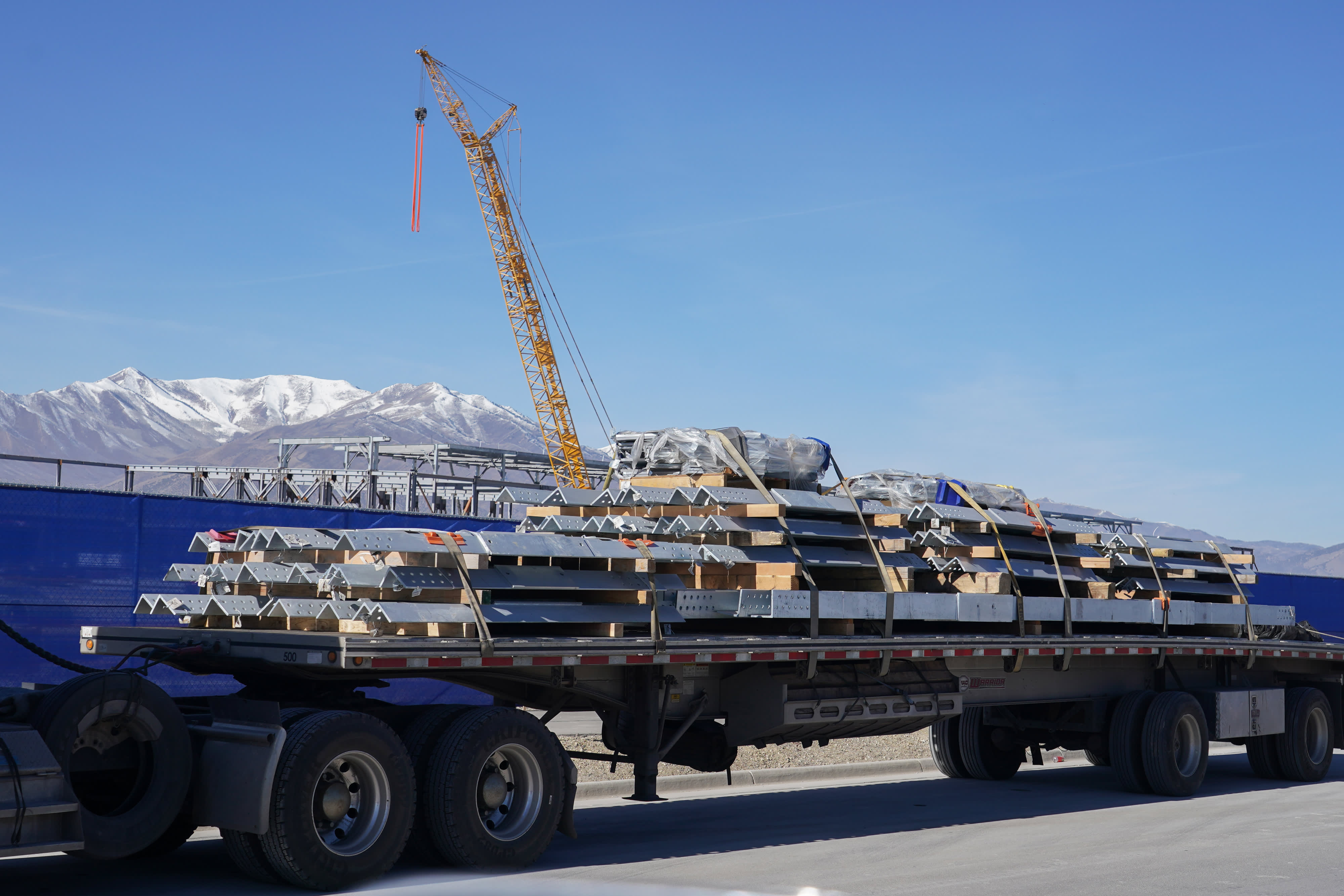
"The effect shows up most in flatbed and heavy haul, where spot rates have hit multiyear highs this summer and capacity is tightest in construction-heavy markets," Brennan said. "Flatbed and heavy haul have been on an absolute tear since last year, and that's where demand from the buildout is most concentrated," he added.
Because site location decisions for these projects are often determined by factors including power and land cost, the arrival of AI is also reshaping trucking lanes, with much of that freight moving into markets that were never traditional freight hubs. "This reshapes routes as much as it adds volume," Brennan said.
The increase in large-scale construction projects is also creating additional demand for skilled transportation and fleet-related talent, and not just drivers.
"These projects require moving heavy equipment, generators, transformers, cooling systems, construction materials, and supporting infrastructure, which increases demand for CDL drivers, diesel technicians, fleet maintenance professionals, and logistics personnel," Brennan said.
All of this is causing a scramble for personnel in what was an already shrinking pool, resulting in longer hiring timelines for specialized positions, increased recruiting activity, and higher demand for maintenance capacity as fleets operate more frequently or add equipment to support project-related freight. And, of course, more miles driven equates to more maintenance that needs to be performed.
It's not just the big trucking companies that are seeing an AI boom, according to Jennifer Lockett, freight factoring operations manager at transportation financing firm altLINE. Smaller companies in the space are also seeing new business, but not without growing pains.
"Data center construction is creating new work for carriers, particularly those moving…