
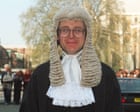
Andrew Nicol was a founding member of Doughty Street Chambers. Photograph: Photoshot/UPPA/B21/Avalon View image in fullscreen Andrew Nicol was a founding member of Doughty Street Chambers. Photograph: Photoshot/UPPA/B21/Avalon Law Obituary Sir Andrew Nicol obituary Barrister and judge with one of the finest minds available to immigrants and journalists in peril in the courts
Prefer the Guardian on Google Sir Andrew Nicol, who has died aged 75, did much to enhance the defence of civil liberties as a barrister and academic, before his appointment as a high court judge in 2009. In that capacity he is mainly remembered for his calm and careful stewardship of Johnny Depp’s libel suit in 2020 against the publishers of the Sun newspaper after their article suggested Depp had assaulted his former wife Amber Heard. English judges are fated to be recalled by their more celebrity-centred cases, but Andy’s intellectual contributions to the development of media and immigration law were much more truly memorable.
The elder child of Margaret (nee Mason), a physiotherapist, and Duncan Nicol, a gas engineer, Andrew was born in Ashtead, Surrey, and educated at the City of London Freemen’s school, Ashtead Park. After taking a law degree at Cambridge and a master’s at Harvard, he worked in housing policy for the state of California (1975-76), and then for a year at a top commercial law firm in Sydney, before returning in 1977 to lecture in that subject at the LSE. His career trajectory to wealth and respectability as a commercial lawyer was interrupted when he became my pupil, during the controversial ABC official secrets trial in 1978.
On the first day, Jeremy Hutchinson QC discovered that Labour’s attorney general, Sam Silkin, had secretly ordered that the jury should be vetted for “extremist opinions”. Andy was given the task of finding some authority to object to this outrage, so he rushed to the LSE library to excavate its rare copy of Jeremy Bentham’s 1821 book The Elements of the Art of Packing, as Applied to Special Juries, which had comprehensively denounced the practice. It was quoted extensively by Hutchinson in his submission that the trial was unconstitutional, later celebrated in a book by EP Thompson (Writing by Candlelight), and a booklet by Harriet Harman, who was then the National Council for Civil Liberties solicitor.
Having been called to the bar at the Middle Temple, Andy was quickly made a member of chambers at 1 Dr Johnson’s Buildings, headed by Emlyn Hooson and John Mortimer , and built a practice in immigration law, bolstered by a book, Subjects, Citizens, Aliens and Others (1990). He developed an interest in media law, acting for David Leigh and the Observer in 1986 in a case that stopped a practice in lower courts of withholding the names of magistrates from the press. “There is no such thing as an anonymous JP” declared the divisional court.
View image in fullscreen Politically, Andy Nicol was always on the side of social justice He was by my side when we successfully defended the New Statesman from a charge of contempt of court for interviewing jurors in the Jeremy Thorpe trial of 1979, although on that occasion he was reported to the Bar Council for wearing brown shoes, which, under absurd traditional rules at the time, could never be worn beneath a black gown.
He maintained his LSE lectureship until 1987, from which vantage point he talent-spotted the best of his students for pupillages, such as Heather Rogers KC and Mr…