
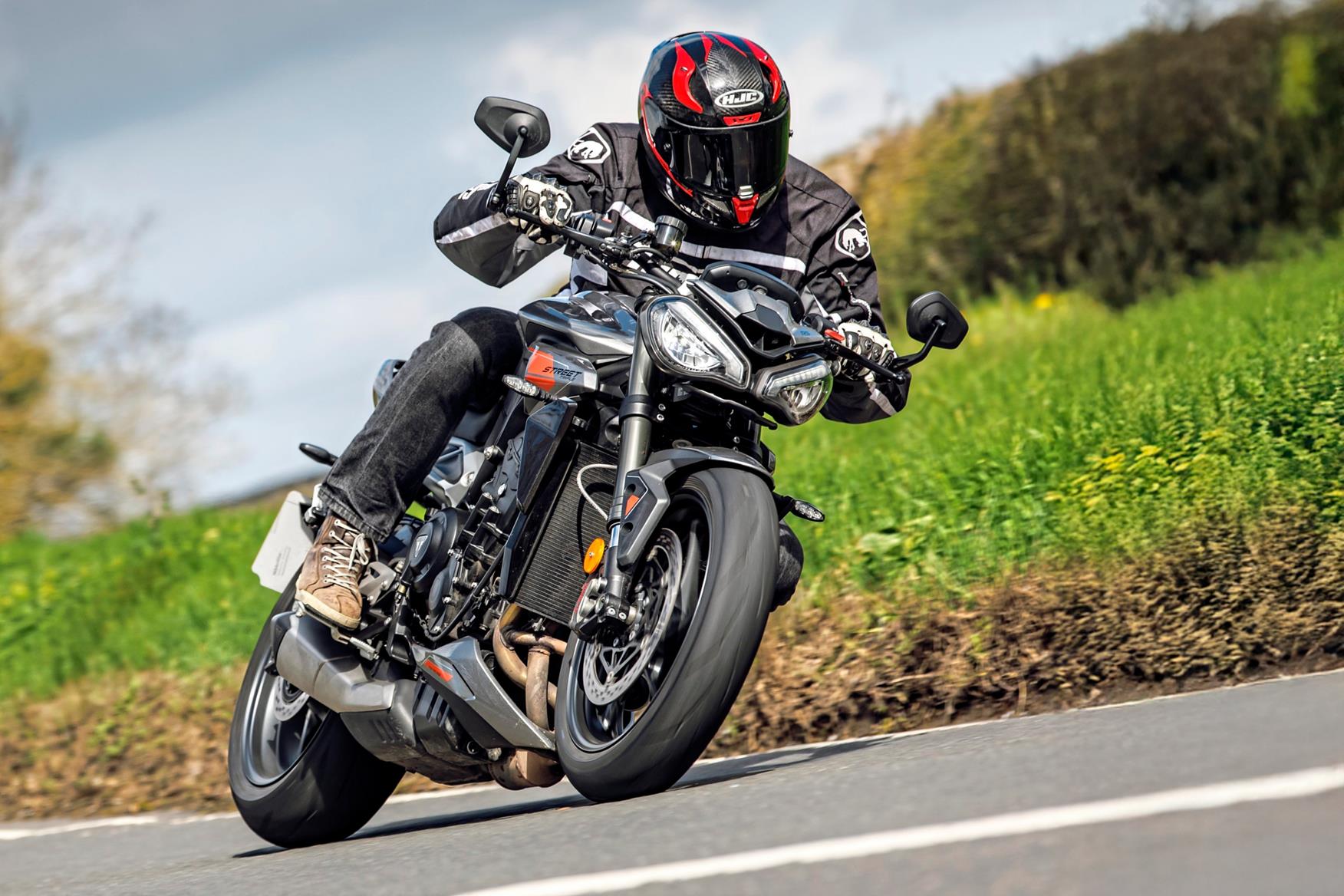
Triumph’s Street Triple blew its Japanese inline-four rivals out of the water when it rocked out of the factory in 2007. Clever use of the Daytona ’s chassis and inline-triple engine in a temptingly priced naked proved an instant success, the bike becoming the brand’s best-selling model and shifting more than 50,000 units in its first five years.
Still a firm favourite, the Triple has grown in both capacity and tech but at its heart it retains the playful nature that’s always made it so appealing. If you fancy trying one, here are five great used options to consider.
Read on for our expert guide to buying a used Triumph Street Triple!
Read the full review of the 2013-2016 Triumph Street Triple R
The first major update brought with it some added tech as well as a sportier chassis and more refined engine. Although a taller first gear makes the engine less explosive off the line, it smooths the transition from first to second while the revised chassis enhances the handling. With more tech, including the option of a quickshifter and ABS, as well as a factory-fit immobiliser and a fuel gauge, this generation has improved finish and is a better buy than the original.
The standard Street Triple model shares the same chassis, swingarm and engine as the R model but has subtle alterations to make it more road-targeted and give it a 20mm lower seat height. As well as less aggressive chassis geometry, its Kayaba forks are non-adjustable and its Kayaba shock only has variable spring preload. It runs two-piston Nissin sliding calipers instead of the R model’s four-piston radial Nissin units with a radial master cylinder. In terms of engine performance and gearing, the R and stock models are identical.
The updated Street Triple R’s chassis is the same aluminium beam twin-spar design as the original generation but refinements saw it become both lighter and sportier. Constructed out of eight parts where the old frame was built from 11, it features reduced rake (down 0.5 degrees) and increased trail (up 2.6mm) and is linked to a die-cast two-piece subframe and 0.6kg lighter swingarm. As well as a more forward weight bias (52% where it was 49%), the steering angle was increased by three degrees, making the bike easier to U-turn.
Hinckley dials up the 675’s sporting potential.
Read the full review of the 2008-2012 Triumph Street Triple R
Emerging a year after the original, the R adds the Daytona’s fully adjustable forks and shock alongside radial brakes. Marginally sportier than the standard bike, the R is a better buy if you want to ride it briskly. Pleasingly raw and a bit unrefined, the original generation were lightly updated in late 2011 when the round headlights were replaced by ‘foxeye’ light.
A step too far for some, but still excellent
Read the full review of the updated 2020-2022 Triumph Street Triple 765 RS
The RS is the sportiest Street Triple (until the 2023 Moto2 and 2026 RX ) and comes with top-rate Showa Big Piston forks and an Öhlins shock alongside Brembo brakes and an electronics package that includes traction control, variable power modes and even a lap timer. The best-selling version, the RS is quite harsh and unforgiving but destroys bends when you are in the mood.
Going bigger, going better… meet the 765
Growing in capacity to 765cc, the all-new generation brought with it not only more performance but also the latest tech including variable power modes, a ride-by-wire throttle and a TFT dash. The R is still the sporty r…