
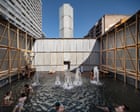
Housed in an obsolete roundabout, Round About Baths transformed the site into a place of refuge from extreme heat. Photograph: Josema Cutillas View image in fullscreen Housed in an obsolete roundabout, Round About Baths transformed the site into a place of refuge from extreme heat. Photograph: Josema Cutillas Architecture Reclaiming the streets: the architects clawing back Europe’s car-centric spaces The European Prize for Urban Public Space’s shortlist highlights projects helping people cope with climate crisis
Philip Oltermann European culture editor Wed 9 Sep 2026 06.00 CEST Last modified on Wed 9 Sep 2026 06.54 CEST Share Prefer the Guardian on Google I n the words of Joni Mitchell, the planners of many urban centres around the world “paved paradise and put up a parking lot”. The European Prize for Urban Public Space tries to show that cities don’t have to be locked in the automotive age for ever.
The prize’s latest shortlist, announced on Wednesday, highlights architectural projects that convert infrastructure for cars into spaces that help urban dwellers cope with the soaring temperatures of the climate crisis : roundabouts that have become splash pools, thoroughfares turned into green havens, and car parks into gardens.
Among the most eye-catching of the five finalists is Leopold Banchini’s Round About Baths in Logroño, northern Spain . The Swiss architect’s project sought to revive what he called a “lost space” on one of the main thoroughfares in the city, a concrete island with a broken fountain.
View image in fullscreen Round About Baths attempted to reclaim a space that would normally be out-of-bounds for those without a motor vehicle. Photograph: Josema Cutillas Inspired by 19th-century public baths, Banchini’s studio used uncut timber panels to build and place a simple structure directly on to the fountain. The existing water basin became a shallow pool, while cast-iron flower pots were repurposed as fire bowls that heat a steam room.
“We have given up so much public space to cars, and if you live in a city with kids you live in constant fear that they will be hit by a passing vehicle”, Banchini said. “It restricts our movement so much that we almost can’t see it anymore.”
Those trying to catch a glimpse of the roundabout baths in situ will be disappointed, however: Banchini’s structure was only erected for a week as part of the city’s Concéntrico architecture festival in June 2025 – inadvertently showing how difficult it is to permanently alter car-centric infrastructure.
View image in fullscreen Leopold’s Banchini’s project in Logroño only stood for a week. Photograph: Josema Cutillas “If we had built something more permanent, we would have had to engage with safety concerns”, said Banchini, noting that bathers were only able to access the roundabout via a zebra crossing on one side.
“The rules around car traffic are hard to modify, and any requests usually go all the way up to municipal authorities”, he added. “And politicians are really scared to touch anything with cars, because they fear it will cost them in votes.”
The creators of another Spanish finalist, Barcelona’s Plaça de les Glòries Catalanes, were more successful: the three thoroughfares that used to bring traffic into the Glòries cloverleaf interchange were partly laid underground to make room for open green space.
View image in fullscreen Barcelona’s Plaça de les Glóries Catalanes has proved to be a success with the city’s residents. Photograph: Fe…