
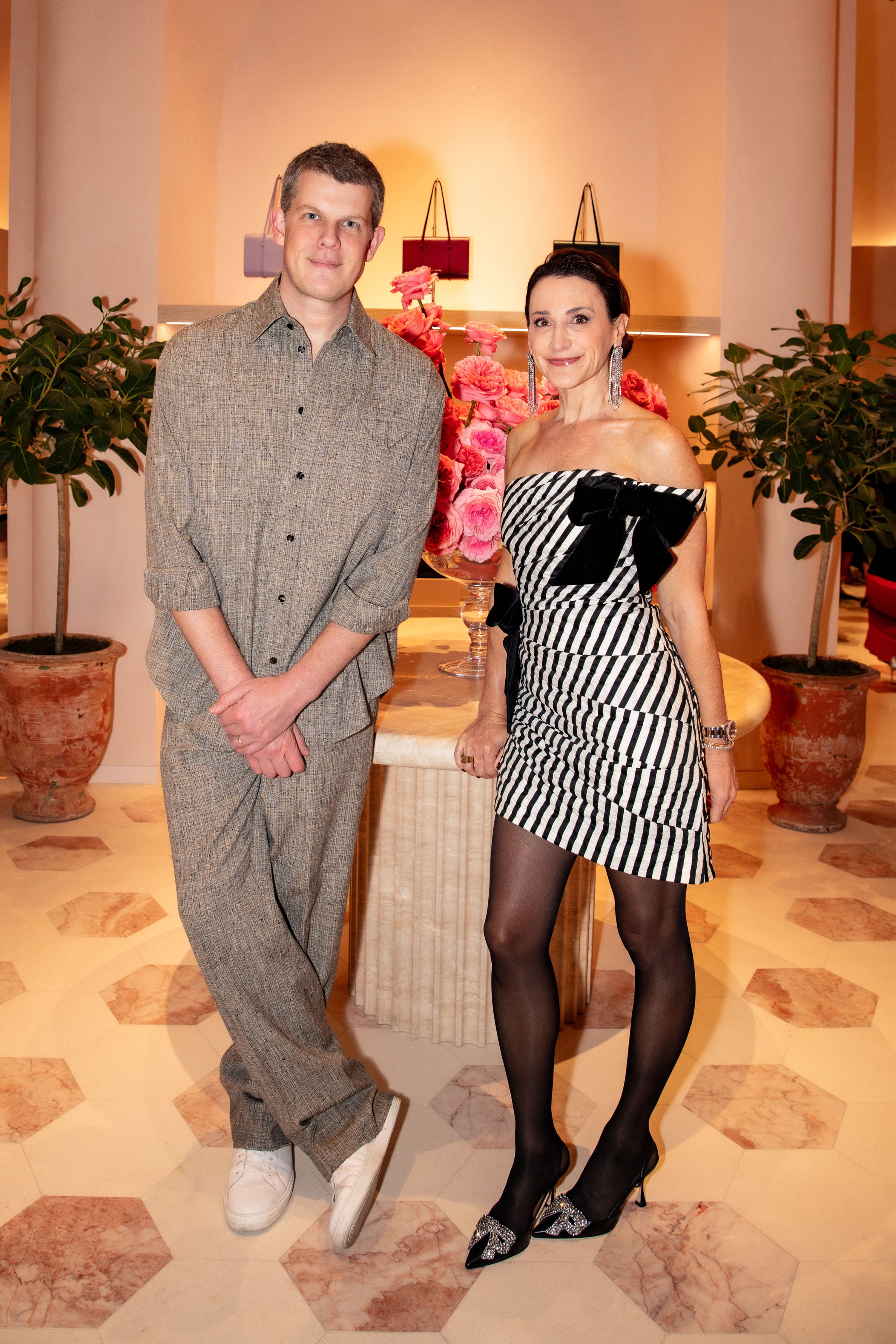
Carolina Herrera creative director Wes Gordon and brand president Emilie Rubinfeld. Photo: Courtesy of Carolina Herrera Save Story Save this story Save Story Save this story Wes Gordon’s eight-year run at Carolina Herrera is often looked at as one of the most successful succession stories in fashion, an industry rife with designer turnover where founder exits can get ugly. Speaking over Zoom ahead of the house’s Spring/Summer 2027 runway show at New York Fashion Week on Monday, Gordon often returns to a word that helps to explain why: respect.
“Respect was very much my priority, not just for the house, but also for Carolina as a person. I worked to earn her trust and was very mindful to make decisions that she wouldn’t be strongly opposed to,” says Gordon about his first year consulting for the brand. He became its creative director in 2018, when the eponymous founder Carolina Herrera retired. Now, she sits front row at the show every season, taking in Gordon’s collections for the house she founded in 1981. This year, the brand is celebrating 45 years in business — a significant milestone for a New York fashion house, and Gordon points out that there are fewer American designer brands still going after their founder’s departure than in Europe.
“The crucial ingredient for a transition is respect,” Gordon continues. “And I think when you see examples of transitions that go awry, maybe there was respect missing from the equation.”
He says it wasn’t just about not upsetting Mrs Herrera, but also about not alienating the brand’s customers who have gone to the brand for an evening dress, a party look or a perfume for over 45 years. The house was acquired by Spanish conglomerate Puig in 1995, after Herrera partnered with the company to develop her fragrance line. Puig doesn’t break out revenue by brand, but in its latest earnings for the first half of the year, the company noted that Carolina Herrera is the top performer in its prestige fragrance and fashion category, growing double digits year-over-year on the success of its cult Good Girl perfume (which, this year, turns 10).
Helping to transition creative control of the company was Emilie Rubinfeld, the brand’s president who took on the role in 2017. “Wes taking the reins was about really making sure that that transition was not a revolution, but an evolution. And I think what was so important was that Wes really appreciated and understood the codes of the house,” says Rubinfeld, who scouted Gordon when he was part of the CFDA/ Vogue Fashion Fund as the founder of his own label. “He was able to really carry on the brand DNA while extending the brand to a community that probably didn't look at Herrera the same way before.”
Rubinfeld says that the brand benefits from being unified across its categories, including fashion, fragrance, makeup, eyewear, and handbags. All sit under Puig, so everything is in-house rather than licensed out. This creates a brand overseen in its entirety by herself and Gordon. It will all be on display at Monday’s show, which Rubinfeld sees as much a brand-awareness play as anything else.
Now, Carolina Herrera is focused more on building out its direct-to-consumer business, with stores opening in Houston, Texas; La Jolla, California; and Miami in the last few months. Dresses and occasionwear are the brand’s core business, but Rubinfeld says more effort is going into “dressing a woman from head to toe”, meaning separates, knits, and other lifestyle pieces ar…