
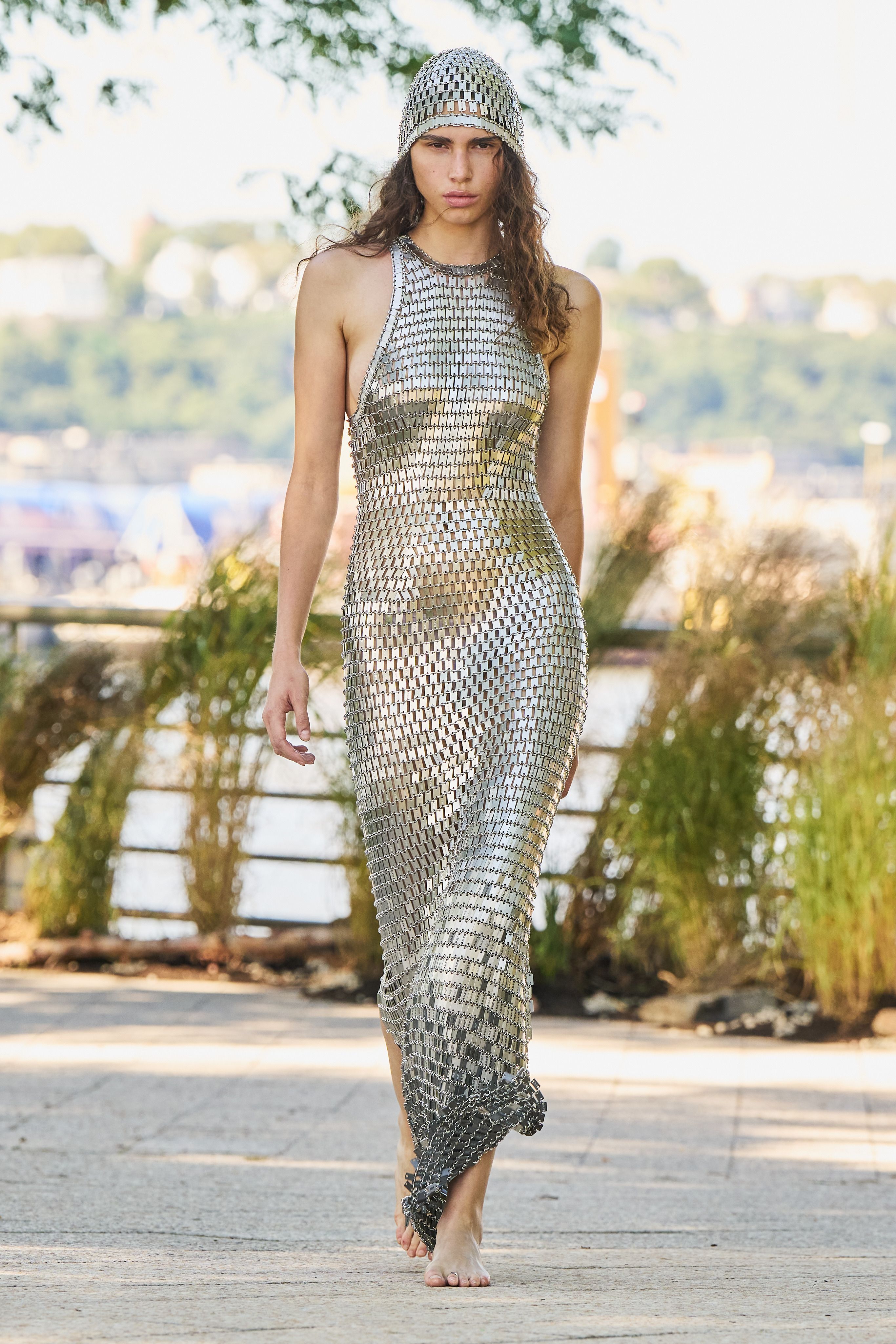
Photo: Isidore Montag / Gorunway.com Save Story Save this story Save Story Save this story After partnering with A24 to co-develop workflows for the film sector, Google’s Envisioning Studio set its sights on the fashion sector. Ahead of New York Fashion Week, Google partnered with designers Jane Wade and Sergio Hudson to develop and test two fashion-specific tools for pre-show styling and runway visualization in beta mode through its Flow AI creative studio.
“Our core premise is that technology must be built with creatives, not simply thrown over the wall at them,” says Yeawon Choi, the user experience designer within Google’s Envisioning Studio who led the project. “We co-design with the creative that will use these tools because we want them to be helpful. And across creative industries, from fashion to film, we’ve found similar friction points — all centering on pre-visualization, relentless timelines, and steep resource constraints.”
Wade worked with Google to digitize one of the most manual parts of show preparation: styling and finalizing each runway look, a process she says typically takes hours, via their co-developed AI styling suite. Hudson worked with Google on one of designers’ most expensive problems: runway mock-ups to plan the staging of the show, addressing his reality that “every mock sent has a cost”, via their co-developed runway visualization tool.
For Wade, this took her studio’s entirely hand-sketched process digital, allowing her team to rapidly visualize garments in different colorways, fabrics, and styling combinations before committing to costly production decisions. “Being able to visualize things first is such a helpful resource for us as a small business, because we wear so many different hats,” Wade says. “I’m our full-time pattern-maker, and have to make so many decisions. But just being able to visualize a look before committing to cutting it could easily save a thousand dollars at the factory.”
“It gives me the option to try it in different fabrics and colors, too — kind of like working backwards — before making a decision,” Wade continues, “rather than getting something back from a sample room and you don’t like how it turned out.” Thanks to the generative AI tool’s memory, Wade was able to upload previous collections, as well as brand photography and beauty lookbooks, to train the styling suite so she could experiment with more looks.
The AI styling suite Wade co-developed with Google to visualize each look with her stylist, in the run-up to her SS27 show. Photos: Courtesy of Google and Jane Wade
Wade also worked with Google to create pre-fitting styling visualizations within the styling suite, allowing Wade and her stylist to sit down together and experiment with accessories, eyewear, and beauty direction, including hair and makeup, all layered onto images of real cast members taken during actual fittings; Wade could even experiment with layering items from the new collection. The tool generates multiple view outputs, including full looks, headshots and detail shots, resembling a professional dressing card. But she emphasizes that the tool supplements rather than replaces real fittings, with every look still physically tried on a model before final decisions are made.
“Of course, this isn’t a final edit tool,” Wade says. “AI is always going to have hiccups and blips, but the purpose of this is that I could sit with my stylist for an afternoon and say, ‘OK, maybe on our model Chloe, she doesn’t…