
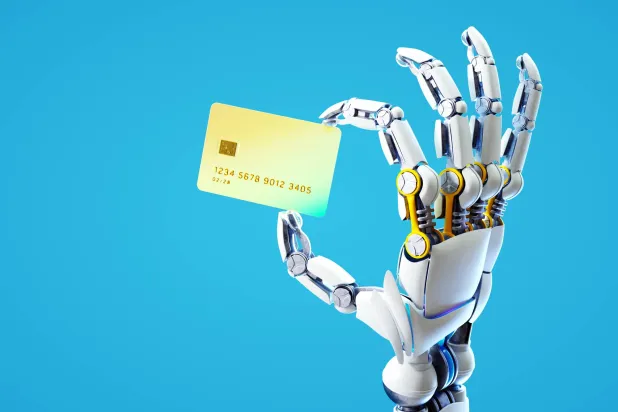
For years, the predictions about the future of commerce often ended with the same result: the eventual disappearance of credit cards... replaced by digital wallets... or cryptocurrencies... or 'buy now, pay later' services. Recently, AI has been portrayed as the next game-changing element; systems are expected to take over everything from product discovery to finalizing purchases, as Emily Price wrote.
If an AI assistant can compare prices, find the best deals, and finalize the purchase on your behalf, what role remains for the traditional payment network? Yet, Visa sees a simple answer: the network plays a vital role.
At the 'Visa Payments Forum 2026' this week, the company unveiled a range of new initiatives in AI, tokenization, and stablecoins, designed to ensure that Visa cards remain the preferred payment method as commerce shifts due to AI.
The company is actually betting that the boom in AI-powered shopping could enhance the role of credit cards rather than diminish it.
AI helps people shop, but it is not 'spending' much money yet. The idea of AI agents managing purchases on behalf of consumers has generated significant excitement in the tech sector. But Visa points to a big gap between consumers' use of AI to research products and actually allowing it to spend money.
Jack Forrestal, Visa's Chief Product and Strategy Officer, told Fast Company: 'I was at one of the Visa offices overseas a few months ago, and I asked the audience: Have you used AI in shopping? Everyone raised their hands. Then I asked: Have you used AI to finalize a purchase? No one raised their hand. And that was a room full of payments experts.'
Forrestal added: 'We have been focusing heavily on the concept of agent-driven commerce, or AI-powered commerce, for over a year. We assumed that would ultimately lead to helping agents; not just in the product search process, but also in the payment process and beyond.' However, the problem is not that AI cannot help people shop, but that consumers are still not convinced of the need to trust it with their money management. Thus, the real barrier is trust.
That is why the company is not looking to replace AI transactions with card systems, but is working on developing technology designed to make AI-powered purchases completely secure and protected, like traditional card transactions.
Forrestal said: 'I believe consumers will want to feel they are in control of the process and are protected.'
Consumers are already aware that in the event of any problems during a purchase, they can turn to the card issuer and payment network. Visa believes this protection becomes even more important when automated programs are conducting transactions.
A large part of Visa's recent announcement focuses on a technology seldom thought about by consumers: payment tokens. Today, many online transactions use tokens instead of card numbers. These digital data help protect payment information while allowing transactions to pass through existing card networks.
Visa is now adding more information to these tokens, including data on who initiated the transaction, its source, and whether there is any AI system being utilized. Forrestal says this additional context is vital to ensure the security of purchases made by AI systems. He adds: 'The system doesn't necessarily tell you, for example, whether this was a purchase made using an AI system, or who that system is? Or what the level of trust or guarantee level is? These are the types of variables we are adding to the tokenization process.'
The goal is to help banks better understand what happens behind the scenes of the transaction, improving fraud detection and reducing false rejections. For consumers, this may mean fewer wrongly flagged legitimate purchases while maintaining strong fraud protection.
AI-powered shopping still needs a payment system. While many discussions about AI-driven commerce assume entirely new payment channels will emerge, Visa bets otherwise.
The company has announced a partnership with OpenAI that enables AI agents to initiate Visa payments within user-defined parameters and controls. It also launches a guide for agents, a registry of certified merchants and AI agents, along with tools to help merchants assess the readiness of their websites for AI-powered shopping.
This strategy makes sense, as AI agents still need a means to pay. Every transaction requires authorization, needs fraud controls, and may require dispute resolution should any problems arise. These are areas where traditional payment networks already operate extensively.
The future may seem familiar. Forrestal believes some of the first AI-powered shopping experiences will involve routine purchases that consumers do not enjoy making themselves.
Travel is another area where AI could gain momentum. Forrestal says, 'We've had travel agents for over a hundred years for a good reason; travel is an incredibly complex process that requires planning, exploring, and thorough research.'
Yet, in both cases, the transaction still needs reliable payment data. For this reason, Visa does not seem worried that AI will diminish the importance of cards. On the contrary, while AI may radically change the way consumers shop and discover products and make decisions, Visa is preparing itself...