
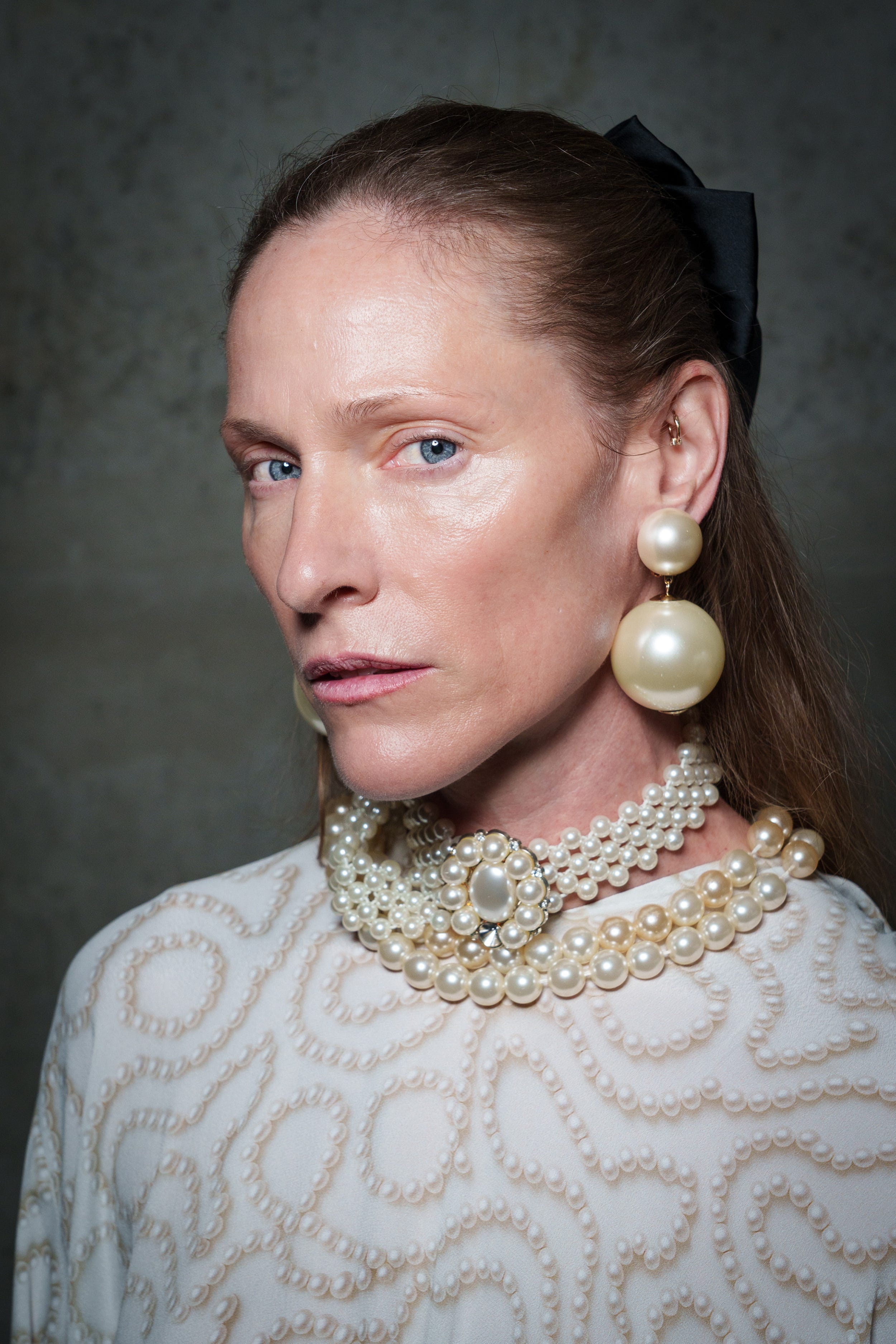
For years, we've focused on smoothing lines and boosting radiance. Now, dermatologists are talking about something far less visible.
The markers of “good skin” tend to shift just as you've mastered the last one. Natural radiance gave way to glass skin , which gave way to that elusive, lit-from-within glow, and now, the newest term to enter the dermatological lexicon is skin density.
While the age-old advice of developing a thick skin against life's ups and downs has always been aspirational, it could now be pursued at the dermatologist's rather than the therapist's (although that is helpful, too). But unlike many other skin trends, this one may be genuinely worth chasing.
In short, the difference between radiance and density comes down to depth. “Radiance is largely a surface conversation, influenced by hydration, pigmentation and the condition of the epidermis,” says Caitriona Ryan , consultant dermatologist.
“Density goes deeper. It reflects collagen content, elastin integrity, the cushioning effect of hyaluronic acid and the wider extracellular matrix that gives skin its strength and support.” It is, in short, the difference between skin that photographs well and skin that is structurally sound.
It all lives in the dermis: the deeper, living layer where your collagen-making cells reside. “You can be barely lined yet still thin and papery, which is low density," explains aesthetics doctor Maude Calveley , which goes some way to explaining why certain faces hold their structure for decades while others, despite an enviable lack of wrinkles, simply look tired. Although density can be measured objectively with high-frequency ultrasound, a biopsy is considered the gold standard.
So, why does it diminish? Unfortunately, it's not a one-size-fits-all answer as several processes unfold at once. “We make less collagen as the fibroblasts (core connective tissue cells in the dermis layer that produce collagen) slow through natural ageing, UV damage, oxidative stress, and hormonal shifts. Simultaneously, the enzymes that break it down grow more active as a result, so the scaffolding thins and frays, and it renews very slowly,” says Calveley.
The junction between the two skin layers, which normally interlocks like a zip for strength, flattens and loses its anchoring proteins, which is “a major reason older skin shears, tears and bruises so easily,” according to Calveley. “Sun is the biggest driver of this and the one you can control,” she adds, while the collagen decline that accelerates around menopause, as oestrogen retreats, compounds the effect.
Although you'd be forgiven for thinking it's an age-focused issue, the British Journal of Dermatology states that from your twenties onwards, collagen is thought to deplete by around one per cent a year.
The good news is that density can be rebuilt...to a degree. Provided you are clear-eyed about what genuinely works and what merely sells, there can be an effective strategy put in place.
Topically, one ingredient outranks the rest. “Retinoids lead by a distance,” adds Calveley. “Prescription tretinoin is the one ingredient with biopsy proof, in a landmark trial, of genuinely building new collagen." Vitamin C follows, since skin cannot manufacture collagen without it, though its results are more modest and highly formula-dependent.
The rest of the shelf: Peptides, niacinamide, the growth factors and salmon-derived PDRN currently trending on TikTok—largely protect existing collagen or plumps t…