
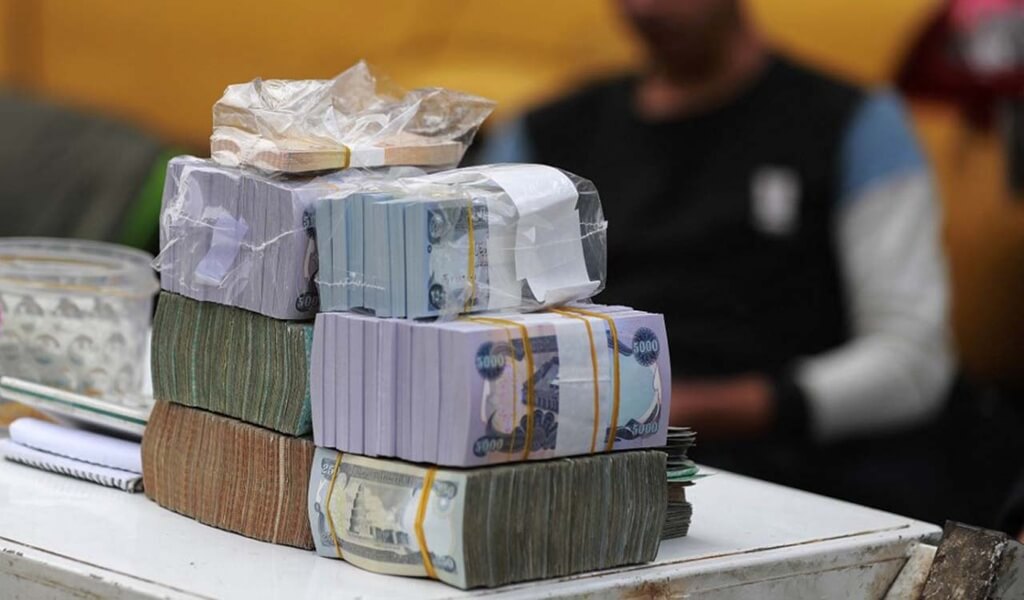
Packs of Iraqi dinars in a currency exchange shop in Baghdad, Iraq. Photo: Ahmad al-Rubaye/AFP
Baghdad (IraqiNews.com) – The U.S. dollar crossed the 160,000-dinar threshold across Iraq’s parallel currency markets during opening trading on Saturday, September 19, 2026, marking a sharp depreciation of the domestic currency as market liquidity contracted under geopolitical and fiscal strains.
Bureaus in Baghdad posted selling prices of 160,000 dinars per $100 against buying rates of 159,500 dinars, while trading in Erbil, the capital of the Kurdistan Region, reflected a parallel surge, settling at 159,650 dinars for sale and 159,100 dinars for purchase.
The widening spread against the Central Bank of Iraq’s official peg of 131,000 dinars follows reports of heightened U.S. Treasury pressure and restrictions on monthly physical cash shipments from Iraq’s oil revenue reserves held at the U.S. Federal Reserve.
Washington has reportedly conditioned the continuity of unhindered dollar liquidity flows on Baghdad’s progress in disarming Iran-aligned armed factions and meeting the critical September 30 deadline, which coincides with the scheduled conclusion of the International Coalition’s military presence.
The resulting cash shortage has fueled market speculation, with local traders and currency dealers warning that selling rates could climb toward the 170,000-dinar mark if physical inflows remain constrained.
The monetary volatility has begun depressing consumer sentiment across the country ahead of the month-end deadline. Households across Iraqi governorates have visibly shifted toward precautionary saving and defensive spending, prioritizing essential food commodities while curtailing expenditures on discretionary goods and leisure services.
Foot traffic and commercial turnover have contracted noticeably across cafes, restaurants, and retail markets—even extending to school stationery vendors preparing for the upcoming academic term—choking domestic cash flow and deepening liquidity bottlenecks across the real economy.