
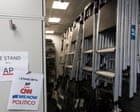
Signs hang in the media work area at the White House after CNN, MS Now and Politico were banned by Trump. Photograph: Evan Vucci/Reuters View image in fullscreen Signs hang in the media work area at the White House after CNN, MS Now and Politico were banned by Trump. Photograph: Evan Vucci/Reuters Media Judge seems inclined to side with media outlets who were banned from White House in lawsuit Due process was not followed, said judge, when CNN, MS Now and Politico were banned from White House
Prefer the Guardian on Google A US district judge on Wednesday heard arguments in the extraordinary showdown between Donald Trump and CNN, MS Now and Politico, suggesting in comments that he was more inclined to side with the media plaintiffs who sued the president on Monday.
Lawyers representing the media organizations have asked Timothy J Kelly, a district judge, to force the White House to return the press badges that were taken over the weekend after Trump banned their journalists from the building. While the judge declined to rule on Wednesday, he acknowledged that due process had not been followed in revoking access.
Read more The three news organizations were not given advance notice that they were in violation of any set of standards and only received formal notice – in letters sent to each news organization on Tuesday – that they “exhibited behavior in violation of the standards of professionalism and decorum expected of those given access to the White House Complex, including by trafficking in verifiable falsehoods about national security and other issues, and publishing sensitive or classified information”.
When he originally announced the ban in a Friday post on Truth Social , Trump cited “their constant ‘reporting’ FAKE NEWS”, rather than any violation of national security protocols.
During a tele-hearing on Wednesday afternoon, Kelly cited past case law that clearly laid out the need for a distinct process that involved advance notice of an infraction and the opportunity to plead one’s case.
“I think it is fair to say that the processes that the circuit laid out in those two cases wasn’t followed here,” the judge said, referring to two similar cases involving journalists who had either lost access or were denied access to the White House. The judge said that the cases made clear that “before a journalist’s White House hard pass was suspended or revoked, that the journalist was entitled to pre-deprivation notice and an opportunity to be heard”.
Michael Kenneth Velchik, a justice department attorney representing the Trump White House, argued that such a process had been laid out in the letters, which informed each news organization that they had until 5pm on Friday to contest the ban. (The letters said that if the organizations did not submit such a challenge, it would become final.)
Theodore Boutrous, a prominent first amendment attorney who has represented many media plaintiffs in press access lawsuits against the Trump administration, said the letters were post-hoc and woefully insufficient to serve as notice.
He said the White House’s actions and process was “not even close to conforming to due process and the first amendment”.
Judge Kelly also seemed to agree that the letters were insufficient. “I don’t know how a letter they got after the pass was revoked could provide them with the standards that they’d have to conform their conduct to,” he said. “It’s a piece of paper they got saying, ‘You’ve already violated that.’”…