
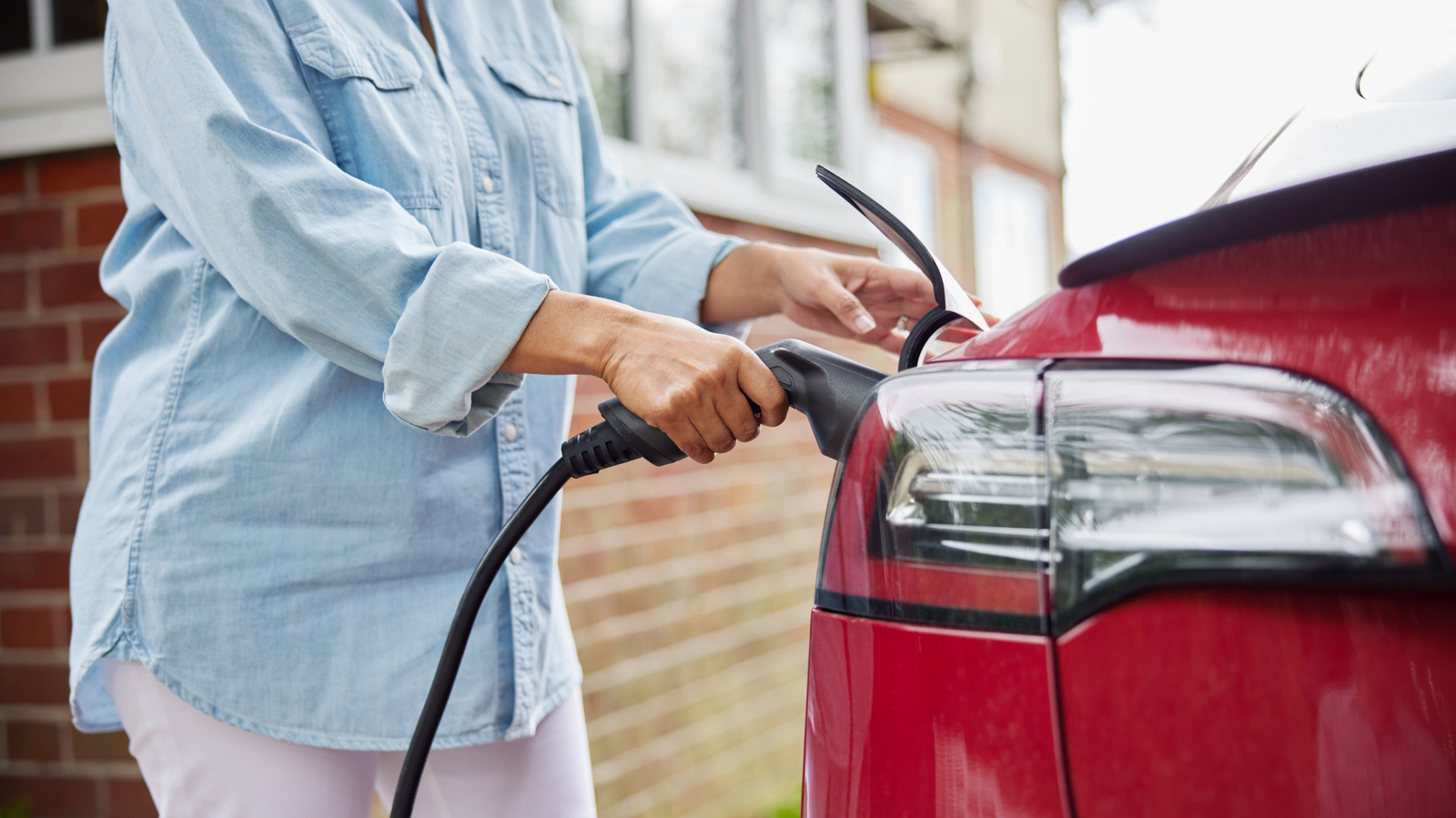
Provided you don't drive long distances every day, Level 1 charging could be all you need.
Daisy-daisy/Getty Images Add Engadget on Google: Preferred Source Google Discover If you're a new electric vehicle owner, you may be surprised to learn just how many charging options you have available, both at home and to extend your range on the road. While the industry has standardized terms like Level 1, Level 2 and Level 3 charging, those labels offer little information on their own. Installing a Level 2 charger can also cost hundreds of dollars, so is it an expense worth taking on?
A Level 1 charger can take more than 40 hours to fully charge up an EV's battery, while a Level 3 charger can add hundreds of miles to your car's range within a single hour. While you may think faster is always better, we also have to account for tradeoffs like cost and battery longevity. So which charging level should you use? The answer depends entirely on where you plan to charge your car, how far you drive and the cost of electricity in your region.
A Level 1 EV charger simply uses the standard 120-volt household outlet in North America, which limits it to about 1.4kW of charging power. Level 2 chargers use 240-volt circuits, typically at higher currents, allowing them to deliver substantially more power. How much more depends on the charger and circuit: A 40-amp Level 2 charger (on a 50-amp circuit) can deliver as much as 9.6kW of power. Level 2 chargers all the way up to 80A exist too, delivering up to 19.2kW, provided your home's electrical service can support it.
Level 1 and Level 2 chargers supply the grid's alternating current (AC) to the EV. The vehicle's onboard charger converts this supply to direct current (DC) before it reaches the battery. Converting AC to DC isn't 100-percent efficient, so it generates heat, and onboard chargers only work up to a certain power limit. With Level 3 charging, the AC-to-DC conversion takes place before it reaches the car, bypassing the onboard charger and delivering high-voltage power directly to the car's battery.
This lets Level 3 chargers dial things up a notch, typically pushing anywhere from 50kW to 500kW of power. It's important to note that charging speeds drop as the battery gets more full, so no EV will be charging at their absolute peak rate for very long. Regardless, Level 3 chargers can be enough to fully recharge a depleted EV battery in an hour or two. That's especially true for newer vehicle models that support the highest power levels. The Lucid Gravity , for instance, can charge at up 400kW if you can find a Level 3 charger that supports that rate. Meanwhile, the Tesla Model Y's maximum charging power ranges from 175kW to 250kW, depending on the model.
Casezy idea/Shutterstock If you only drive a few miles a day, a Level 1 charger is all you need. There's little reason to shell out hundreds of dollars for a Level 2 charger and an electrical upgrade when your EV's battery can simply charge overnight. If you're on a time-of-use plan with your energy provider, you can schedule charging during off-peak hours and still gain plenty of range through Level 1 charging for your commute the next day.
While the exact figure depends on your vehicle's efficiency, the US Environmental Protection Agency (EPA) estimates Level 1 charging adds about 5 miles of range per hour. So even with a conservative 8 hours of charging time, you stand to gain roughly 40 miles of range.
Level 2 chargers make a lot more sense…