
Remember when a stroker meant cheap performance? 18 years back I bought a Yamaha RD250DX (Microns, clip-ons, Marzocchi shocks…) and a Suzuki GT250 for £500. A few years later my RGV250 cost the same. Nostalgia and rose-tinted memories pushed two-stroke values through the roof.
However, prices have levelled and there’s more supply than demand – buy with your head not your heart, and you can still bag a smokin’ bargain.
Read on for our expert guide to two-strokes!
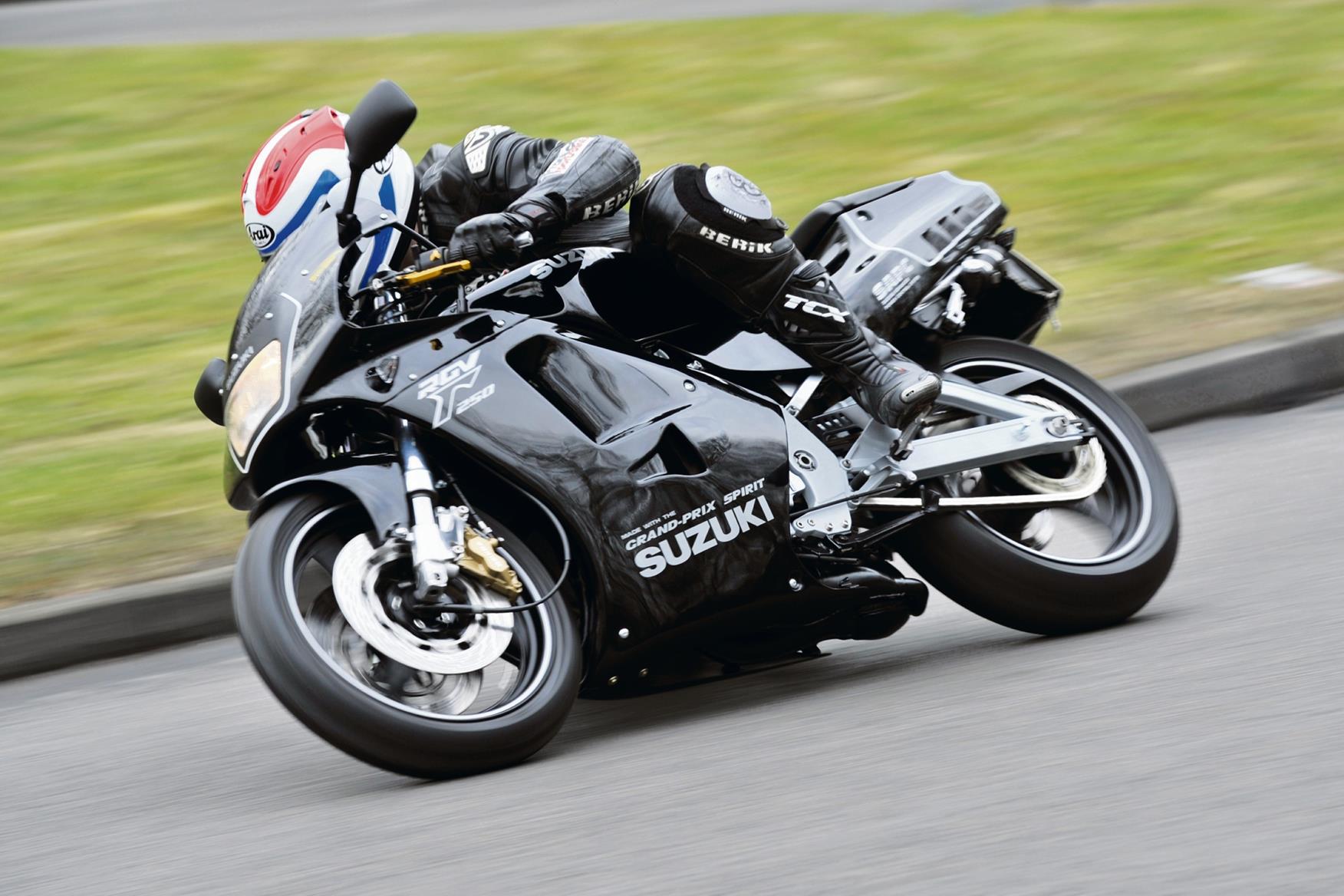
It’s still the one, right? With its banana swingarm and twin pipes the M-model RGV of 1991 looked just like Suzuki’s 250 GP bike, and with bigger carbs, new powervalves, USD forks and a 17in rear wheel (down from 18in) its performance was a step up from the previous version.
It looked, sounded and felt like a racer for the road – and still feels great today. No, it won’t do massive power wheelies, and yes, you need to be on the ball to get the best out of it – but a good RGV is still an engaging and invigorating experience.
Faster and cheaper than an RGV or Yamaha TZR, the stock KR250-B2 did 130mph when it arrived in 1989. No wonder it became the racer’s go-to tool (and the rare factory race kit let it almost keep with pukka 250cc racers). Only on sale for a year, then replaced by the KR-1S , so there isn’t the greatest choice – but also tends to be more affordable than an S.
It’s the parallel-twin motor from the TZR250, retuned for more flexibility and slipped into a chassis derived from the DT and XT models. Not a supermoto, the TDR was designed to be fast and fun on any kind of surface. I’ve got one so I’m biased – but it really is the most practical and enjoyable 250cc stroker for today’s clogged, crumbling roads.
Stop laughing. MZs have been the butt of many jokes but these ring-ting-tinging singles have given many of us simple, cheap transport over the years. Still can. Though no longer peanuts, a good ETZ is still affordable and far more reliable, frugal and enjoyable for daily capers than you think. Smoking past cars on an Eastern Bloc relic is hilarious.
Forget the SP this and RR that. If you want to stand out in the two-stroke masses, get an NS250R. Created to celebrate F. Spencer’s GP success, the V-twin was only on sale for a year before being replaced by a completely different NSR250 (though it did form the basis of the V3 NS400R). This makes it rare in the UK, but prices are lower than for a ‘common’ NSR.
Everyone knows two-strokes are finicky, unreliable, inefficient and need constant maintenance. They’re the reserve of lunatics with a twitching clutch hand and a much-used toolkit. Which is, of course, guff.
Yes, a two-stroke will usually need a little more care and attention than a four-stroke, but owning a desirable stinkwheel isn’t the trauma that pub bores say.
Unreliable? No. With engine oil carried in the fuel, ports in the cylinder walls and pistons expanding quicker than cylinders, you need to warm them before riding – but I bet you do that with your GS . With modern oils there’s no reason to expect constant breakdowns.
Sure, new pistons and rings every 24,000 miles sounds scary, but that’s years of sunny trundling. And strokers are so easy to work on that it’s not that big a job. Overall servicing costs are no more than a four-stroke and there’s a wealth of how-to knowledge waiting online.
They’re cheap to run too. All the bikes here qualify for classic insurance, don’t chomp tyres, and can be frugal. Cruise in the middle of the revs, on the…